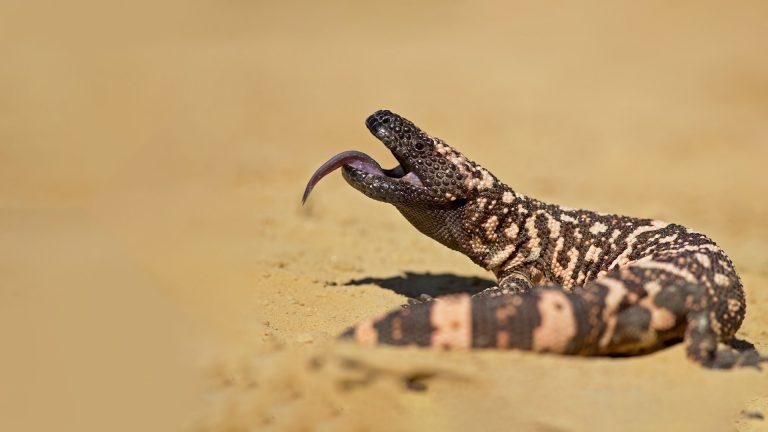
You feel a sudden pain. Before you even understand what happened, the lizard’s powerful jaws have locked onto your hand.
You pull back instinctively, but the animal refuses to release its grip.
The longer it holds on, the worse the situation becomes. Its teeth are digging deeper, its muscles are tightening, and something dangerous is slowly entering your body.
This is not a scene from a horror movie. It is the reality of encountering one of the world’s most unusual reptiles.
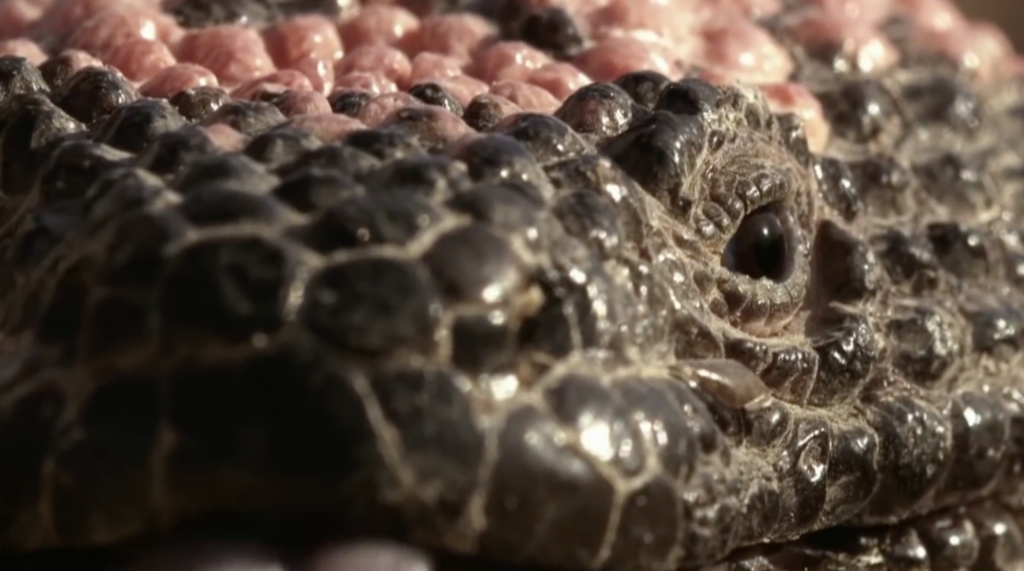
The Gila monster looks like a creature designed to scare people. With its bright colors, rough skin, and intimidating name, it seems like a natural predator.
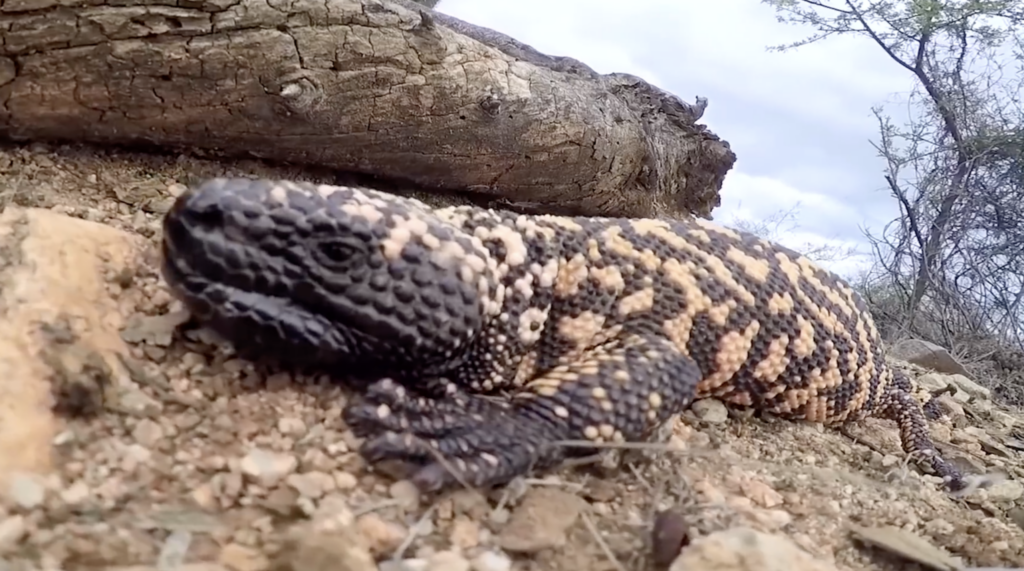
But despite its appearance, this lizard is actually a quiet and slow moving animal.
Most of its life is spent hiding underground, avoiding extreme desert temperatures and conserving energy. But when it finally comes out to feed, it can consume an incredible amount of food.
A Gila monster can eat nearly one third of its body weight in a single meal.
Its targets are usually eggs, small mammals, birds, and other animals. Humans are not part of its diet. However, if the lizard feels threatened, it has a powerful defense mechanism.
Its bite.
Unlike snakes, Gila monsters do not inject venom through hollow fangs. Instead, venom flows through grooves in their teeth as they bite and chew. The longer they hold on, the more venom can enter the wound. The result can be extreme pain, swelling, nausea, dizziness, and dangerous changes in blood pressure.
There is also no specific antivenom available for a Gila monster bite.
So if one ever grabs onto you, every decision matters.
Step 1: Stay away
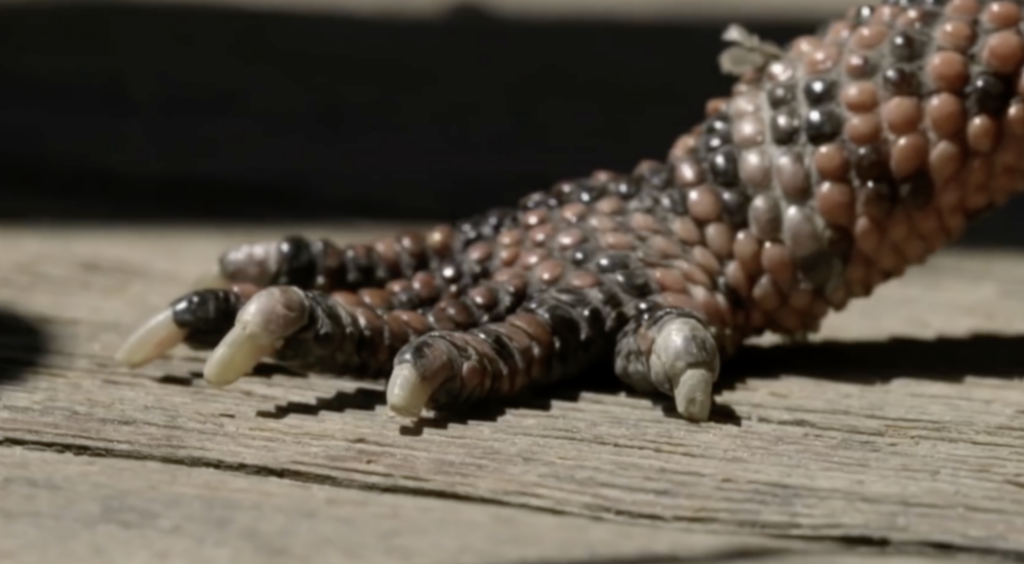
The easiest way to survive a Gila monster bite is to avoid one completely. These reptiles move slowly, reaching speeds of only around 1.6 km/h (1 mph). They are not interested in chasing humans, and they usually avoid confrontation.
Most bites happen when people try to handle them, touch them, or get too close.
A Gila monster may look fascinating, but getting near its powerful jaws is a dangerous mistake.
Step 2: Do not pull away
If the lizard bites you, your first instinct will probably be to escape by pulling your hand away. But that could make things much worse. The Gila monster has strong jaw muscles and a stubborn feeding response. Trying to force it away can cause it to grip harder, increasing the damage to your skin and allowing more venom to enter.
The animal can maintain its bite for several minutes, turning every second into a painful struggle.
The key is to remain calm and avoid making sudden movements.
Step 3: Try to calm the animal
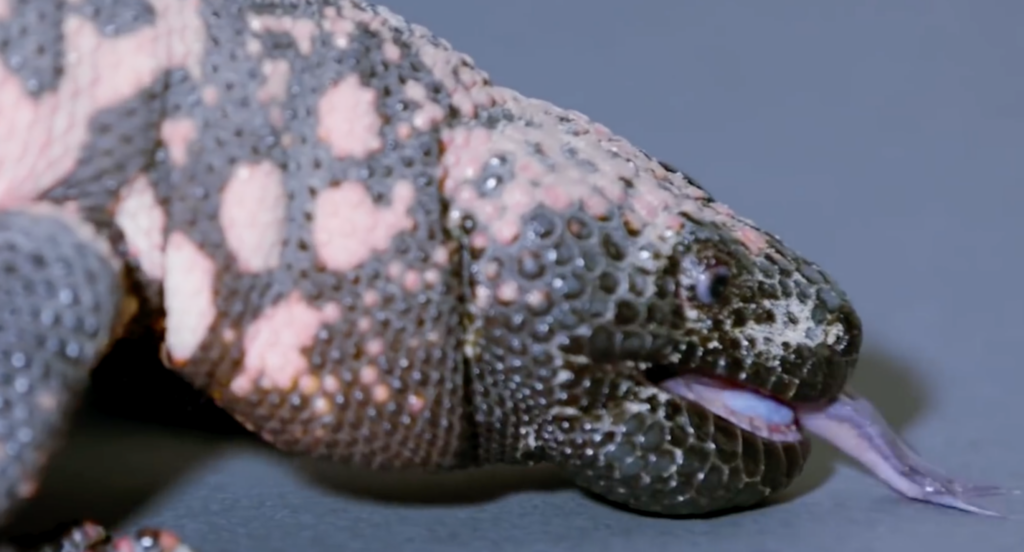
Once the bite happens, the goal is to reduce the lizard’s stress. Lowering the animal toward the ground may help it feel less threatened. Fighting against it could make the situation worse. One example showed how dangerous a Gila monster encounter can become.
In 2001, zoologist Kip Siemens was cleaning a Gila monster enclosure at a zoo when the animal suddenly bit his hand.
The pain was overwhelming. His first reaction was to try shaking the lizard loose, but the bite only became stronger.
The animal refused to release him.
Step 4: Release the grip
After several minutes, Siemens managed to use a spoon to force the Gila monster’s mouth open and finally free his hand.
But escaping the bite was only the beginning.
Soon afterward, the venom started affecting his body.
He experienced severe pain, blurred vision, tingling sensations, chest tightness, and intense discomfort. His condition became serious enough that he needed emergency medical treatment.
Step 5: Get medical help immediately
A Gila monster bite requires urgent medical attention.
Doctors cannot simply give you an antivenom and send you home. Instead, treatment focuses on controlling symptoms, managing pain, and supporting the body while the venom leaves the system.
After receiving medical care, Kip Siemens survived the attack. However, the experience was so intense that he decided he would never work with Gila monsters again.
The Gila monster may look slow and harmless, but its bite proves that speed is not always what makes an animal dangerous.
Sometimes, the most terrifying creatures are the ones that do not need to chase you.
They only need to hold on.