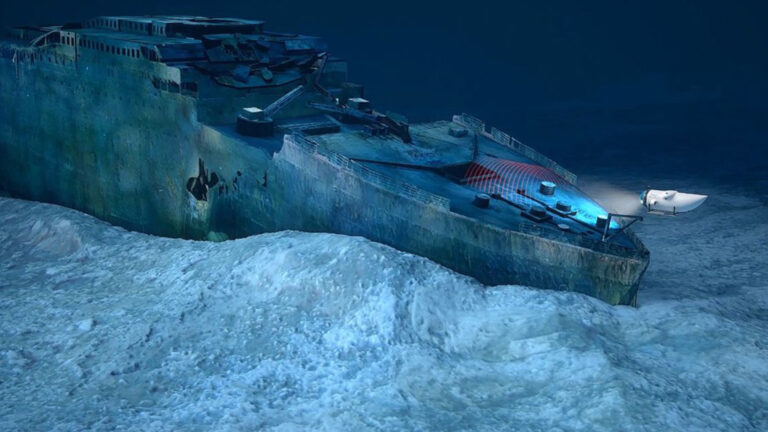
More than a century after its tragic sinking, the RMS Titanic still rests deep beneath the icy waters of the North Atlantic Ocean. But according to scientists, the world’s most famous shipwreck may not remain there for much longer. Experts believe the Titanic is slowly disappearing, and large parts of the ship could completely collapse within the coming years.
The Titanic sank on April 15, 1912, after striking an iceberg during its maiden voyage from Southampton to New York City. More than 1,500 passengers and crew lost their lives in one of the deadliest maritime disasters in history. For decades, the wreck remained hidden nearly 3,800 meters below the ocean surface until it was finally discovered in 1985.
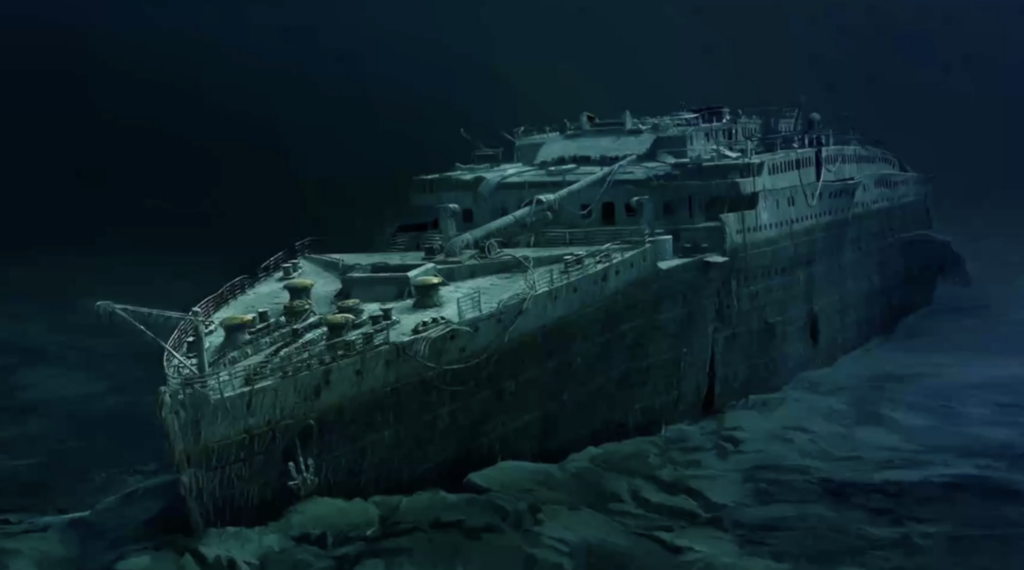
Since then, researchers have made several expeditions to study the ship. What they found was alarming. The once massive steel liner is being consumed by a microorganism known as Halomonas titanicae, a bacteria specially adapted to survive in the extreme conditions of the deep ocean.
These microbes feed on iron, and unfortunately for the Titanic, the ship contains more than 50,000 tons of it. Over time, the bacteria create rust formations called “rusticles,” icicle like structures hanging from the wreck. While they may look harmless, they are actually eating away at the ship’s metal framework piece by piece.
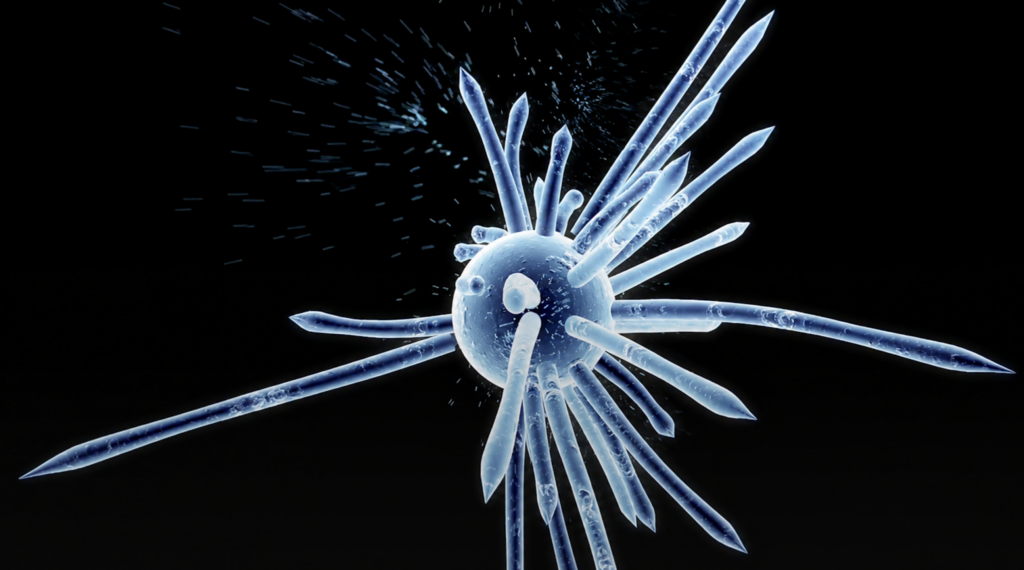
Scientists say the deterioration has accelerated over recent decades. Entire sections of the Titanic have already collapsed, including parts of the captain’s quarters and upper decks. As the metal weakens further, experts predict the ship could eventually become unrecognizable, with only scattered debris remaining on the ocean floor.
The harsh environment surrounding the wreck also contributes to its destruction. Crushing water pressure, freezing temperatures, salt corrosion, and deep sea currents constantly wear down the structure. Combined with bacterial activity, the Titanic faces a slow but inevitable disappearance.
Some researchers worry that Halomonas titanicae could pose problems beyond the Titanic itself. Because the bacteria consumes iron and metal, it may threaten other underwater structures such as oil rigs, pipelines, and submerged industrial equipment. Studying the microbe could help scientists better understand how to protect important infrastructure in the future.
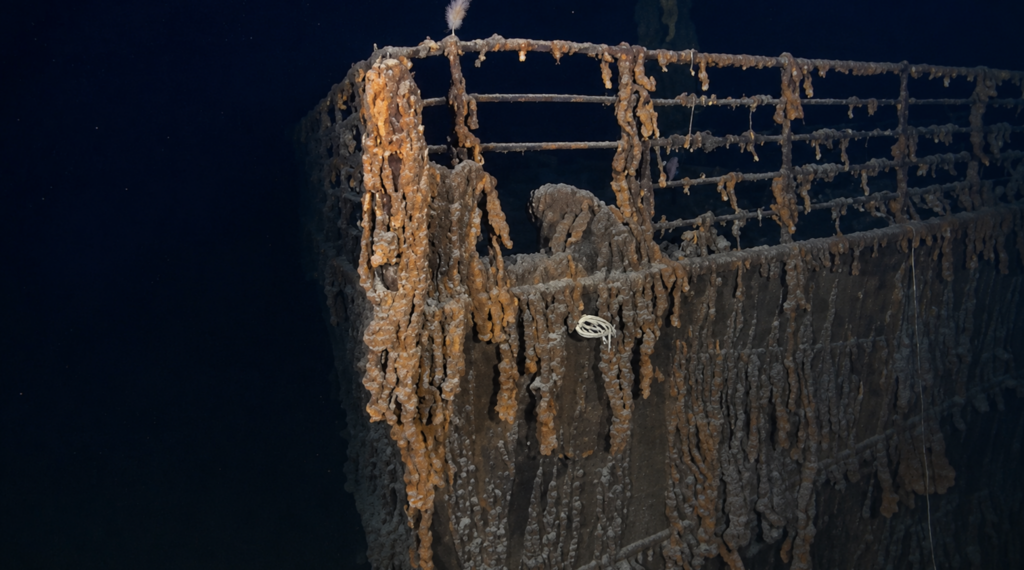
Despite its deteriorating condition, the Titanic continues to fascinate people around the world. The wreck has become both a historical landmark and a memorial to the lives lost during the disaster. Only a small number of humans have ever visited the site due to its extreme depth and dangerous conditions.
In recent years, private companies have offered expeditions allowing wealthy tourists to see the famous shipwreck up close in specialized submersibles. Interest in these deep sea tours increased even further after the tragic Titan submersible incident in 2023, when a vessel carrying passengers to the Titanic imploded during its descent, killing everyone onboard. The disaster highlighted just how dangerous visiting the wreck can be, even with modern technology.
For now, the Titanic still survives beneath the Atlantic waves, but time is running out. Every year, more of the legendary ship disappears into the darkness of the ocean floor. Future generations may never get the chance to witness the remains of the vessel that became one of history’s most unforgettable tragedies.