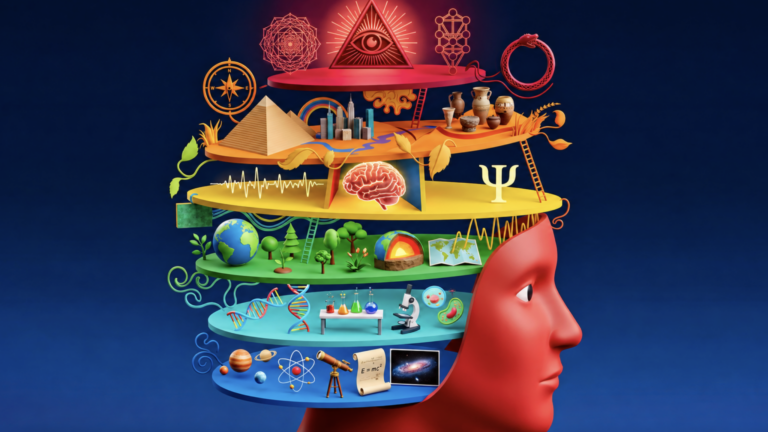
Intelligence is a hierarchy. For all of human history, we have sat comfortably at the top. We are not the fastest or strongest species, but our intelligence made us the apex species on the planet.
So what happens the day we are no longer the most intelligent? Would we suffer the same fate we have handed to other living things? To understand that possibility, we first need to look at the different levels of intelligence, from the simplest organisms on Earth to the superintelligence that could one day surpass us.
Level 1, Basic Reactions
Intelligence can be loosely described through abilities such as learning, memory, prediction, planning, adaptation, problem solving, abstraction, and social reasoning.
The earliest building blocks appeared long before anything we would recognize as intelligent life. In Earth’s early oceans, chemical reactions around thermal vents helped create simple protein structures. Some eventually developed the ability to self replicate, forming part of the path toward life.
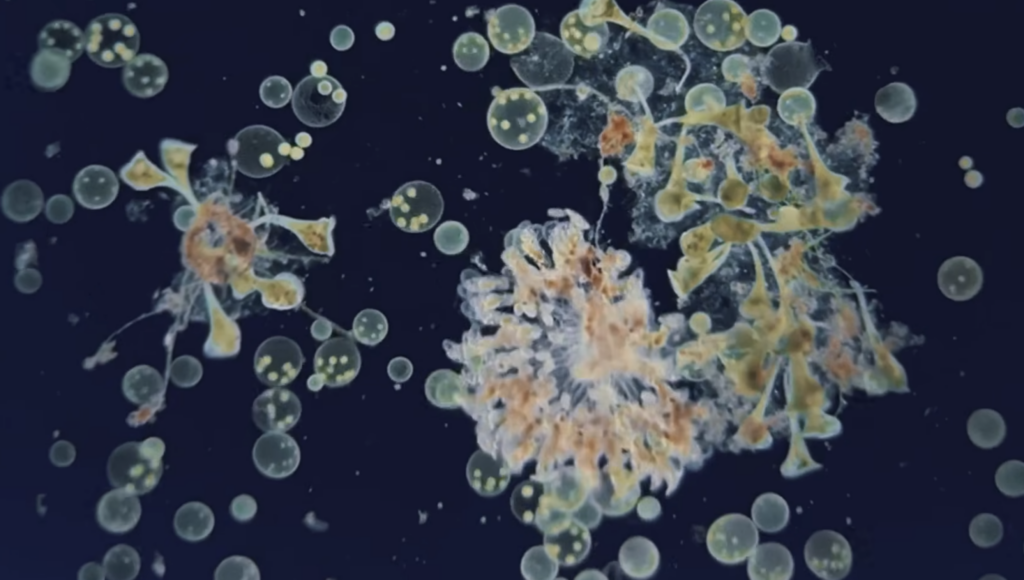
Much later, simple organisms developed basic systems for detecting their surroundings. Early wormlike creatures had structures that could detect chemical gradients, helping them move toward food and away from threats. This was not intelligence in the modern sense, but it was an early form of cognition.
This basic ability became known as basal cognition, the first rung on the ladder of intelligence. Life could react to its environment, survive, reproduce, and eventually evolve.
Level 2, Reading the Room
The next step came when organisms stopped simply reacting to what was happening and began anticipating what might happen next.
Animals can learn that certain places contain food, that particular sounds indicate prey, or that certain environmental conditions signal danger. A bird may return to a tree where it previously found insects, while a squirrel may react to signs of a predator before an attack actually happens.
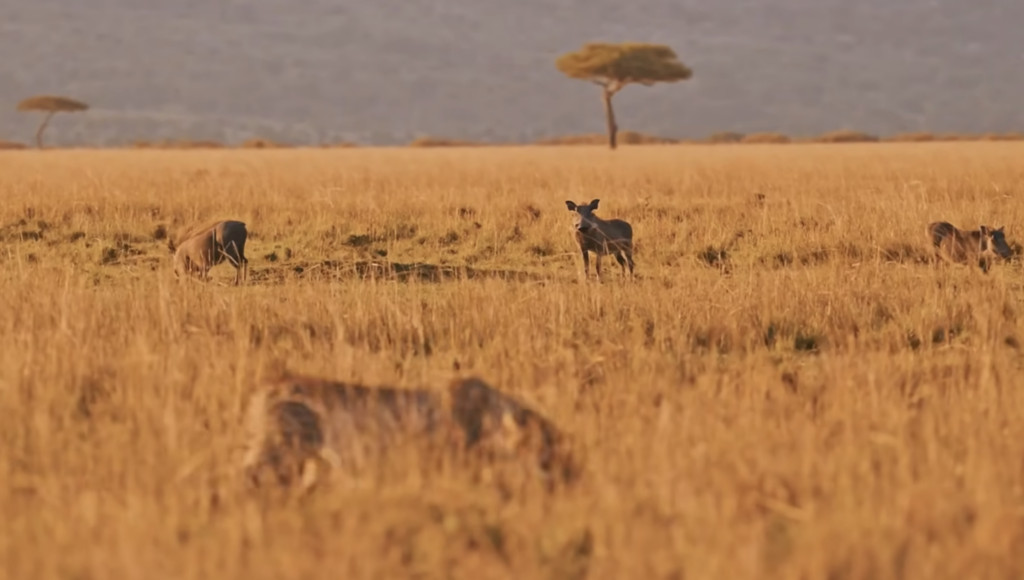
This requires an internal model of the world. Organisms gather information, recognize patterns, and use previous experience to make better decisions.
Reaction allows an organism to survive what is happening now. Learning allows it to use what happened before. Prediction allows it to prepare for what has not happened yet.
Level 3, Planning
Prediction opens the door to planning. Instead of simply anticipating an event, an organism can consider possible actions and choose a sequence that could produce a desired result.
Leopards in India have been observed driving mountain goats toward the edge of cliffs, avoiding a direct confrontation and using gravity to do the difficult work. Crows use tools and solve problems involving multiple steps. Octopuses manipulate objects and navigate complex environments, while primates use objects as tools and change their behavior based on experience.
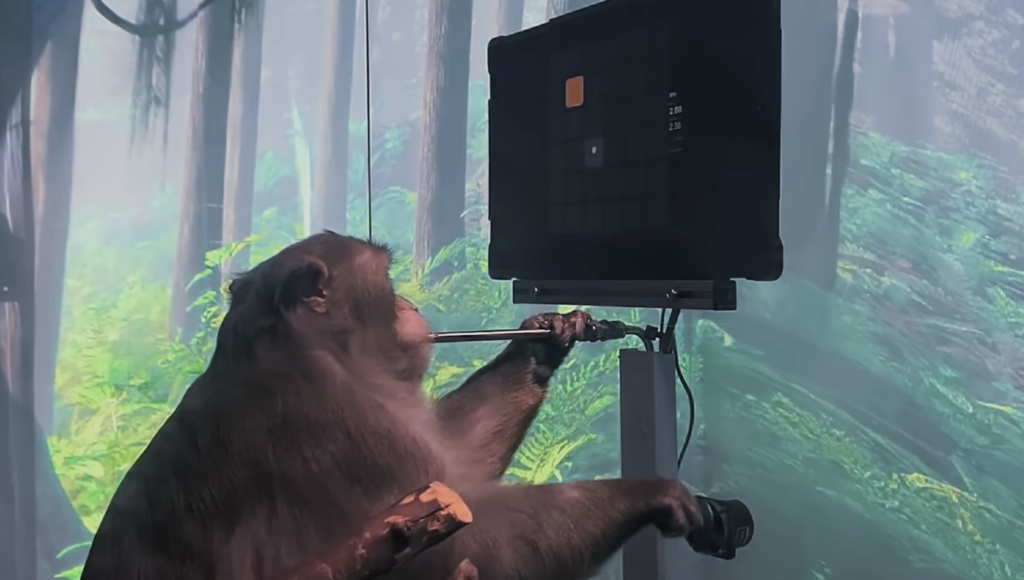
Planning introduces means end reasoning. A goal becomes the end, while individual actions become the means used to reach it. As the number and complexity of these steps increases, intelligence becomes more powerful.
But eventually, another challenge appears. Other intelligent organisms have their own goals and strategies.
Level 4, Social Intelligence
Social intelligence develops when organisms must understand not only their environment, but other intelligent individuals within it.
Animals living together must determine who they can trust, who will compete for resources, and who knows where food can be found. Primates form alliances, wolves coordinate during hunts, and elephants maintain sophisticated social relationships and long term recognition.

Humans take this much further. We constantly try to understand what other people know, want, believe, and intend. Language makes this even more powerful because people can directly communicate information about their internal thoughts.
Cooperation allows groups to divide tasks, share resources, defend themselves, and solve problems that individuals could never solve alone. Over time, this produces cultures, economies, institutions, and civilizations.
Intelligence is no longer confined to one brain. It begins to exist between many minds.
Level 5, Abstraction
Language allows humans to move beyond the physical world and manipulate symbols. We can think about yesterday, tomorrow, distant places, imaginary objects, hypothetical situations, and concepts that have no physical form.
A person can see a tree, but a human can also think about the concept of a tree, then abstract further toward plants, organisms, or living things. Eventually, we can reason about ideas such as justice, infinity, probability, consciousness, morality, and mathematics.

This ability means we do not have to solve every problem independently. Abstract rules allow us to generate countless solutions from the same underlying idea.
Knowledge can also be passed between generations. Writing, books, libraries, computers, databases, and the internet allow information to survive long after its creator is gone. Human intelligence therefore becomes more than the intelligence of individual brains. It becomes the accumulated intelligence of civilization.
But biological brains still have limits. Our memories are imperfect, our attention is limited, and our brains eventually degrade.
That raises the next question: what happens when intelligence is no longer bound by biology?
Level 6, Machine Intelligence
For most of human history, another intelligence surpassing humanity belonged to mythology. Now humans are building systems that do not share the same biological limitations.
An advanced artificial intelligence could potentially process information at electronic speeds, maintain enormous amounts of information, and work continuously without sleep or rest. It could divide complicated problems into thousands of subtasks and work on them simultaneously.
The most important difference could be the ability to improve. Humans spend years becoming experts, while an advanced artificial system could potentially acquire information and skills much faster. If it could contribute to improving future AI systems, this could create a feedback loop in which each generation becomes more capable.
The result would not simply be a machine that is somewhat smarter than a human. Intelligence itself could become scalable in a way biological intelligence never was.
And that leaves the final question.