The year is 2061, and two engineers are arguing about the end of the universe. Can entropy, the slow universal decay of everything into disorder, ever be reversed? Can humanity somehow save the universe from ultimate death?
They turn to a supercomputer powered directly by sunlight. The machine gives them a simple answer: not enough data. The same question is asked again and again across thousands of years and across galaxies, every time humanity grows more advanced. Yet the answer never changes, all the way to the end of time.
This is the Last Question, a story by Isaac Asimov. On the surface, it is a bleak story about a question so enormous that it outlasts every civilization that asks it. But there is another way to look at it. The story is also about what humanity can accomplish when it gains access to more energy.

In Asimov’s future, every major leap forward comes after humanity discovers a more powerful source of energy. That idea has a strange connection to our own history.
Fire was the first major energy breakthrough. Before it, humans had to hunt, kill, and eat food raw. Cooking changed that equation by making food easier to digest and providing more usable calories. That additional energy helped support larger human brains, better tools, more complex language, and long term planning.
Then came farming. Planting a seed instead of eating it was a bet on the future. A hunter gatherer used calories quickly, but a farmer could store grain for months or even a year. That surplus became the foundation of civilization, allowing some people to spend their energy on building, trading, governing, creating tools, and developing cultures instead of constantly searching for food.
For thousands of years, farming had its limits. Then humanity found coal.
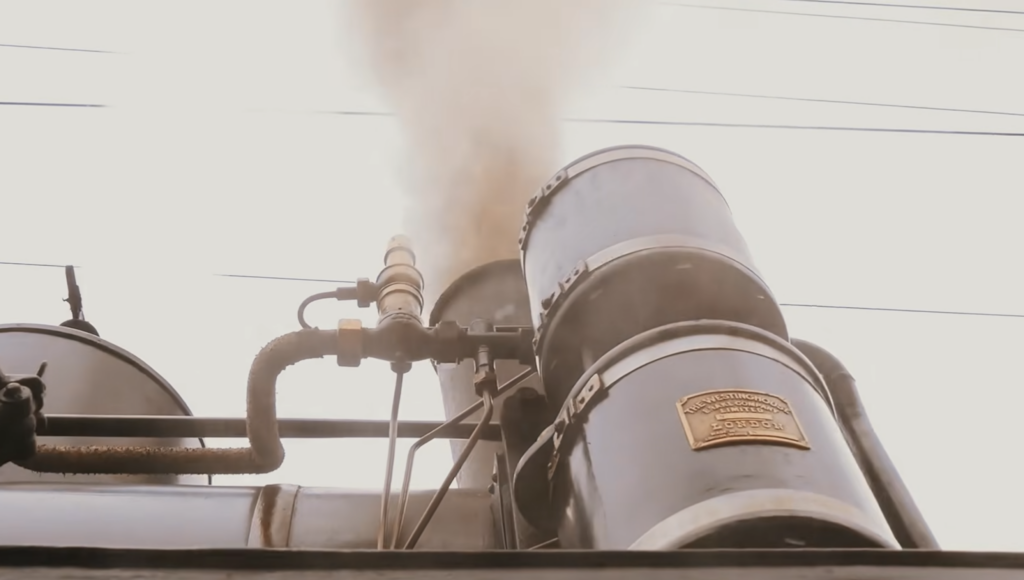
Coal allowed people to boil water and use steam to push machines continuously. A single engine could perform the work of many people without getting tired, eating, or sleeping. Factories expanded, cities grew, and railroads dramatically reduced travel times.
Electricity pushed the transformation even further by allowing energy to be produced in one location and delivered somewhere else. Power was no longer limited to large factories. It could reach individual homes with the flip of a switch.
Then came oil, a remarkably energy dense fuel that could power cars, planes, and ships while also becoming essential for plastics and fertilizer. Oil helped reshape the twentieth century and became deeply connected to global economies and conflicts.
Fire, farming, coal, electricity, and oil all followed the same pattern. Humanity reached an energy ceiling, found a more powerful source, and then used that new energy to build something even larger.
Today, that search is continuing.
AI systems require enormous amounts of electricity, while advanced manufacturing, space exploration, batteries, semiconductors, and other technologies are increasing energy demand. At the same time, oil is finite, and extracting and transporting remaining reserves can become more difficult.
That is why researchers and companies are searching for new energy sources, including naturally occurring hydrogen.
Unlike manufactured hydrogen, which requires energy to produce, natural hydrogen can form underground through chemical reactions between water and iron rich rock. Some known deposits appear to be replenishing themselves over years or decades rather than requiring millions of years to form again.
In Saskatchewan, Canada, MAX Power Mining is working to validate what could become a large scale commercial discovery of naturally occurring hydrogen. The same geological formations can also contain helium, an important gas used in MRI machines, superconducting magnets, and rocket systems.
Solar and wind remain important parts of the energy picture, but storing their electricity for long periods remains a challenge. Batteries can store power for hours, but storing enough energy for much longer periods is still difficult.
None of this means the energy problem is solved. It means humanity may have another rung on its energy ladder.
And that brings us back to Asimov’s strange question.
The engineers in the story were not simply asking whether a machine could solve a technical problem. They were asking whether the decline of everything could eventually be undone. Every time the machine answered, “not enough data,” it was not necessarily saying never. It was saying not yet.

Fire got humanity started. Farming created surplus. Coal broke the muscle ceiling. Electricity put power into homes. Oil made modern transportation and industry possible. Now humanity is searching for whatever comes next.
Nobody knows whether that ladder will ever reach the point where the ultimate question can finally be answered. But throughout human history, every new energy source has allowed us to push farther than before.
Perhaps the strangest part of the Last Question is not whether humanity will eventually save the universe.
It is that, for thousands of years, humanity keeps asking the question anyway.