When people think about the deadliest animals in Africa, they usually imagine lions chasing their prey, crocodiles hiding beneath the water, or venomous snakes waiting in the grass. But the animal responsible for some of the most dangerous encounters on the continent may surprise you. It is not the fastest predator or the most feared hunter. It is the massive, seemingly calm hippopotamus.
Despite their round bodies and peaceful appearance, hippos are among the most dangerous animals in Africa. They are responsible for hundreds of human deaths every year, with estimates suggesting they kill around 500 people annually. Unlike lions, hippos do not attack because they want to eat humans.
They attack because they are extremely territorial, unpredictable, and surprisingly aggressive when they feel threatened.
Hippos are the third largest land mammals on Earth, behind elephants and white rhinos. A female can weigh around 1,400 kilograms (3,100 pounds), while large males can reach more than 4,000 kilograms (9,000 pounds). But their enormous size does not make them slow. Hippos can run at speeds of up to 48 km/h (30 mph), making them much faster than most people expect.
Their powerful bodies, sharp teeth, and aggressive behavior make them a serious danger, especially near rivers and lakes where they spend much of their time. So what should you do if you encounter one of Africa’s most dangerous animals?
The first rule is simple: do not surprise it. Hippos are usually calm when left alone, but they can become extremely dangerous if they believe you are invading their territory. If you find yourself near a hippo, keep your distance and make your presence known with loud noises rather than suddenly appearing close to it.
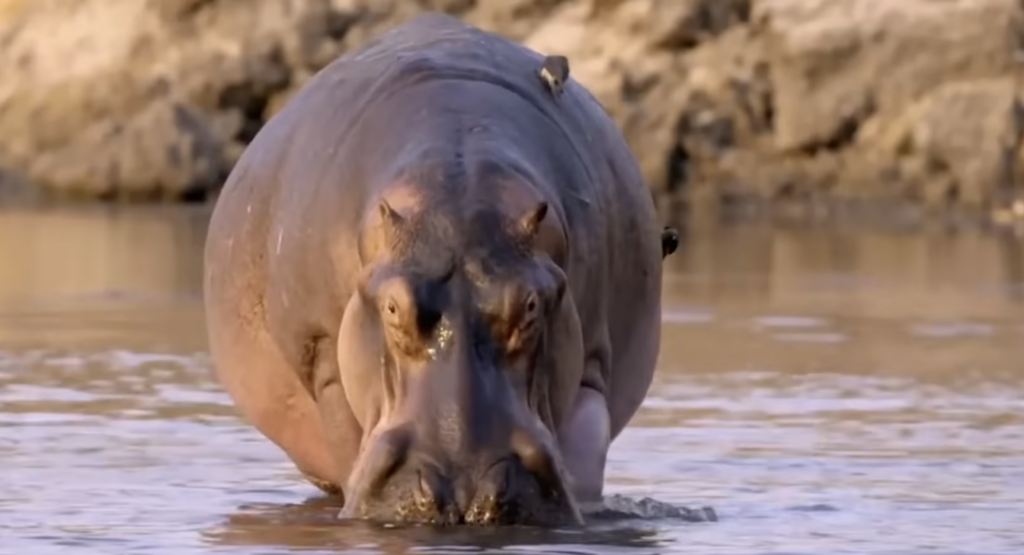
The goal is to give the animal time to move away without feeling threatened.
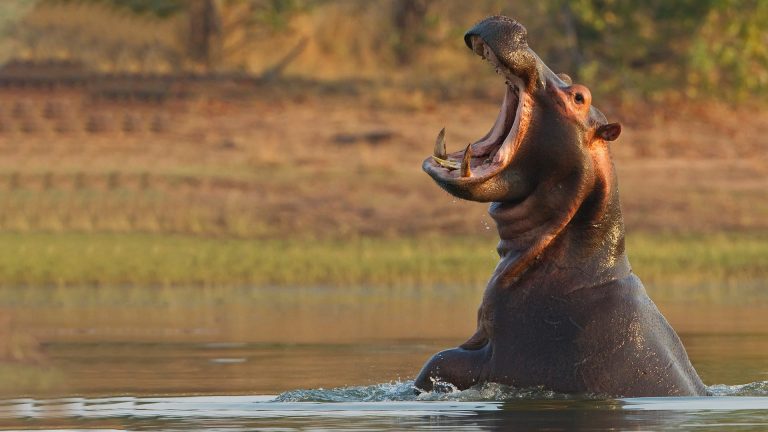
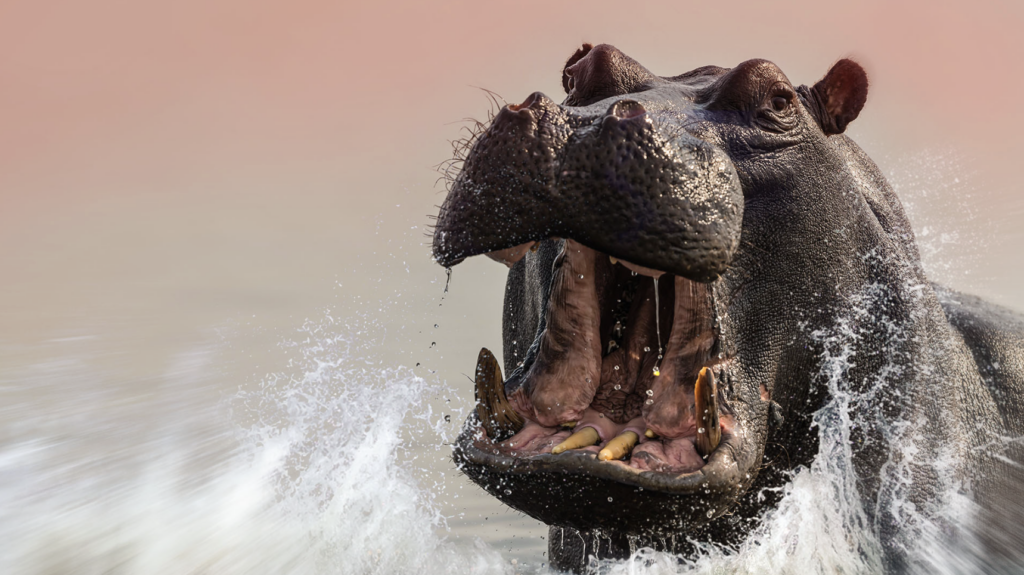
You should also pay close attention to warning signs. A hippo opening its mouth widely may look like a harmless yawn, but it is actually a display of aggression and a warning to stay away. If you see this behavior, leave the area immediately and create as much distance as possible.
If a hippo begins charging, your best chance is to escape quickly. Although a hippo can outrun a human, you should never run in a straight line if it is chasing you. Move around obstacles such as trees, rocks, or uneven terrain that can slow the animal down. If possible, reach higher ground, such as a tree or steep slope, where the hippo may have difficulty following.
Unfortunately, if a hippo reaches you, the situation becomes extremely dangerous. A hippo’s bite is one of the strongest in the animal kingdom, with a bite force estimated at more than 13,000 kPa (around 2,000 psi). Its large teeth and powerful jaws can cause devastating injuries.
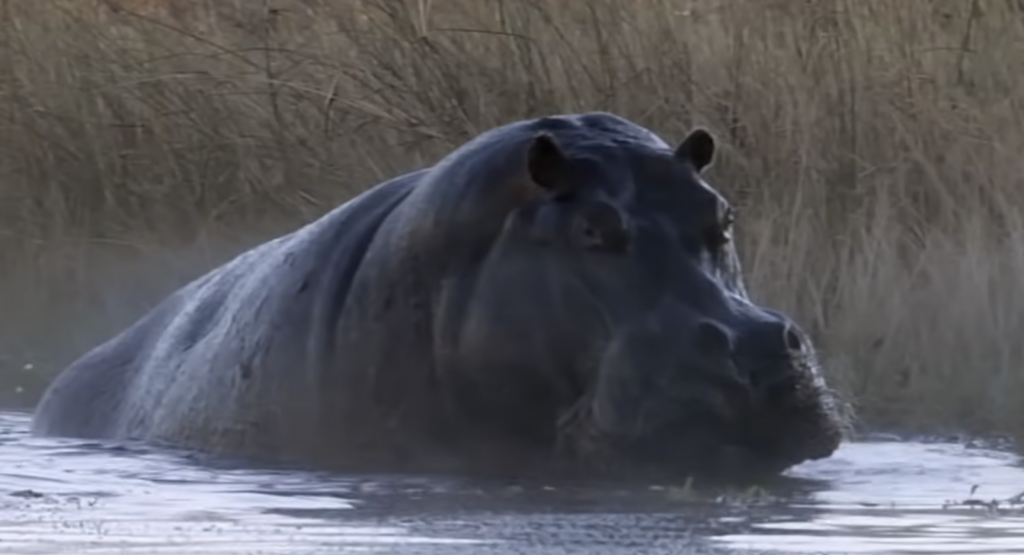
In a life threatening situation, the only option may be to fight back by targeting sensitive areas like the eyes or snout to create an opportunity to escape.
The best way to survive a hippo attack, however, is to avoid one completely. Unlike smaller dangerous animals that may appear suddenly, hippos are usually found near specific habitats such as rivers, lakes, and wetlands. Staying away from their territory and respecting their space is the safest strategy.
The next time you think about Africa’s deadliest animals, remember that danger does not always come from sharp claws or deadly venom. Sometimes, the greatest threat is a giant river animal that looks peaceful but is powerful enough to take down almost anything in its path.