Deep in the western Pacific Ocean lies one of the most extreme environments on Earth. The Mariana Trench is not a place designed for human exploration in any comfortable sense. It is cold, dark, and so deep that sunlight has never reached its lowest point.
At the very bottom is the Challenger Deep, the deepest known location in Earth’s oceans. Reaching it is already an enormous challenge, but the idea of drilling beneath it introduces an entirely new level of difficulty.
Even the journey down is dangerous. The pressure at this depth is around 1,100 times greater than what we experience at sea level. That force alone is enough to crush most materials and makes standard exploration impossible.
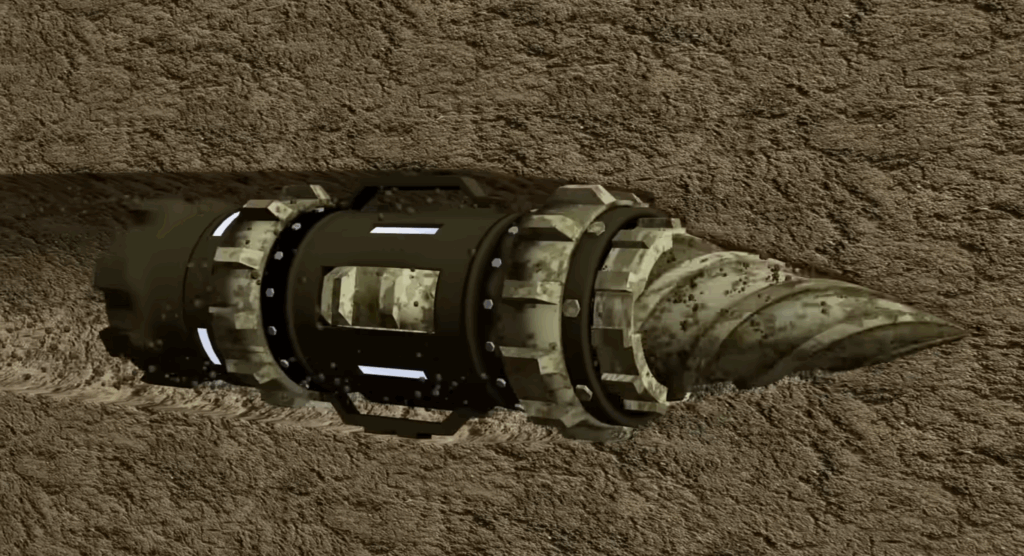
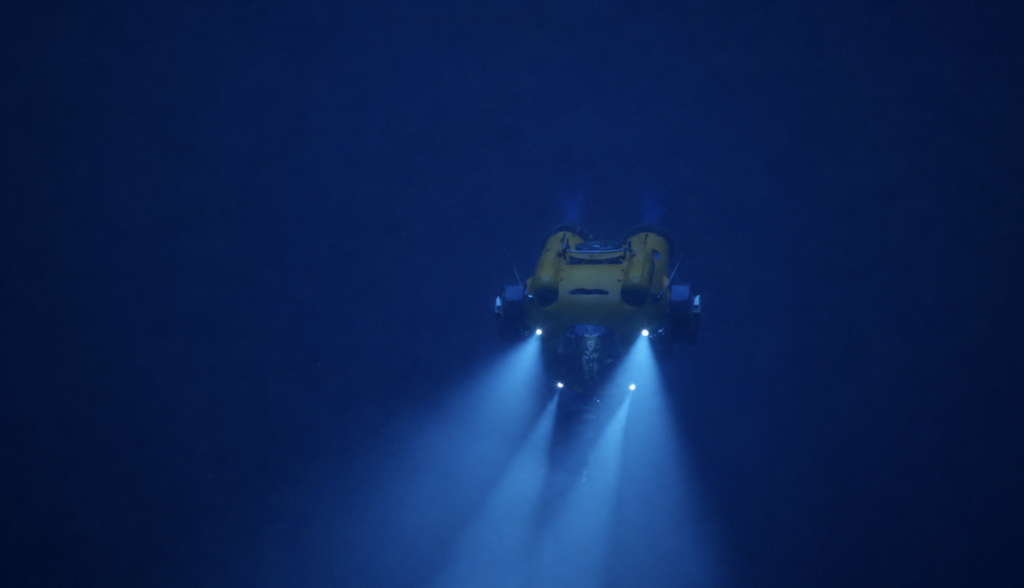
Any attempt to operate here would require highly specialized submarines and reinforced equipment designed to survive extreme compression. Human presence would be limited to short, carefully controlled missions inside pressure resistant vessels.
But drilling adds a completely new layer of complexity.
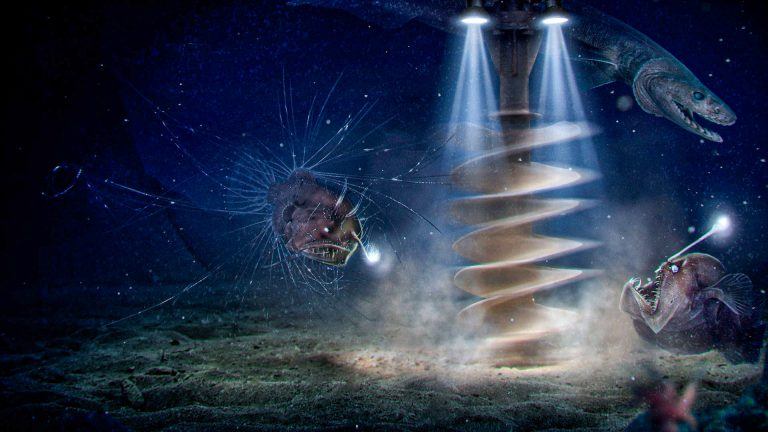
Before any drilling could begin, engineers would face the challenge of stabilizing equipment on an uneven and unfamiliar seafloor. Unlike land based drilling sites, there is no solid foundation that can easily support massive structures. Everything would need to be anchored in shifting sediment under crushing pressure.
On top of that, visibility is almost nonexistent. Artificial lighting would be essential, as no natural sunlight reaches this depth. Every operation would take place in complete darkness, guided only by sensors and remote systems.
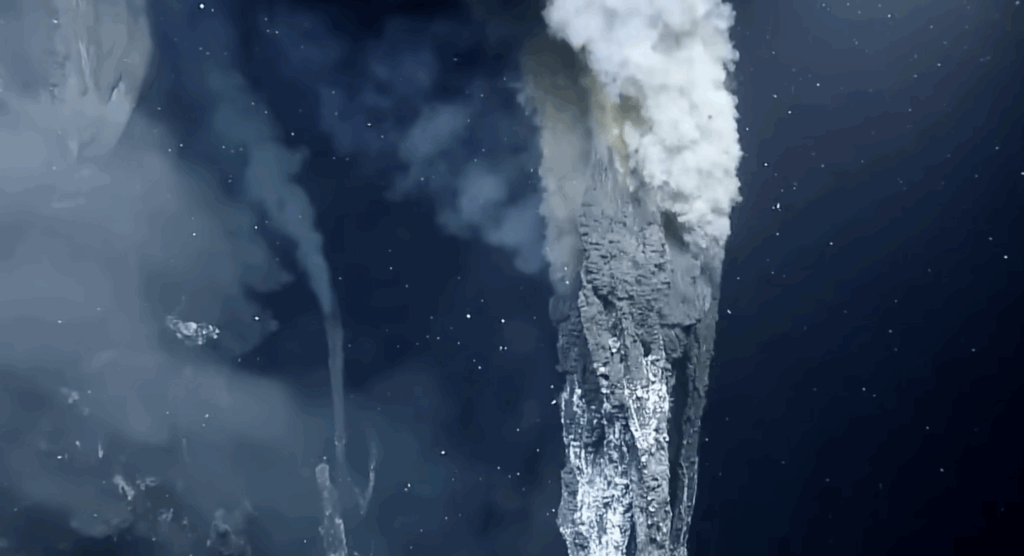
As drilling progresses, conditions beneath the seafloor begin to raise even more questions. The ocean crust is made primarily of dense igneous rock, formed from ancient volcanic activity. This material is extremely hard and rapidly wears down drilling equipment, requiring constant maintenance and replacement of drill components.
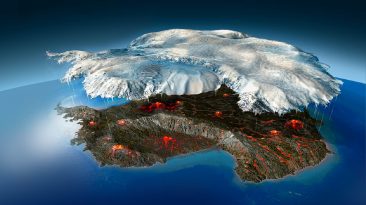
We already know from deep sea research that temperature increases significantly beneath the ocean floor. In some subduction zones, drilling has revealed temperatures exceeding 120 degrees Celsius just a short distance below the seabed.
This means that any attempt to go deeper would require not only pressure resistant systems, but also heat resistant technology capable of surviving extreme geothermal conditions.
Another major issue is navigation. At such depths, even locating a drilled hole again becomes extremely difficult. The environment shifts slowly, sediments move, and visibility is nearly zero. Without precise markers and guidance systems, even a successful drilling site could be lost.
The challenge becomes similar to trying to thread a needle in complete darkness, while both the needle and your hand are constantly moving.
In theory, the deeper you drill, the closer you get to Earth’s internal layers, but reaching the planet’s core is far more complicated than simply drilling straight down.
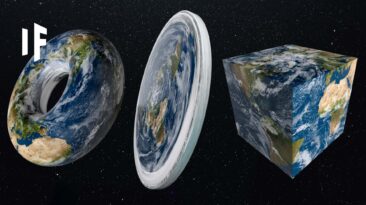
Earth is not a perfect sphere. Its shape is slightly wider at the equator, meaning the distance to the core varies depending on where you start. In fact, some locations are actually farther from the center of the Earth than others.
This means that even starting from the deepest point in the ocean does not necessarily bring you closer to the core in the most efficient way. Paradoxically, other locations on Earth could offer a shorter path inward.
Ultimately, the Mariana Trench remains one of the most extreme and least understood environments on our planet. Even with modern technology, the idea of drilling beneath it pushes the limits of engineering, physics, and imagination.
It is a reminder that even on Earth, there are still places that remain almost entirely beyond human reach.