There is a thick, jelly like substance packed throughout the body of one particular animal, and it may be the closest thing science has found to a fountain of youth.
Your body makes a version of it too. Just nowhere near enough, and not the same kind.
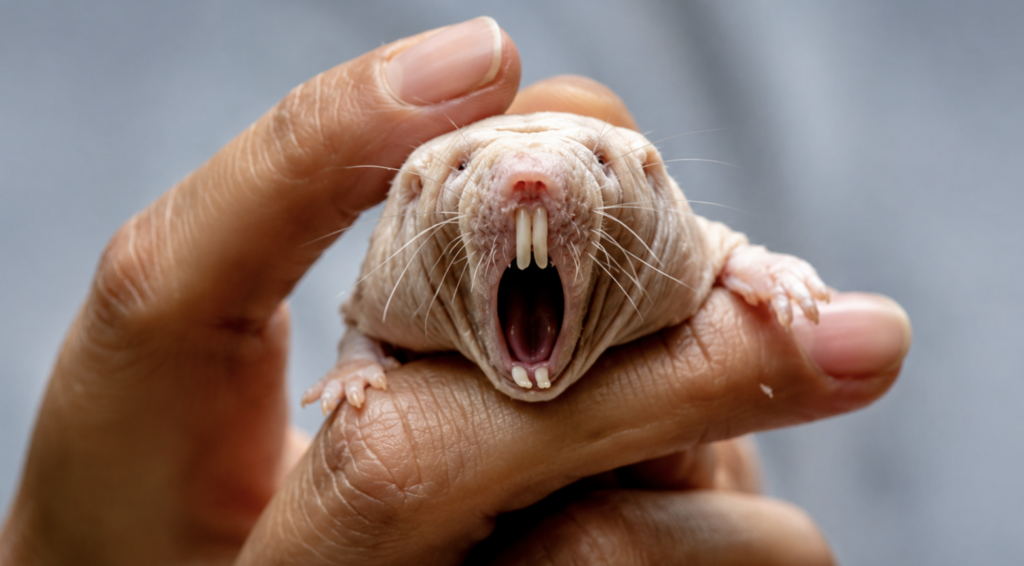
The animal in question is not majestic. It is a naked mole rat: wrinkled, nearly hairless, with teeth that stick out at angles evolution should apologize for. It regularly appears on lists of the ugliest creatures alive.
It is also a biological mystery that has occupied scientists for decades.
What if reaching 150 years old stopped being fiction? What if aging slowed dramatically, cancer became rare, and your body repaired itself far more efficiently than it does now? Nobody has found a true fountain of youth. But the clues keep leading back underground, to this strange little rodent.
Start with the number that first caught everyone’s attention.
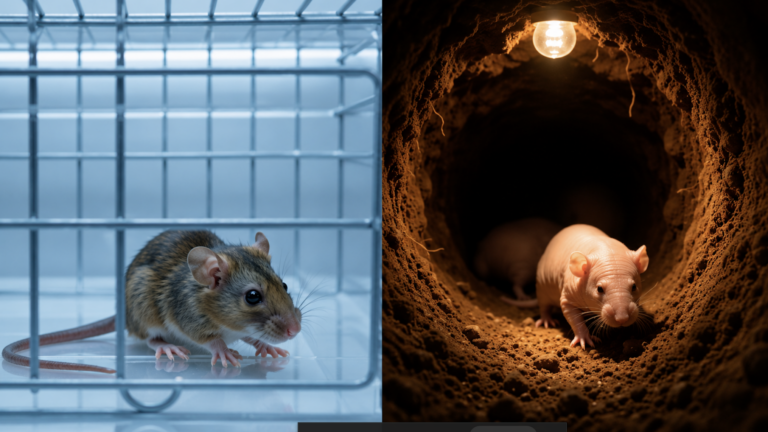
A typical mouse lives a few years. A naked mole rat can live for more than 40.
That alone would be remarkable. But they do not simply survive longer, they stay healthy while doing it, showing extraordinary resistance to the age related diseases that eventually catch up with almost every other mammal.
Cancer among naked mole rats is extremely rare. Not reduced. Rare.
So scientists went looking for the reason, and the trail led to that jelly.
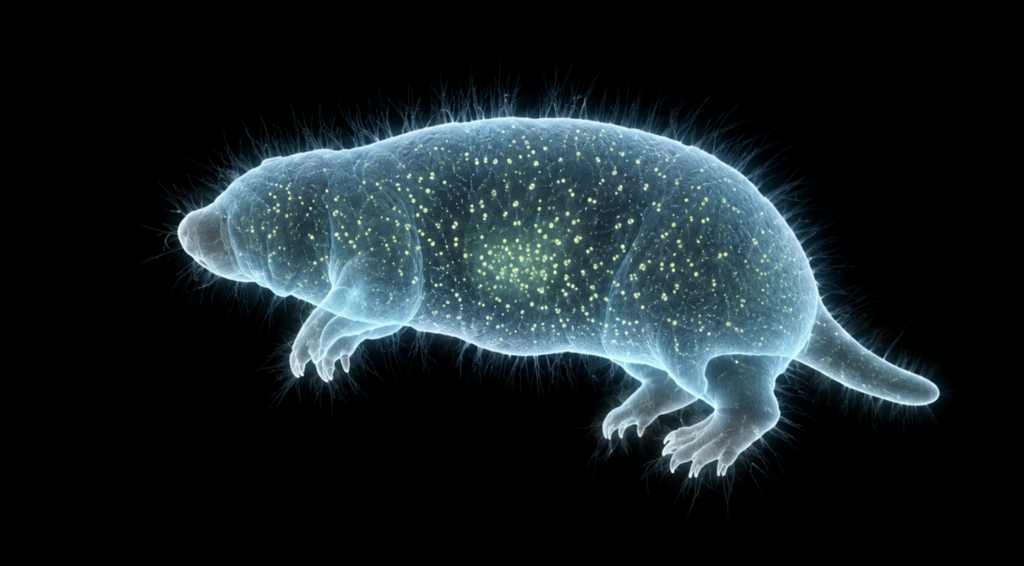
The substance is hyaluronic acid, a thick protective material found throughout the body, surrounding cells and tissues and helping them hold their structure and function. Humans have it. Most mammals have it.
Naked mole rats produce a special form of it, and they produce it in enormous quantities, far beyond anything human bodies manage.
Researchers suspected this was the shield protecting them from disease and the slow damage of aging. But suspicion is not proof, so they ran the obvious experiment.
They took the naked mole rat gene responsible for producing that enhanced jelly and put it into ordinary laboratory mice.
The modified mice lived longer than normal mice.
They also lived better. Chronic inflammation, which is linked to a long list of aging related diseases, dropped in the modified animals. They were less likely to develop cancer and other serious illnesses. Overall lifespan increased by roughly 4 percent.
Four percent sounds modest until you consider what it represents: a single borrowed gene measurably extending life in a mammal that never had it before. And the more important result was not the extra time at all. It was that the mice were healthier throughout it, which suggests science may be able to improve lifespan and quality of life together rather than trading one for the other.
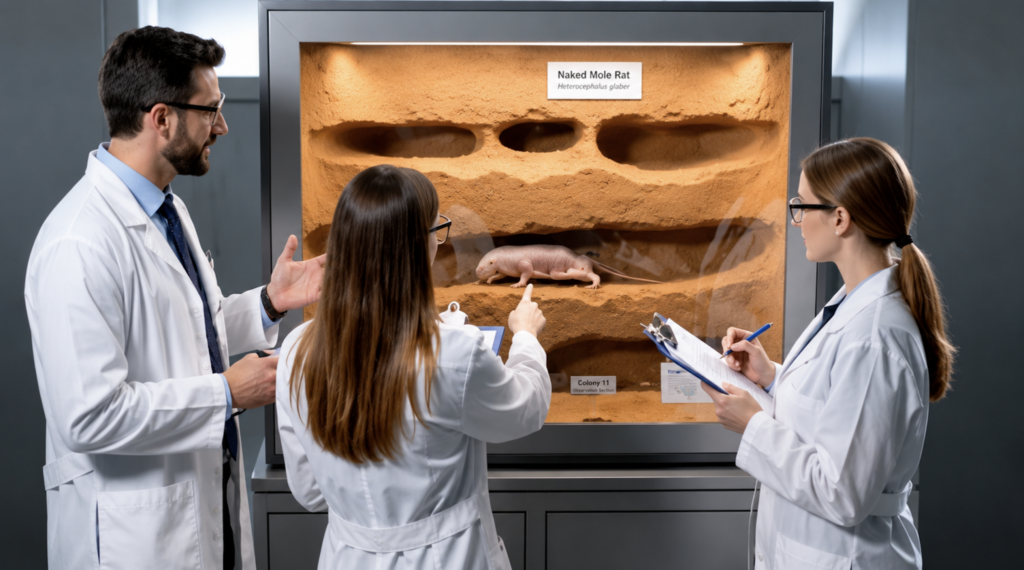
And the jelly is only part of what makes this animal unusual.
Researchers have also found that naked mole rats possess remarkably efficient cellular repair systems. Their bodies seem unusually good at spotting damage inside cells and fixing it before it accumulates into something dangerous. That constant maintenance may be another pillar holding up their resistance to aging and disease.
Understanding those mechanisms is where the real prize sits.
Therapies inspired by naked mole rat biology could eventually help humans heal injuries more effectively, guard against cancer, and potentially slow aging itself. Some researchers go further, speculating that this work could feed into regenerative medicine capable of restoring damaged tissues or even organs.
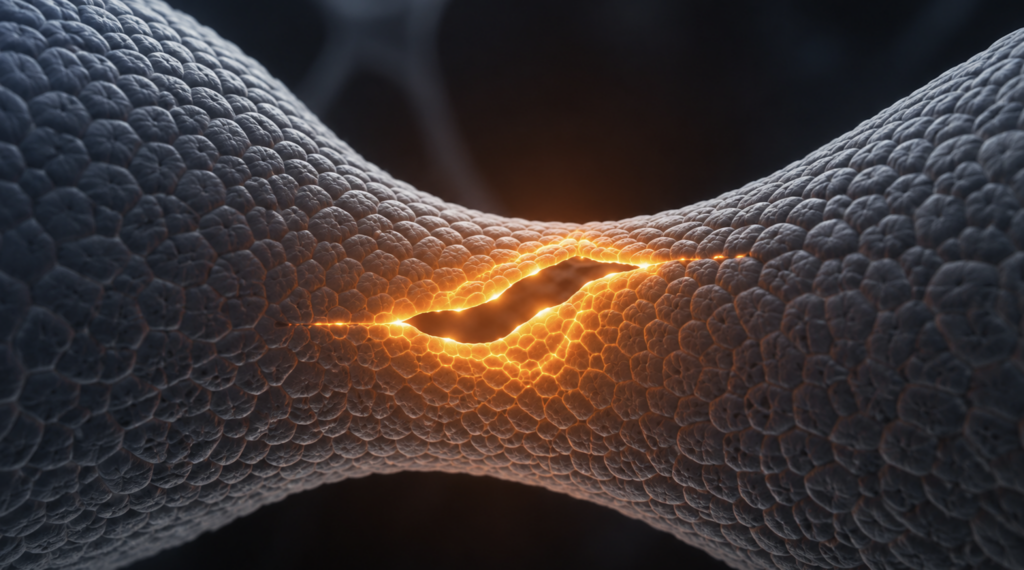
Now the honest part.
A very long road separates a modified mouse from a human treatment. Results in mice frequently fail to translate to people, and scientists still have enormous gaps in their understanding of how aging actually works. Nobody should expect a longevity pill because of one gene transfer.
But the direction of the evidence is genuinely exciting.
Because the lesson of the naked mole rat is that the answer was never going to arrive from a mythical spring or some futuristic machine. It was sitting inside an ugly, wrinkled rodent in a tunnel, quietly living four decades while producing a substance we barely make.
We spent centuries looking for the secret in the wrong places. It turns out it may be a jelly, and the animal that has it never needed to search for anything.
If researchers can translate what it does into human medicine, 150 years might stop being a dream and start being a target.