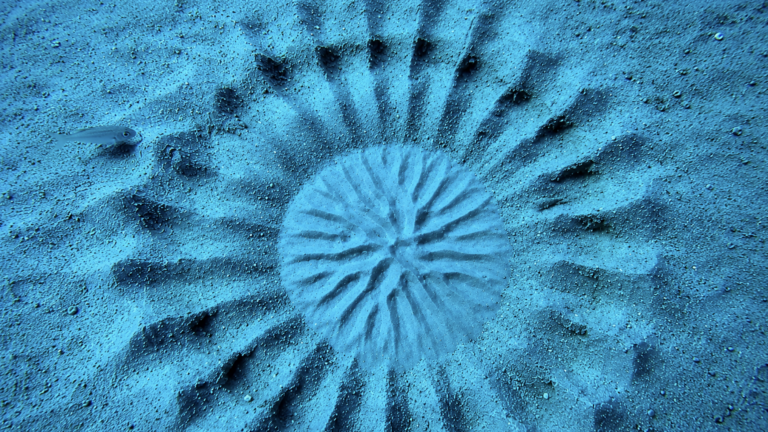
Imagine diving deep beneath the ocean’s surface and coming across a perfectly crafted circular pattern etched into the seafloor. With its intricate ridges, geometric symmetry, and decorative details, it looks less like something created by nature and more like a work of art designed by humans.
When Japanese divers first discovered these mysterious formations in 1995, they were baffled. Some speculated that the circles were the result of unusual geological activity, while others jokingly wondered whether extraterrestrials might somehow be involved.
For years, the mystery remained unsolved.
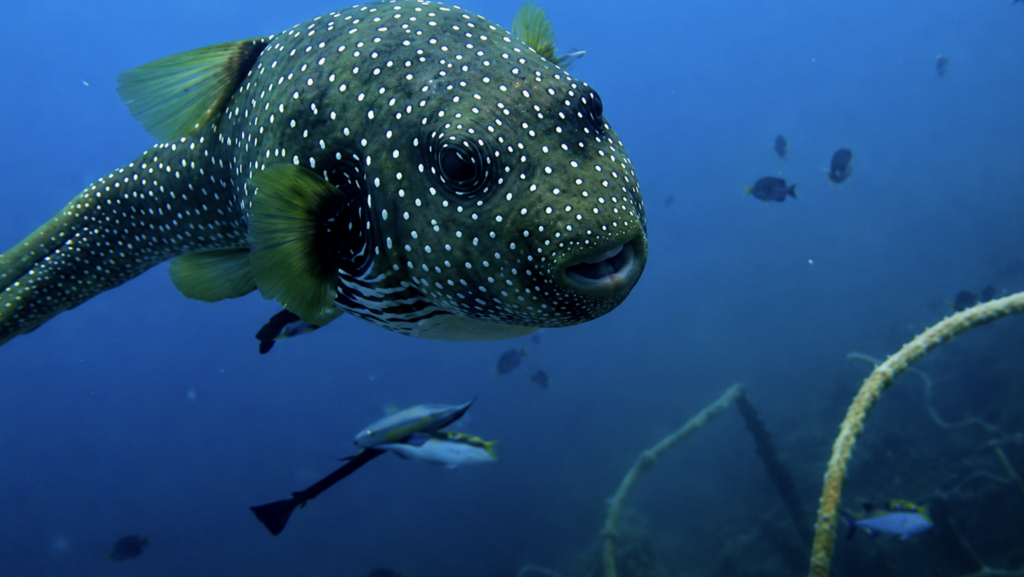
Then researchers finally caught the creator in the act, and the answer was far more surprising than anyone expected. The artist behind these underwater masterpieces turned out to be a small white spotted pufferfish.
Despite its modest size, the male pufferfish creates one of the most remarkable structures in the animal kingdom. Using nothing more than its fins and determination, it carefully sculpts enormous circular nests in the sand. These formations can reach nearly two meters in diameter, making them many times larger than the fish itself. Constructing a single circle can take up to ten days of continuous work.
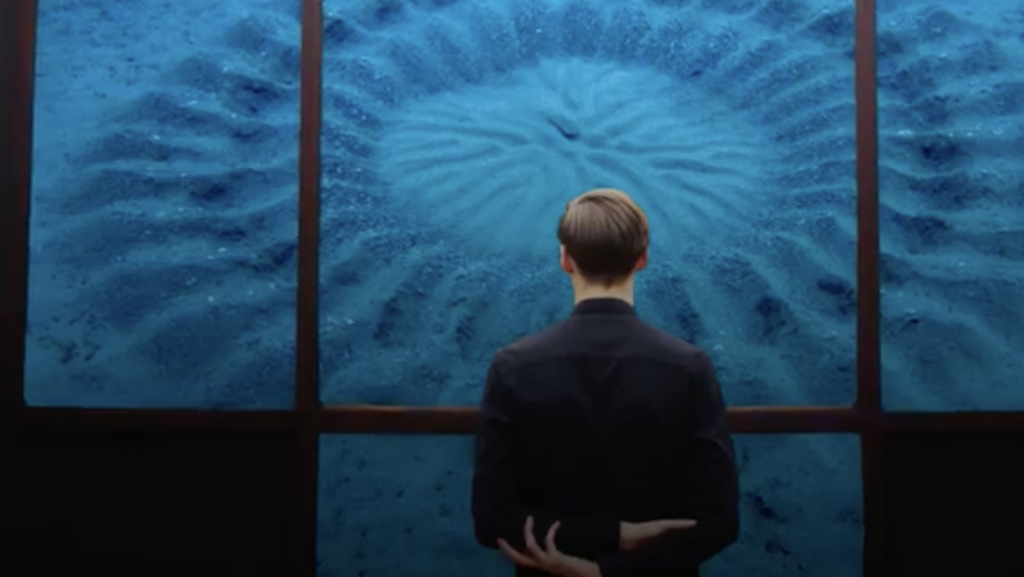
The pufferfish swims back and forth across the seafloor, using its pectoral, anal, and tail fins to push sand into carefully arranged ridges and valleys. It then decorates parts of the structure with small shells and fragments of coral. The result is an astonishingly complex design that appears almost too perfect to have been made by a fish.
At first glance, it seems like an incredible amount of effort for something so temporary. Ocean currents will eventually erase the structure, leaving no trace behind. Yet for the pufferfish, these elaborate circles serve a critical purpose.
Every breeding season, male pufferfish construct these nests to attract females. Once the circles are completed, females arrive to inspect them. The quality of the nest can determine whether a male succeeds in finding a mate. If a female approves of what she sees, she will choose the male and lay her eggs in a specially prepared area at the center of the circle.
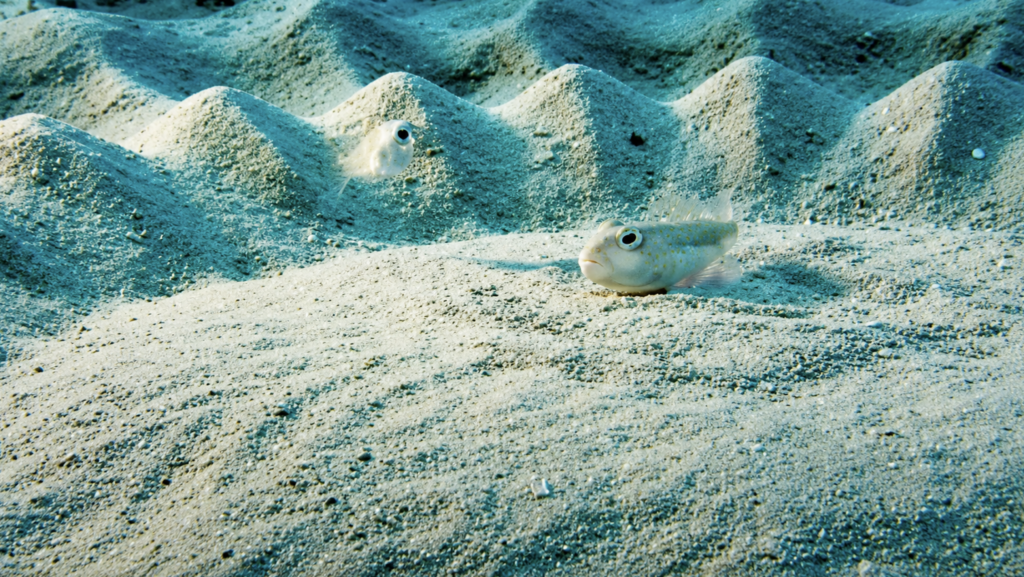
After the eggs are deposited, the female leaves. The male then fertilizes the eggs and remains behind to guard them. He protects the developing offspring until they hatch, after which he abandons the nest and the ocean gradually reclaims his creation.
The white spotted pufferfish is not the only animal known for producing elaborate displays to attract mates. Birds such as bowerbirds famously construct decorative structures and collect colorful objects to impress females. What makes the pufferfish especially remarkable, however, is that its creations are not just beautiful. They are also highly functional pieces of engineering.
Scientists discovered that the intricate ridges and grooves surrounding the nest perform an important role. Rather than manually gathering fine sediment and placing it in the center, the fish designs the structure so that ocean currents do the work for him. The circular pattern channels water in a way that naturally carries fine particles of sand toward the middle of the nest, creating an ideal environment for eggs.
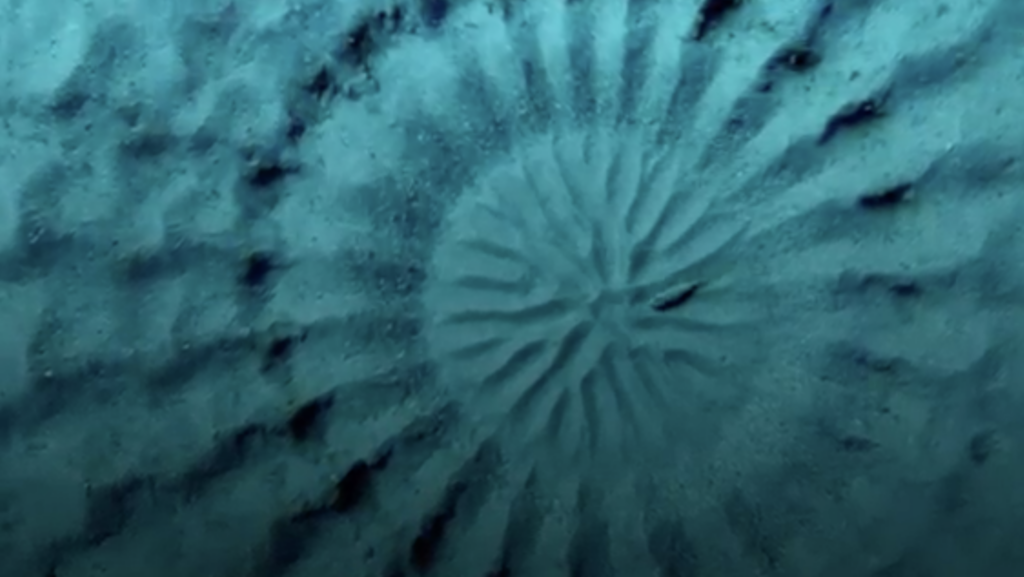
The design also helps protect the developing offspring. The peaks and valleys around the circle slow water movement in the center by as much as 25 percent. This reduction in current creates a calmer, safer area where eggs are less likely to be disturbed by strong underwater flows.
Because the nests are so large compared to the size of the fish, researchers believe their scale may serve another important purpose. Deep underwater, visibility is often limited, and individual fish can be separated by considerable distances. A large structure may simply make it easier for females to locate potential mates across the vast seafloor.
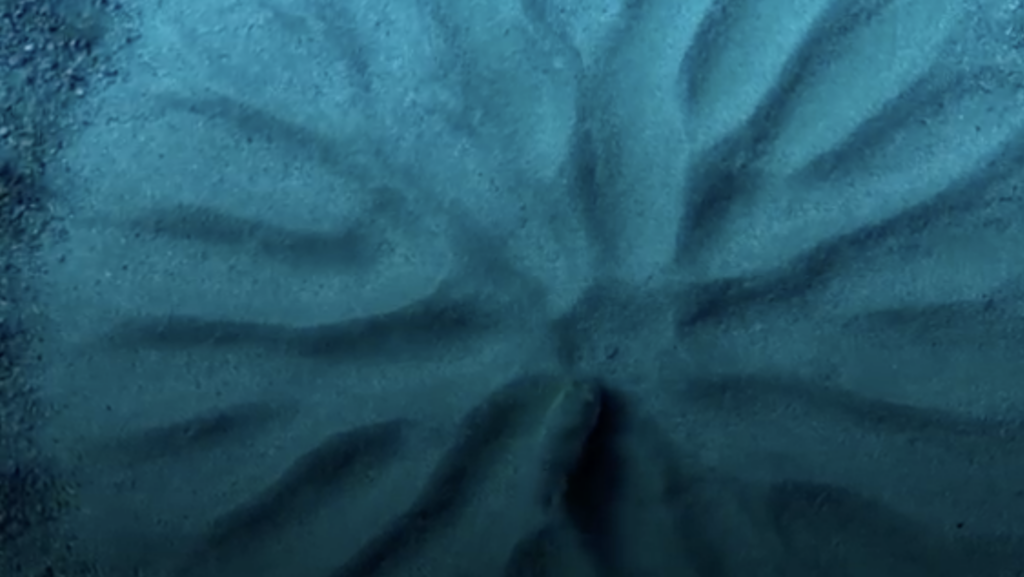
Even so, many questions remain unanswered. Scientists still do not fully understand what influences a female’s choice when she evaluates a nest. Do females prefer more symmetrical designs? Are they impressed by a male’s construction skills? Or do they care only about the fine sand collected in the center where the eggs will be laid?
Current evidence suggests that the quality of the sediment may be more important than artistic flair. Yet regardless of the reason, the white spotted pufferfish continues to create some of the most extraordinary natural artworks ever discovered. Hidden beneath the waves, this tiny fish transforms ordinary sand into stunning geometric masterpieces, proving that one of nature’s greatest artists is also one of its most skilled engineers.