
Throughout history, certain murderers have committed crimes so horrifying that their names became permanently associated with fear. They often appeared ordinary on the surface, living among their communities while concealing violent secrets and leaving behind victims who had little warning of what was coming.
Some were eventually brought to justice after years of investigation, while others left questions that investigators and historians still debate decades later.
David Berkowitz became one of the most feared criminals in New York City during the 1970s. The gunman, later known as the Son of Sam, attacked young women and couples with a .44 caliber revolver.
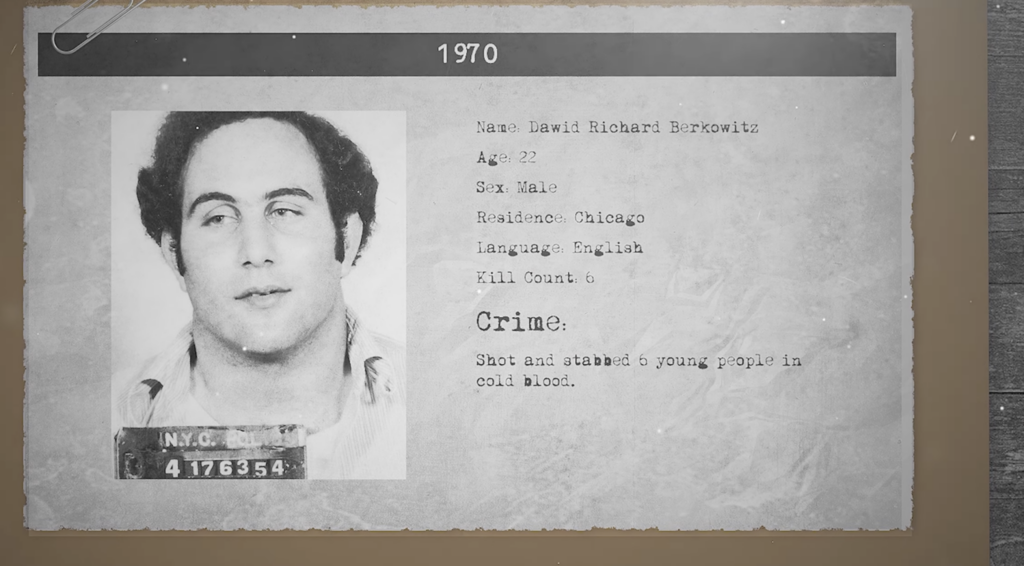
Between 1975 and 1977, Berkowitz killed six people and wounded seven others. He also sent disturbing letters to police and newspapers, signing them with the name Son of Sam and intensifying the panic spreading throughout the city.
His apparent preference for women with long, dark hair caused many New Yorkers to change their hairstyles out of fear. Berkowitz was finally arrested in 1977 and later claimed that a demon communicating through his neighbor’s dog had instructed him to kill.
He was diagnosed with paranoid schizophrenia and received multiple lengthy prison sentences.
H.H. Holmes became notorious for constructing one of the most infamous buildings in American criminal history. After studying medicine, Holmes settled in Chicago and created a hotel containing concealed rooms, passages, and other features that investigators later associated with his murders.

The property eventually gained the nickname “Murder Castle” after several people connected to the building disappeared. Holmes confessed to killing 29 people, although the actual number of victims remains uncertain and may have been considerably greater.
He was convicted of murder and executed in 1896, becoming one of the earliest American criminals to gain widespread notoriety as a serial killer.
Ted Bundy demonstrated how easily a seemingly respectable appearance could conceal a violent criminal. During the 1970s, he traveled across several states and frequently approached young women by pretending to need assistance.

Bundy eventually confessed to approximately 30 murders, although investigators have long suspected that the true number was higher. His ability to appear intelligent and charming helped him avoid suspicion for years.
He escaped from custody twice before authorities finally captured him again. Bundy was convicted and sentenced to death, and in 1989 he was executed in Florida.
John Wayne Gacy was another murderer who managed to maintain an outwardly ordinary life. He participated in community activities and sometimes entertained children at charity events while secretly committing horrific crimes.

Gacy targeted young men and sometimes attracted victims by offering them work. When investigators searched his Illinois home in 1978, they uncovered the remains of numerous victims hidden on the property.
He was ultimately convicted of murdering 33 people. The case earned him the infamous nickname “Killer Clown,” and after years on death row, Gacy was executed in 1994.
More than a century earlier, London had been gripped by another terrifying mystery. In 1888, an unidentified murderer known as Jack the Ripper attacked women in the Whitechapel district.

At least five women were killed during the series of crimes, and the brutal nature of the attacks generated enormous public fear. Police conducted an extensive investigation but never officially established the killer’s identity.
In later years, several suspects were proposed, including Aaron Kosminski. Claims involving DNA evidence have attempted to connect him to the crimes, but the evidence remains disputed and many researchers continue to regard the case as unsolved.
Jeffrey Dahmer became responsible for one of the most disturbing criminal cases of the late twentieth century. His murders began in 1978 and continued until 1991, when his crimes were finally exposed.

Dahmer killed 17 young men and committed horrific acts involving their remains. His crimes might have continued longer if one intended victim had not managed to escape and alert authorities.
Police arrested Dahmer soon afterward, leading investigators to uncover evidence of years of killings. He received multiple life sentences but was murdered by another prisoner in 1994.
Richard Ramirez brought terror to California during the 1980s. The criminal became known as the Night Stalker after entering homes at night and attacking people while they were asleep.

His crime spree between 1984 and 1985 included 13 murders along with numerous other violent offenses. Authorities eventually connected Ramirez to the attacks through fingerprint evidence, bringing the widespread manhunt to an end.
He was sentenced to death and remained on death row for decades. Ramirez eventually died from cancer in 2013 before his sentence could be carried out.
Perhaps one of the most shocking cases involved Harold Shipman, a physician whose profession gave him access to people who trusted him completely. Rather than protecting his patients, investigators concluded that he had secretly killed many of them.

Shipman primarily targeted elderly patients and used lethal injections of morphine to cause their deaths. Suspicion eventually grew after concerns surrounding a victim’s will prompted authorities to examine Shipman’s medical records and practices.
He was convicted of 15 murders, but a later inquiry concluded that he may have been responsible for more than 200 deaths. Shipman died by suicide in prison in 2004.
Each of these cases reveals how long violent criminals could sometimes operate before authorities discovered the truth. Their crimes changed investigations, terrified communities, and left behind questions that continue to attract attention.
Even when a killer was eventually identified, the full extent of the crimes was not always clear. In cases such as Jack the Ripper, the identity of the person responsible remains uncertain, showing that some mysteries can survive for generations.