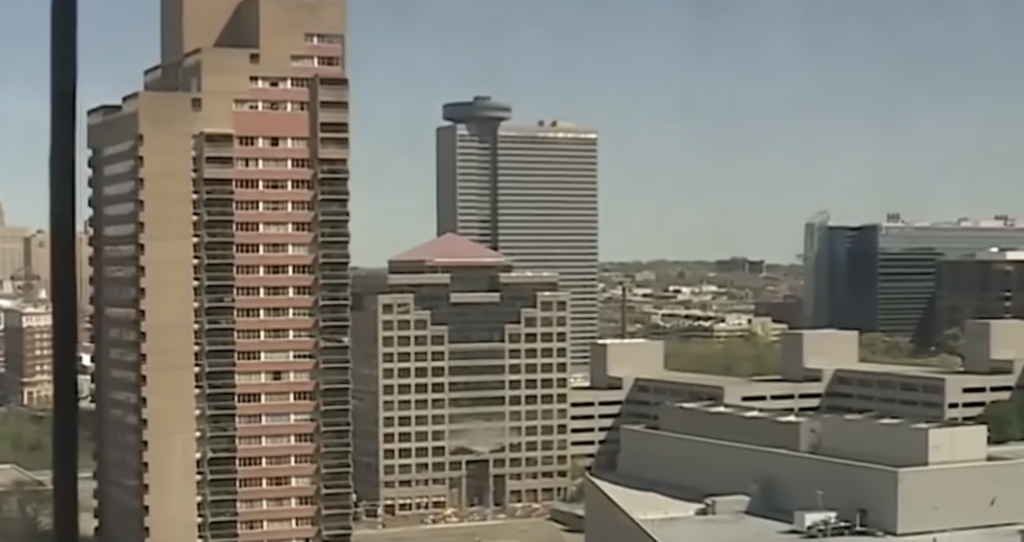
In the summer of 1981, the Hyatt Regency Hotel in Kansas City was one of the most exciting places in the city. Its massive lobby, elegant design, and famous suspended walkways made it a symbol of modern architecture.
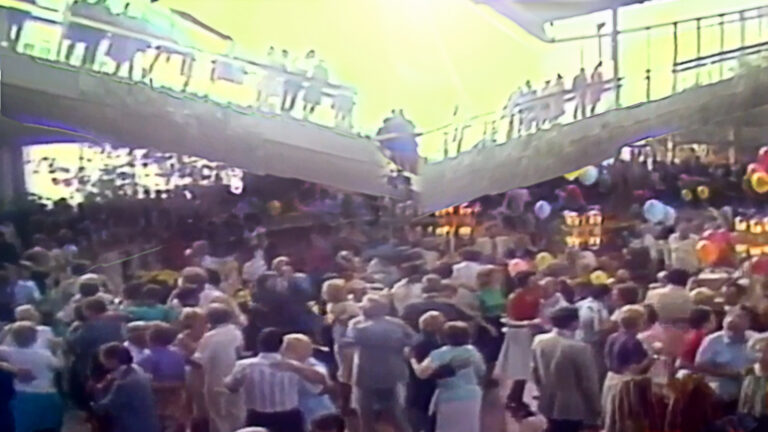
Every Friday night, hundreds of people gathered inside the atrium for dance parties. Couples filled the floor while guests watched from the skywalks hanging above. The atmosphere was electric, and nobody knew that a hidden design flaw was about to turn a celebration into one of the deadliest structural failures in American history.
On July 17, 1981, around 7 p.m., the hotel was packed. A band played music from the big band era as guests danced below the three large skywalks stretching across the lobby.
Dozens of people stood on the walkways, enjoying the view of the crowd below. Then, two loud cracking sounds echoed through the atrium.
Seconds later, two of the skywalks collapsed.
Around 70 tons of steel and concrete came crashing down onto the people below. The falling structure crushed hundreds of guests instantly, trapping survivors beneath massive pieces of debris.
The celebration turned into chaos.
People screamed for help as broken metal, concrete, and bodies covered the lobby floor. Those who escaped tried desperately to lift the wreckage, but the weight was impossible to move.
A survivor called emergency services, describing a scene of unimaginable horror. Rescue workers arrived to find hundreds of people trapped beneath the collapsed walkways.
Many victims were pinned beneath the bodies of friends and family members. Some survivors could hear people calling for help but had no way to reach them.
The disaster became even more dangerous when the collapse damaged water pipes inside the hotel. Water began pouring into the lobby, flooding the area where victims were trapped.
Rescuers now faced a terrifying choice. They had to save those who still had a chance of survival while knowing others could not be reached in time.
The debris was so heavy that normal rescue equipment was not enough. Emergency crews used powerful tools, including chainsaws, to cut through the wreckage and free trapped survivors.
A makeshift hospital was created outside the hotel. The lawn became a treatment area, while the dead were moved to another part of the building.
After more than six hours trapped beneath the rubble, 11-year-old Dalton Grant and his mother were finally rescued. The crowd watching the rescue erupted in applause. After hours of death and destruction, they had found a sign of hope.
But the rescue operation continued through the night.
Another survivor, Mark Williams, spent more than nine hours trapped under a massive concrete slab. When rescuers finally reached him, he was the last person pulled from the wreckage.
In total, 114 people lost their lives, and more than 200 others were injured. The tragedy left survivors, rescue workers, and the entire city permanently changed.
As investigators searched for answers, they discovered the disaster was not caused by a natural event. It was the result of a critical design mistake.

The original plan called for each skywalk to be independently supported from the roof. However, the design was changed during construction. Instead, the second-floor walkway was attached to the fourth-floor walkway, forcing one structure to carry the weight of another.
This small modification created a deadly weakness.
Investigators found that the connection system could not support the weight placed on it that night. A design intended to create a clean floating appearance had created a disaster waiting to happen.
The engineers responsible lost their professional licenses, but no criminal charges were filed.
The Hyatt Regency disaster changed construction safety forever. Stricter review procedures were introduced, and engineering inspections became more thorough.

The tragedy also changed how emergency responders handle disasters. Today, many first responders receive psychological support after traumatic events to help prevent long-term mental health struggles.
Decades later, survivors created a memorial honoring those who died.
The Hyatt Regency collapse remains a powerful reminder that even the smallest overlooked detail can have devastating consequences. On a night that began with music and dancing, a hidden flaw brought 70 tons of destruction crashing down in seconds.