Every six years, thousands of people gather in the Suwa region of Japan to watch men ride enormous logs down a mountainside.
Not metaphorically. They climb on top of tree trunks weighing several tons, hang on, and let gravity take over while the wood careens through mud and rock toward the bottom.
People have died doing this. They keep volunteering anyway, because being chosen for it is considered an enormous honor.
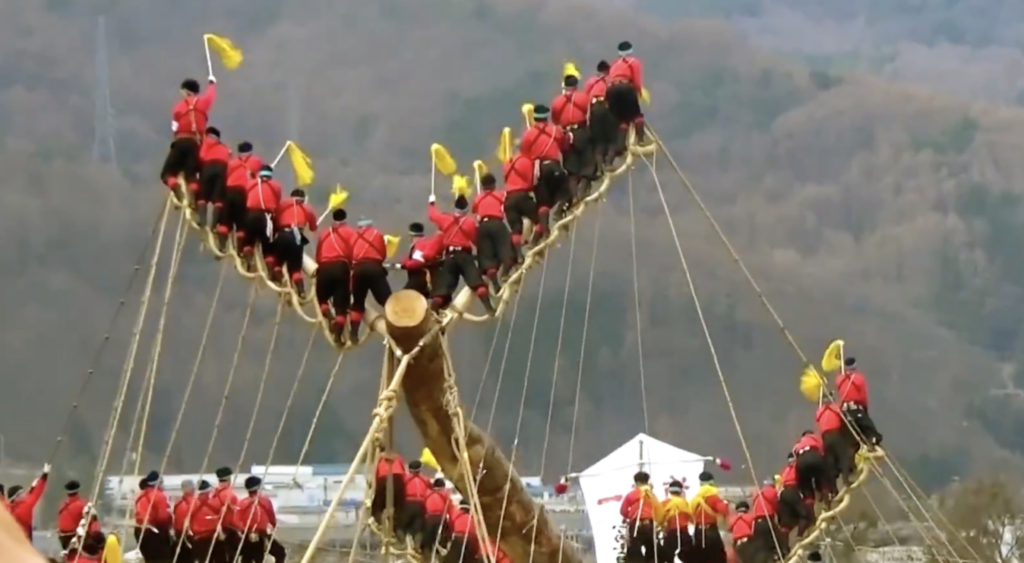
The event is the Onbashira Festival, a tradition roughly 1,200 years old and tied to the Shinto faith, held near the Suwa Grand Shrine about 200 kilometers from Tokyo.
The purpose is renewal. Every six years the shrines get new sacred wooden pillars, called Onbashira, and the entire festival exists to bring those pillars down from the mountains and raise them into place.
Moving them is where it gets dangerous.
It starts in the forest, where only fir trees meeting strict requirements are selected. Each must be at least 150 years old and taller than 17 meters. Once chosen, the trees are felled, stripped of branches and bark, and left to dry.
Sixteen giant logs get prepared in total.
The first phase is Yamadashi, when the trees are hauled out of the forest toward the town below. Hundreds of participants pull the trunks by hand using ropes while crowds cheer them along.
That part is exhausting. The next part is what made this festival famous.
Kiotoshi
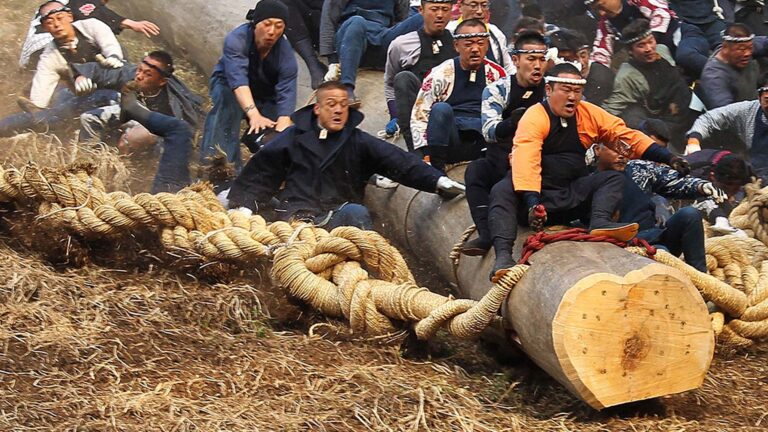
The logs are dragged to the top of a steep hill, riders climb aboard, and the whole thing is sent over the edge.
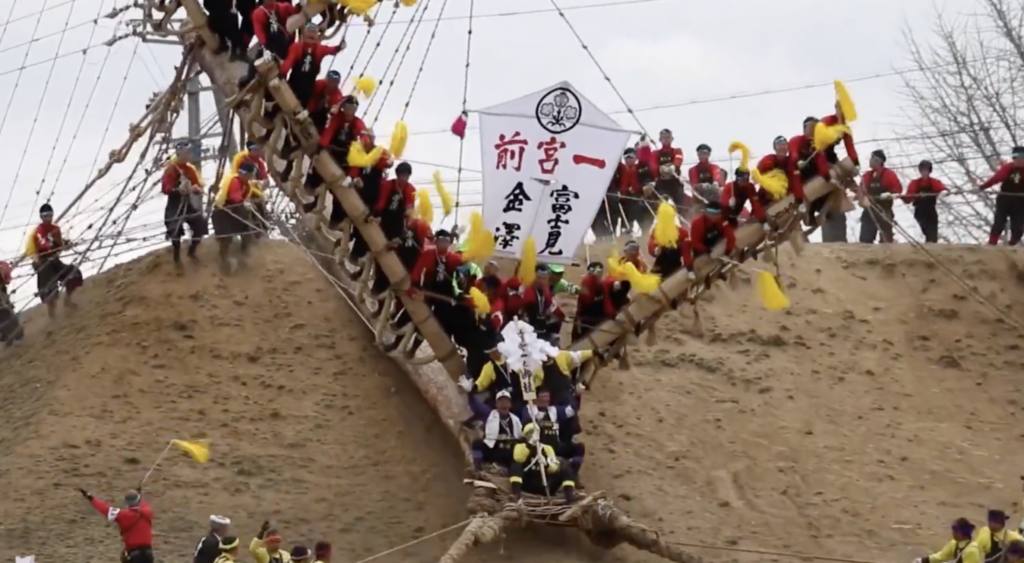
They accelerate downhill through mud and rocks, and some continue straight into freezing rivers at the bottom.
The trunks twist and spin unpredictably as they go, throwing riders around violently. People lose their grip and fall beneath the moving timber. Others get flung into the surrounding crowd or slammed into the ground at speed.
The death toll reflects that. Reports indicate people have died in seven of the last ten Onbashira festivals, with serious injuries ranging from broken limbs to head trauma occurring regularly.
Which raises the obvious question of how anyone survives it.
Community elders assess riders before allowing them to take part, generally choosing people based on fitness and experience. Beyond that, it comes down to grip, balance, and positioning.
Holding a log sounds simple until several tons of wood start sliding downhill and the forces involved turn extreme. Riders usually wear heavy duty work gloves for grip and protection.
Legs matter as much as hands. Experienced riders squeeze the trunk tightly between their legs with their feet planted slightly forward, using grooves and imperfections in the wood to steady themselves.
Leaning forward helps too, shifting the strain off the lower back and letting the legs absorb the impact. Lose balance for a second and it goes badly.
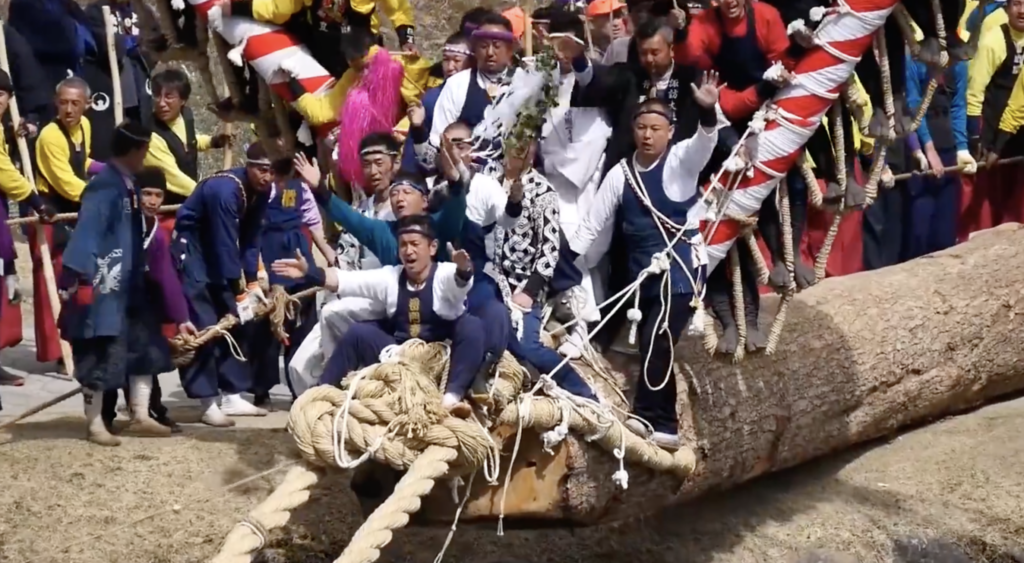
The worst place to sit is near the front. If the trunk digs into the ground or suddenly changes direction, anyone up there can be thrown directly into its path, and getting crushed becomes a real possibility.
If the log starts to roll, survival experts say the only move is pushing clear immediately.
Knowing how to fall properly is genuinely the difference between walking away and not. Participants are taught to tuck and roll away from the log rather than trying to catch themselves with their arms, since landing awkwardly means broken bones or being dragged back underneath.
And surviving the descent still isn’t the end of it.
Satobiki
In the final phase, the logs are raised upright at the shrine using ropes and manpower alone.
While that happens, selected participants stay perched on top of them.
This stage has killed people too. In 2016, a man died after falling from a raised pillar. During the 2010 festival, two people were killed when a guide wire snapped as workers were lifting one of the logs into position.
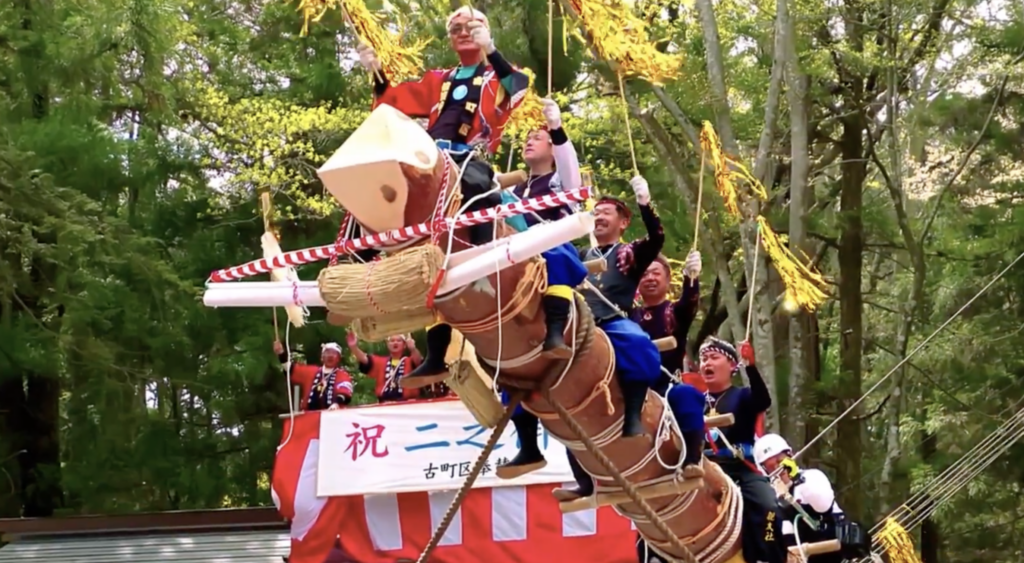
The danger grows with the height. Experts say that if someone starts losing their grip during the raising, letting go early is often the better option, because a shorter fall is far more survivable than a longer one.
Despite all of it, the festival is deeply respected across Japan.
For the people involved, this was never about recklessness. It’s about tradition, faith, courage, and belonging to a community. Families pass down stories about it across generations, and some people wait years for the chance to ride.
The crowds add their own risk, with thousands of spectators pressing toward the action for a better view while several tons of wood move unpredictably nearby.
Still, every six years, they come back. The sound of giant trees thundering down those mountainsides has been part of the Suwa region for over a thousand years, and it doesn’t look like stopping.