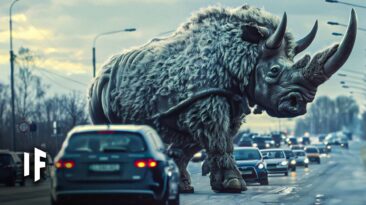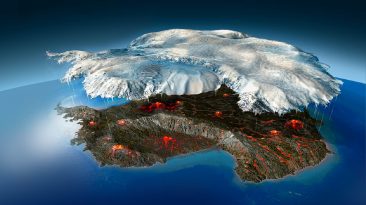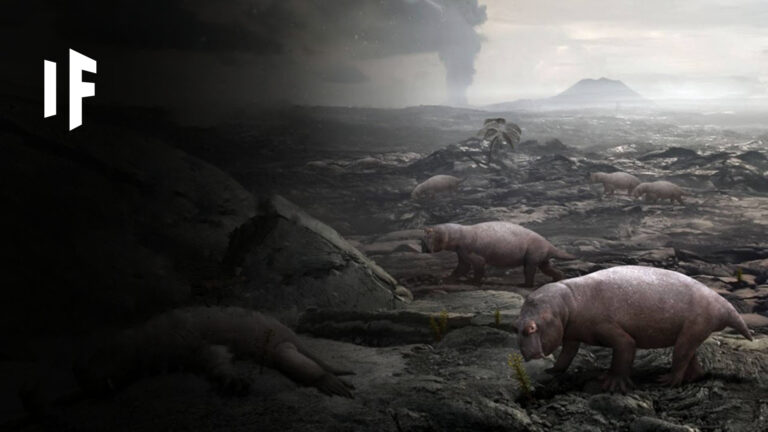
Stepping into Earth as it existed 200 million years ago would feel less like time travel and more like arriving on an entirely different world. There are no cities, no technology, and no sign that humans will ever exist. Instead, the planet is dominated by raw landscapes, extreme climates, and creatures that would later become legends.
At this point in history, Earth is still recovering from a massive extinction event that reshaped life completely. Entire groups of species disappeared, allowing new forms of life to evolve and dominate the planet. The result is a world filled with rapid experimentation in evolution, where survival is the only rule that matters.
One of the most striking differences is the shape of the land itself. The continents we know today are not yet separated. Instead, they are fused into a single supercontinent known as Pangaea. From what is now North America to Europe, Africa, and Asia, everything is connected in one enormous landmass.
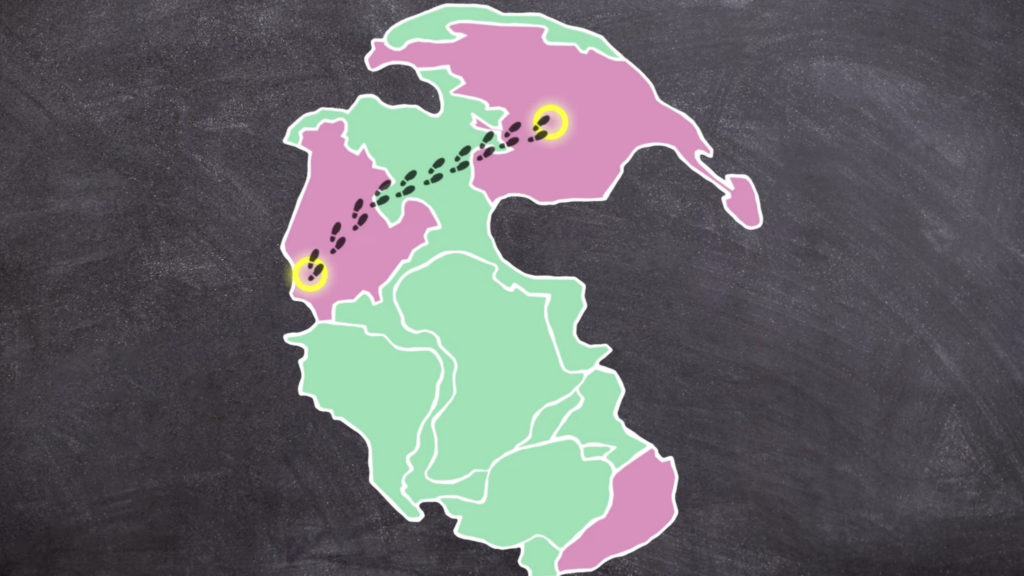
In theory, it would be possible to walk across vast distances that today require airplanes and oceans to cross. A journey from what is now California to France would be possible without ever encountering a sea barrier. However, the environment would be completely unrecognizable along the way.
There are no cities, roads, or human settlements. Instead, the landscape is filled with primitive forests, harsh deserts, and wide open ecosystems shaped by early geological forces. The world is still in the early stages of forming the environments that will eventually support modern life.
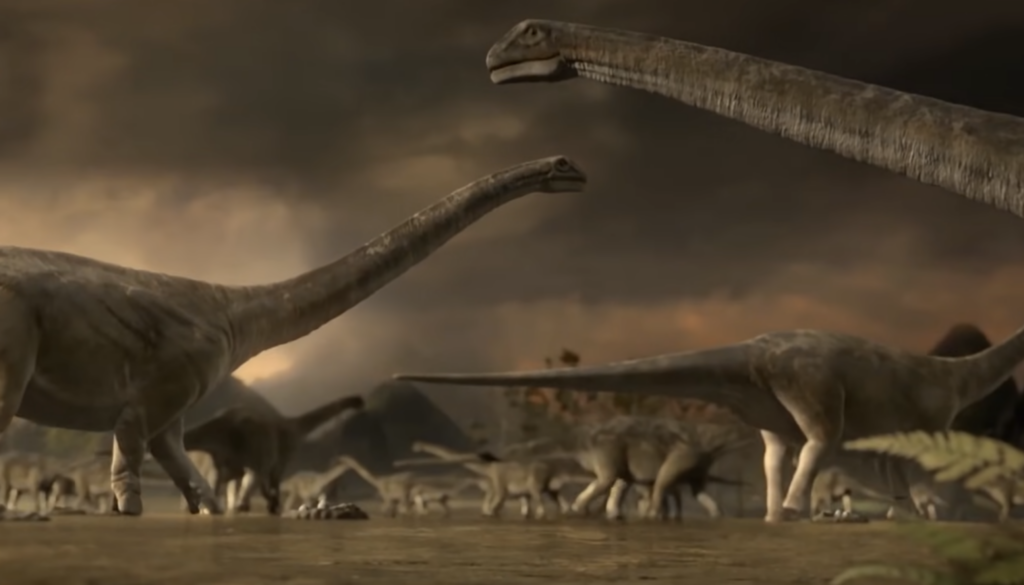
Life during this time is dominated by early dinosaurs and other prehistoric creatures. Some species are small and relatively harmless, but others are far more dangerous. Even early dinosaur species already show signs of becoming the dominant animals on Earth.
Smaller predators would not pose much threat to a human observer, but larger species would be an entirely different story. Some early herbivores and predators grow to enormous sizes, and survival in their presence would require constant awareness and caution.
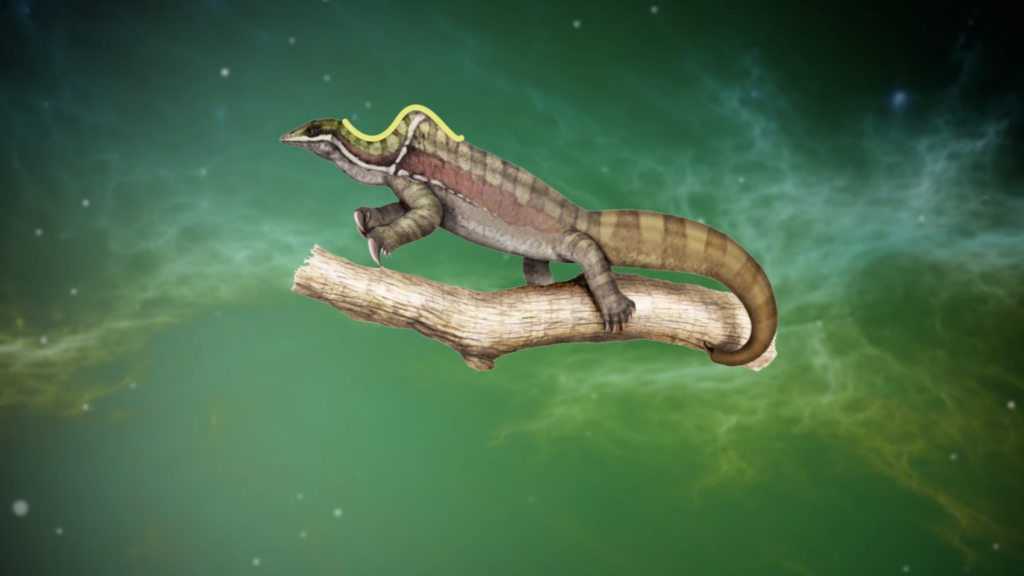
Alongside dinosaurs, the Triassic world also contains many unusual reptiles and early evolutionary experiments. Some species show features that resemble both reptiles and early birds, offering clues about how modern animals would eventually evolve.
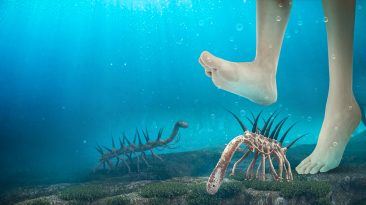
One example is Drepanosaurus, a strange creature with unusual limbs and body structure that does not fit neatly into modern classifications. These kinds of animals show how evolution was still experimenting with different survival strategies during this time.
The Triassic period lasts for tens of millions of years and represents a crucial stage in Earth’s biological development. It follows a mass extinction that removed a large percentage of life, opening ecological space for new species to emerge and diversify.
With fewer dominant predators in many regions, surviving species were able to expand rapidly into new environments. This allowed early dinosaurs to grow in number and size, eventually becoming the dominant land animals of the planet.
As you move across Pangaea, the environment changes dramatically depending on location. Coastal regions may be covered in forests and vegetation, while the interior of the supercontinent becomes increasingly dry and extreme.
Because of its enormous size, the center of Pangaea struggles to receive moisture from the surrounding oceans. This creates vast desert regions where rainfall is rare and temperatures can swing dramatically between day and night.
Surrounding this supercontinent is a massive global ocean known as Panthalassa. This ancient ocean covers most of the planet and plays a major role in shaping global climate patterns.
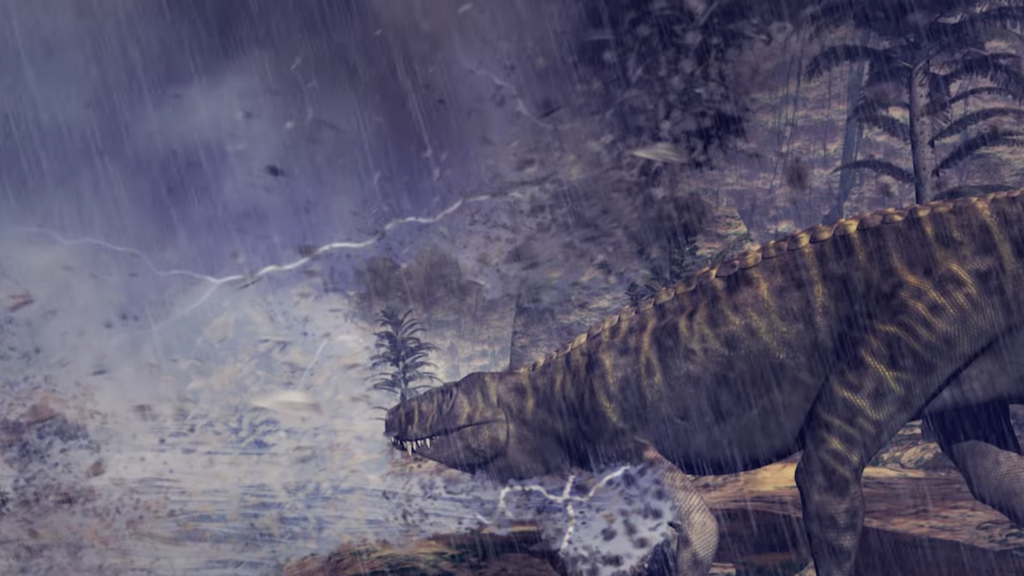
Storm systems forming over Panthalassa can grow to enormous strength due to the lack of land barriers. These powerful weather systems can travel long distances and impact the edges of Pangaea with intense force.
Over millions of years, Earth continues to evolve toward the world we recognize today. Later periods, such as the Jurassic, bring even more recognizable dinosaurs, including massive herbivores and iconic predators that dominate popular imagination.
This is the era where species like large sauropods and early large predators emerge, showing just how far evolution has progressed since the early Triassic world. Survival in such an environment would be extremely difficult for any outsider.
Even the idea of interacting with dinosaurs becomes questionable when considering their size, behavior, and environment. What may seem fascinating from a distance would likely be far too dangerous to experience directly.
Looking back at this ancient Earth, it becomes clear that the planet was once a completely different world. It was a place shaped by chaos, constant change, and evolutionary experimentation on a massive scale.
While it is tempting to imagine walking among dinosaurs, the reality of living in that time would be far more extreme and unpredictable than anything we experience today. It was a world built for survival long before it was ever a place for humans.