The world you know today would probably feel ancient to someone living 50 years from now. Think about how much life has changed over the past few decades. Smartphones replaced landlines, artificial intelligence can already generate images and write text, and technology that once seemed impossible has become part of everyday life.
Now imagine stepping into the year 2076.
You would still recognize Earth, but many parts of daily life might feel like science fiction.

The first thing you would notice is how people interact with technology. Looking down at a phone screen may seem as outdated as using a fax machine. Instead of carrying devices in their pockets, many people could wear technology directly on their bodies or use lightweight glasses that project information into their field of vision.
Navigation instructions, messages, and entertainment might appear instantly in front of your eyes. Artificial intelligence assistants could accompany people throughout the day, helping them work, learn, and make decisions.
Healthcare may also become much more personal and immediate. Rather than scheduling routine doctor appointments, people could use advanced scanners capable of monitoring their health continuously. Small wearable devices might identify illnesses long before symptoms appear and recommend treatments almost instantly.
People may also live longer than they do today. Improvements in medicine, nutrition, and disease prevention could push average life expectancy significantly higher. Reaching your eighties or even nineties may become increasingly common in many parts of the world.
Yet a longer lifespan would create new challenges.
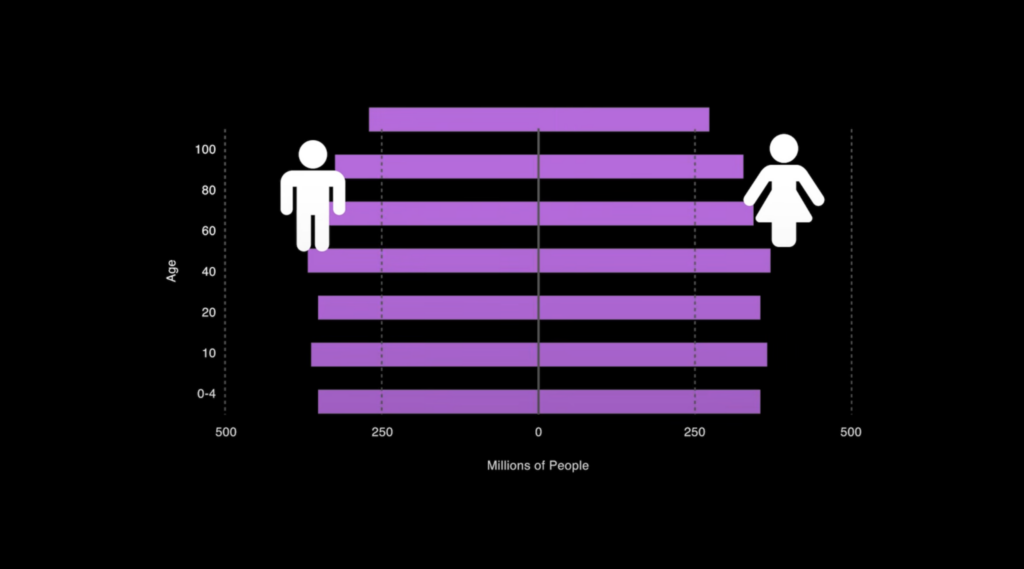
The age structure of society could look very different. Instead of having far more young people than elderly citizens, populations in many countries may become much older. There could be nearly as many retirees as children.
This shift would place enormous pressure on economies. Governments would have to support larger aging populations while maintaining healthcare and pension systems. Many people might work longer careers than previous generations simply because societies would need more experienced workers to remain active.
The job market itself could also be transformed by artificial intelligence and automation. Machines are already performing tasks that once required human workers. Fifty years from now, intelligent systems may handle everything from transportation and manufacturing to administrative work and certain medical procedures.
Rather than replacing every job, however, technology may change the kinds of skills people need. Creativity, complex problem solving, and interpersonal communication could become increasingly valuable.
At the same time, humanity will probably be managing another major challenge.
More people.

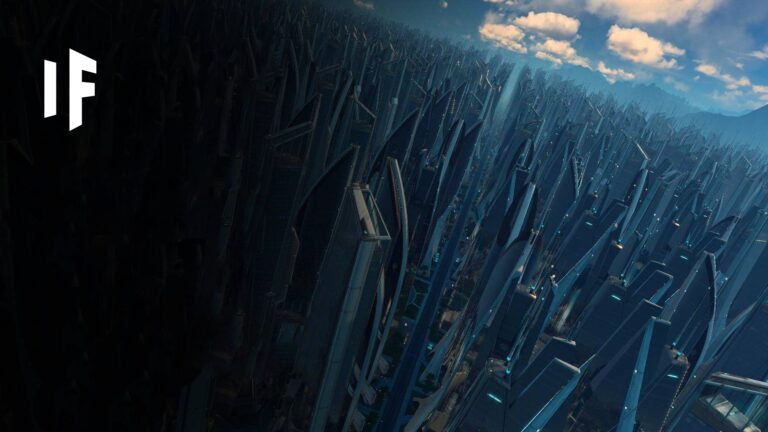
Large portions of the global population are expected to live in cities. Urban areas may become enormous interconnected regions filled with advanced transportation systems and highly efficient infrastructure.
However, growing populations place increasing demands on food, water, and energy supplies. Climate change could make agriculture more difficult in some regions, while rising temperatures and changing weather patterns may force communities to adapt in entirely new ways.
Coastal cities could face increasing threats from stronger storms and rising seas. Some areas may require extensive protective infrastructure, while others could experience gradual relocation as environmental conditions change.
Despite these concerns, the future may also bring remarkable achievements.
Humanity’s presence in space could expand significantly during the next fifty years.
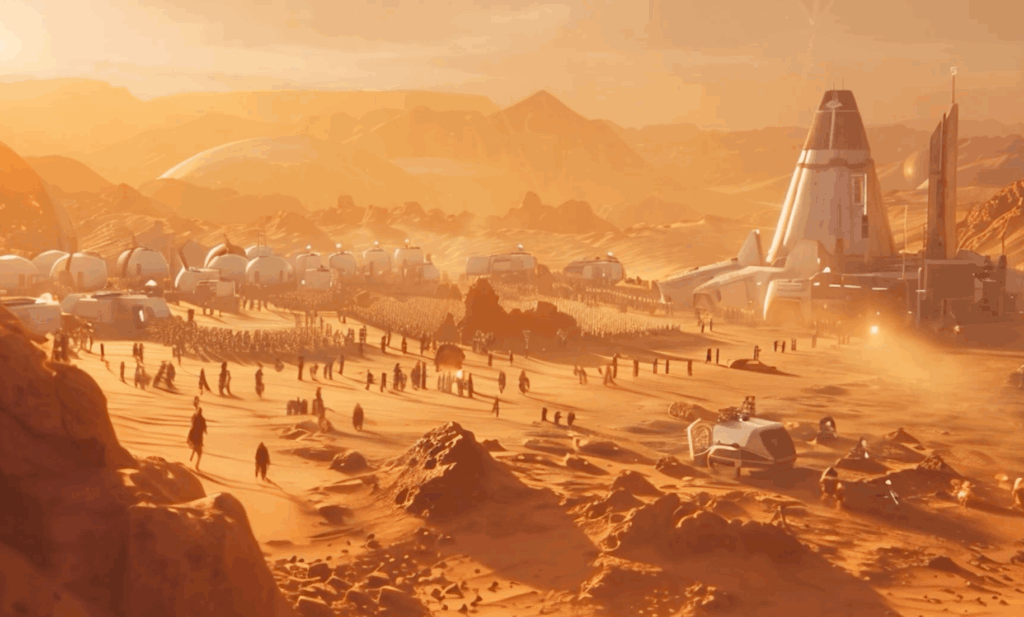
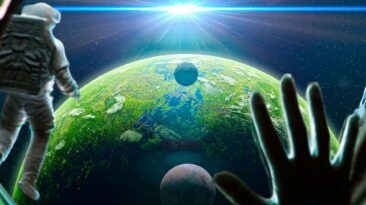
Permanent settlements on the Moon or Mars may begin appearing. Advances in rocket technology and life support systems could allow small communities to live beyond Earth for extended periods.
Scientists may also discover strong evidence that life exists elsewhere in the Universe. Even finding simple organisms on another world would transform our understanding of life itself.
Private companies and national space agencies could continue exploring nearby planetary systems and searching for worlds capable of supporting life.
Back on Earth, another revolution may be taking place inside the human body.
Medical technologies could allow people to replace damaged organs, restore lost senses, and improve certain physical abilities. Advanced artificial eyes may offer capabilities beyond normal human vision. New treatments might slow aspects of aging and significantly improve quality of life.
Genetics may become increasingly important as scientists develop better ways to understand inherited diseases and individual health risks. Medicine could become highly personalized, with treatments designed specifically for each person’s biology.

Artificial intelligence will likely become one of the most influential technologies of the future. Intelligent systems may work alongside humans in nearly every industry. They could assist scientists with research, help doctors diagnose illnesses, and manage complex transportation networks.
Rather than creating a world run entirely by machines, the next fifty years may be defined by collaboration between humans and increasingly capable technologies.
The future will undoubtedly bring difficult challenges. It may also deliver discoveries and innovations that are impossible to predict today. If you could travel fifty years into the future, you would probably find a world that feels both familiar and completely transformed.
And just like every generation before us, the people of that future world will probably look back at our time and wonder how we ever lived this way.