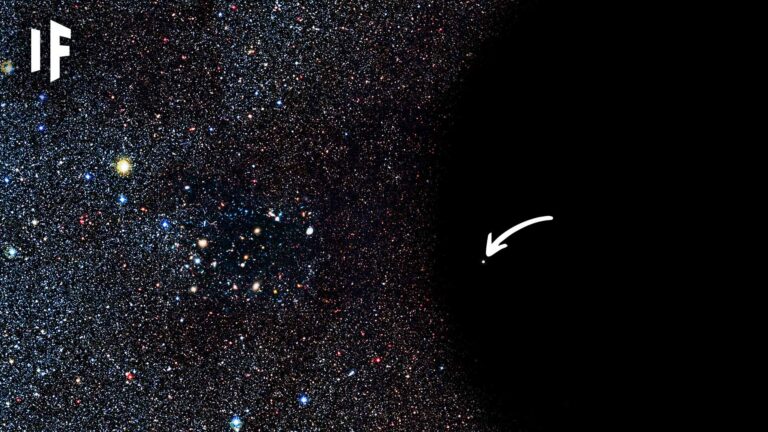
Space is famous for being unimaginably vast. Yet even among its endless distances, there are places that make the rest of the Universe seem crowded. One of those places is the Boötes Void, an enormous region so empty that drifting through it would feel like being completely cut off from everything that exists.
Located roughly 700 million light years from Earth, the Boötes Void sits in the direction of the Boötes constellation. The distance is difficult to comprehend. Our nearest major galactic neighbor, the Andromeda Galaxy, is about 2.5 million light years away. The Boötes Void lies around 280 times farther than that.
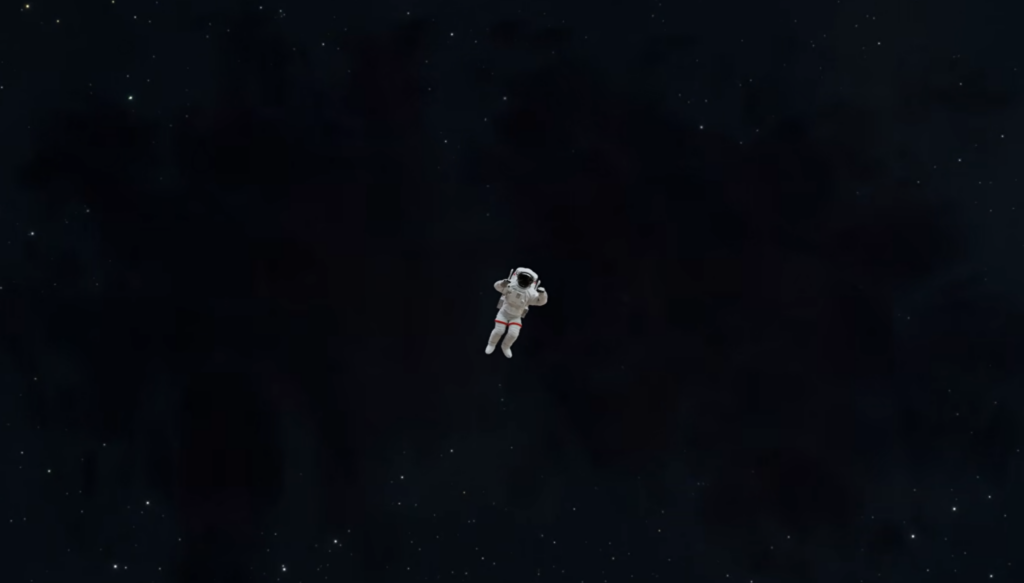
Even if humanity somehow built a spacecraft capable of traveling at the speed of light, the journey would still require 700 million years. Using today’s technology, the trip would take far longer than the current age of our civilization. Reaching it is essentially beyond our capabilities.
What makes this place truly remarkable is its size.
The Boötes Void stretches approximately 330 million light years from one side to the other. Crossing from one edge to the center would take around 165 million years even at light speed. Entire collections of galaxies could fit inside this enormous region countless times over.
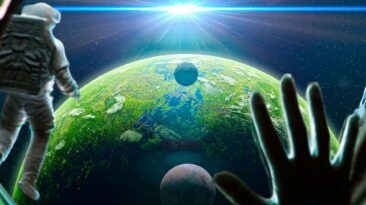
If you somehow found yourself inside this cosmic emptiness, there would be no dramatic sensation. You would not feel yourself entering the Void. There would be no invisible wall and no sudden change in gravity.
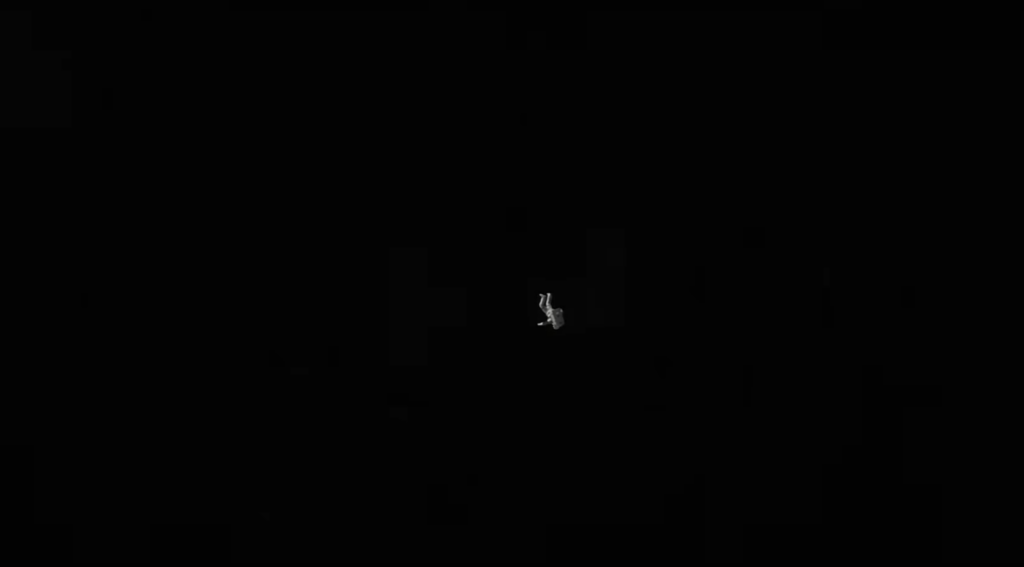
Instead, there would simply be almost nothing around you.
You would continue floating in microgravity exactly as astronauts do in deep space. The difference would be your surroundings. There would be very few nearby stars and almost no galaxies close enough to serve as reference points. Looking out into space, you would see darkness stretching in every direction.
The environment would also be incredibly cold. Temperatures would hover only a few degrees above absolute zero, around minus 270 degrees Celsius. In conditions like these, losing your spacecraft or source of light would be terrifying. Without landmarks, you would have no reliable way of knowing whether you were moving at all.
You could drift for years, centuries, or even millions of years without seeing anything change.
Despite its name, the Boötes Void is not completely empty. Scientists estimate that roughly sixty galaxies exist inside it. However, considering the Void’s enormous dimensions, these galaxies are separated by immense distances. Finding one by chance would be extraordinarily unlikely.
The discovery of the Boötes Void helped astronomers understand something surprising about the Universe. Matter is not spread evenly across space. Instead, galaxies gather into enormous filaments and clusters, forming a giant cosmic web. Between these structures lie gigantic regions with very little matter at all.
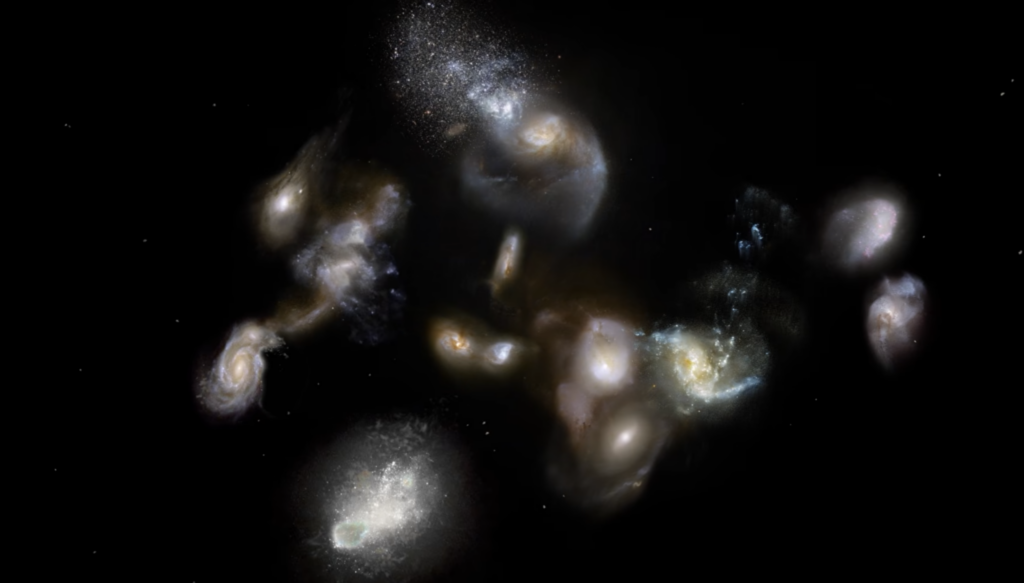
These empty regions are known as cosmic voids, and they may account for most of the Universe’s total volume.
The Boötes Void remains one of the most extreme examples ever found. It demonstrates that the Universe is not only vast but also overwhelmingly empty. In a cosmos containing hundreds of billions of galaxies, there are still places where almost nothing exists.
If you were somehow stranded there, you would experience perhaps the greatest isolation imaginable. No nearby stars would illuminate your path. No planets would pass overhead. No galaxies would fill the sky.
There would only be darkness, silence, and an emptiness so immense that it would challenge everything you thought you understood about the Universe.