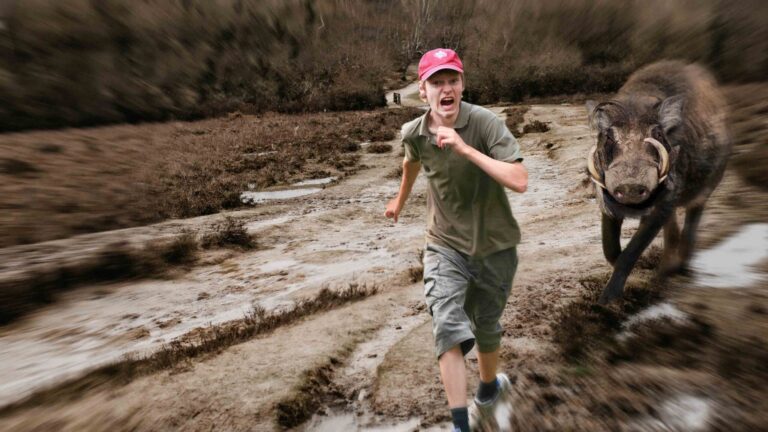
A peaceful walk through the forest can turn into a dangerous encounter in seconds. You are hiking with your dog when suddenly it stops, starts barking, and focuses on something moving in the bushes. Then you see it: a large snout, sharp tusks, and a powerful animal pushing through the trees.
A wild boar has entered your path, and your first instinct might be to climb the nearest tree and wait until it leaves.
But that plan may not save you.
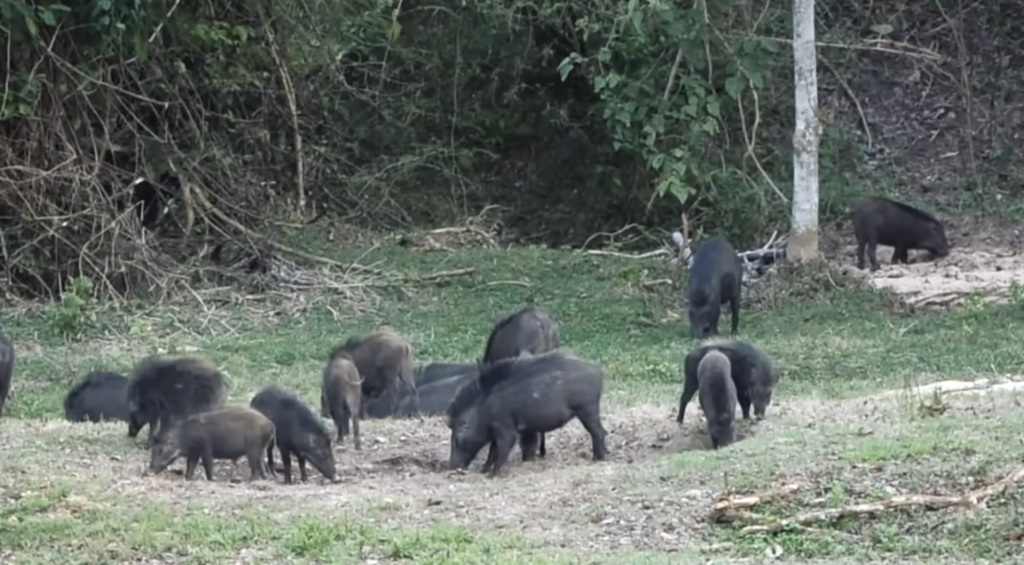
Wild boars may look similar to domestic pigs, but they are much more powerful. They have muscular bodies, longer legs, thick hair, and sharp tusks capable of causing serious injuries. Some adults can weigh more than 136 kg (300 lb), making them surprisingly fast and dangerous when threatened.
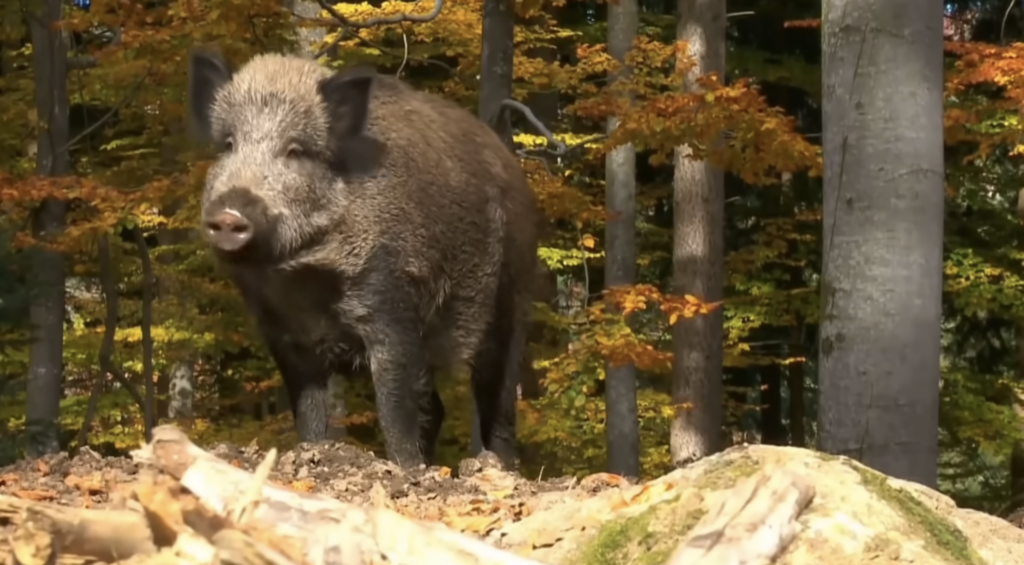
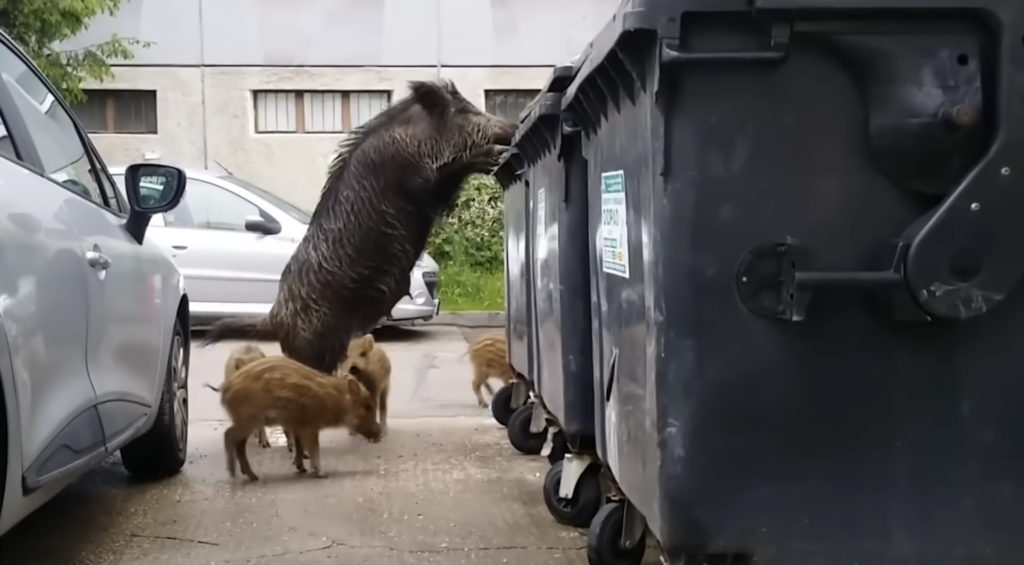
These animals usually avoid humans, but encounters are becoming more common. Wild boars have expanded into new areas, including cities and suburban neighborhoods, where they search for food in gardens, parks, and garbage containers. If they feel cornered or believe you are a threat, they can become extremely aggressive.
Wild boars are not natural predators of humans. Their diet consists mostly of plants, roots, fruits, and insects. However, when food is scarce or when they feel threatened, they can attack. In rare cases, these attacks have been deadly, with several people killed each year around the world.
The first rule when encountering a wild boar is to control the situation before it gets worse. If you are walking with a dog, keep it close. Barking, chasing, or approaching a wild boar can trigger a defensive response. Dogs are often the reason humans become involved in dangerous encounters because they may unknowingly provoke the animal.
If you notice a wild boar from a distance, do not approach it. Slowly move away and give it plenty of space. Sudden movements or attempts to scare it away could make the animal charge.
But if the boar is already close and decides to attack, running may not be enough. Wild boars can reach speeds of around 48 km/h (30 mph), making them faster than most people. A short sprint might not create enough distance to escape.
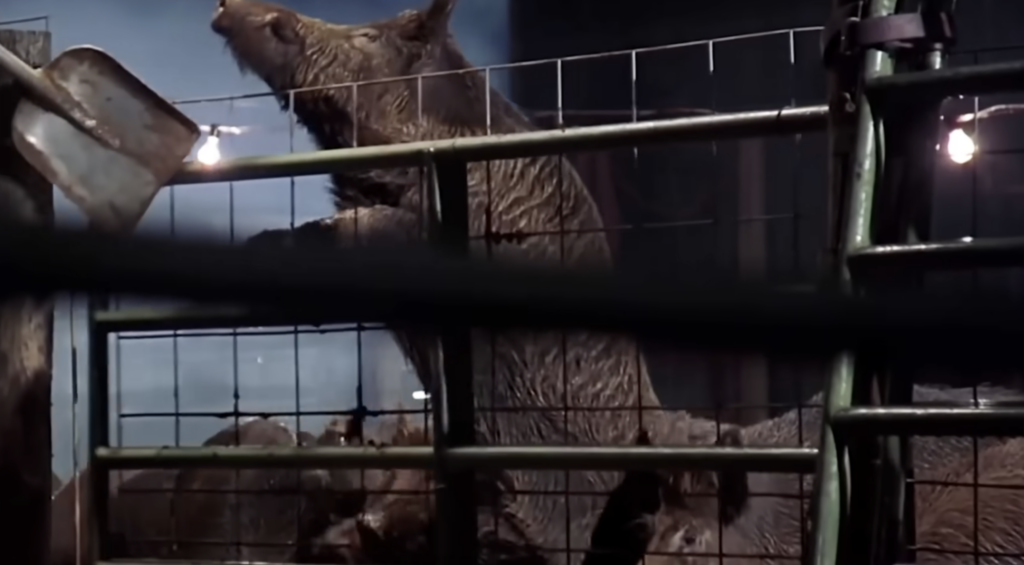
Many people believe climbing a tree is the perfect solution, but wild boars are stronger and more capable than they appear. They can jump over obstacles and escape from enclosed traps with surprisingly high walls. A low branch or small tree may not provide the protection you expect.
Instead of immediately looking for a tree, your best option is to create distance and find solid protection. A large vehicle, building, fence, or tall obstacle is a much safer barrier between you and the animal.
If the boar charges and you cannot escape, staying on your feet becomes extremely important. Falling to the ground puts your most vulnerable areas within reach of the animal’s tusks. A wild boar can injure the stomach, legs, arms, or neck with a single powerful movement.
Try to avoid the charge by moving sideways rather than directly backward. Wild boars rely on their momentum, and stepping out of their path can reduce the chance of being hit.
If you are forced to defend yourself, use anything available. A backpack, stick, rock, or other object can create distance and discourage the animal from continuing the attack. The goal is not to defeat the boar, but to convince it that attacking you is not worth the risk.
Once the animal retreats, do not wait around. Leave the area immediately because the boar may return, especially if it is protecting food, territory, or young.
Even if your injuries seem minor, seek medical attention. Wild boars can cause deep wounds with their tusks and may carry diseases that can be transmitted through bites, scratches, or contact with bodily fluids.
The best way to survive a wild boar encounter is not by fighting one or hiding in a tree. It is by avoiding confrontation, staying calm, and creating distance before the animal feels threatened.
Because when a 300 pound wild boar decides to charge, the safest victory is making sure the fight never begins.