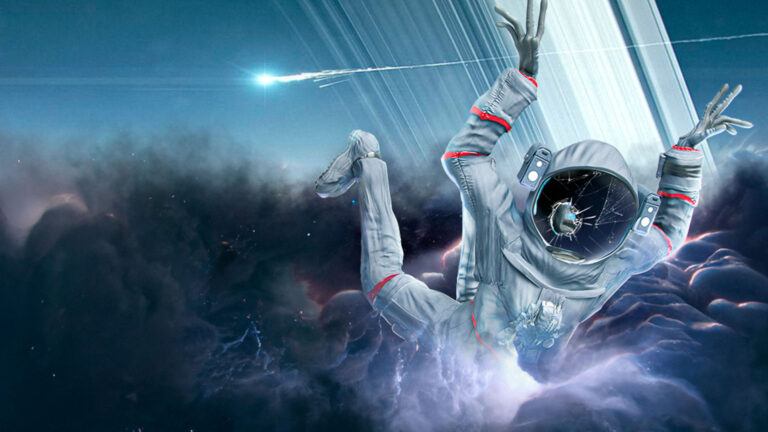
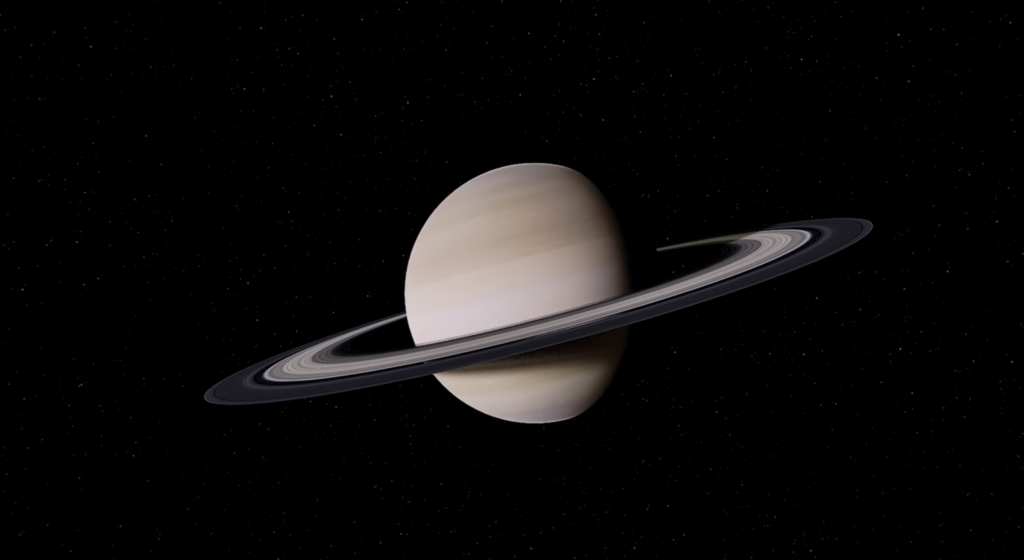
If a human could somehow approach Saturn, the experience would be unlike anything in our Solar System. From a distance, the planet looks calm and elegant, wrapped in its iconic rings. But as you get closer, it becomes clear that Saturn is one of the most hostile environments imaginable.
On the way in, you would pass a collection of fascinating moons. There is icy Enceladus, the distant moon Iapetus, and Titan, Saturn’s largest satellite, which is often considered one of the most intriguing worlds in the outer Solar System. Each one might tempt you to stop, but Saturn itself would already be pulling you in.
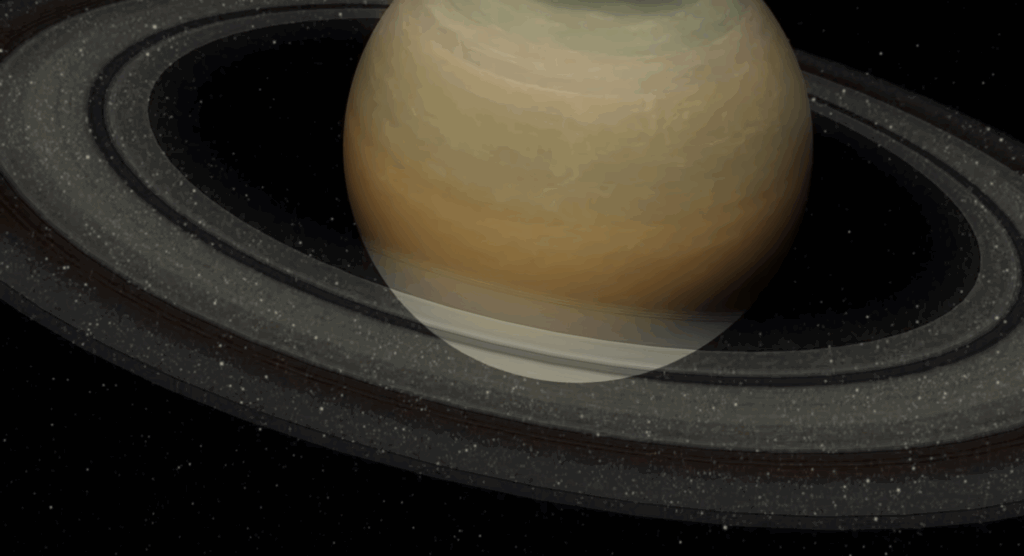
You would then enter the vast ring system, moving through layers of ice and dust that stretch thousands of kilometers into space. The rings are not solid structures, but instead made of countless particles orbiting the planet at high speed. Passing through them would feel less like flying and more like crossing a moving storm of debris.
As you descend further, Saturn’s atmosphere begins to dominate your surroundings. At roughly 1,400 kilometers above the cloud tops, strange glowing colors appear in the sky, created by charged hydrogen interacting with solar radiation. The beauty is deceptive, because below you lies a planet-wide system of extreme weather.
One of Saturn’s most famous features is the massive hexagon-shaped storm at its north pole. This structure is so large that several Earths could fit inside it. Winds race through the atmosphere at incredible speeds, forming patterns that scientists still do not fully understand.
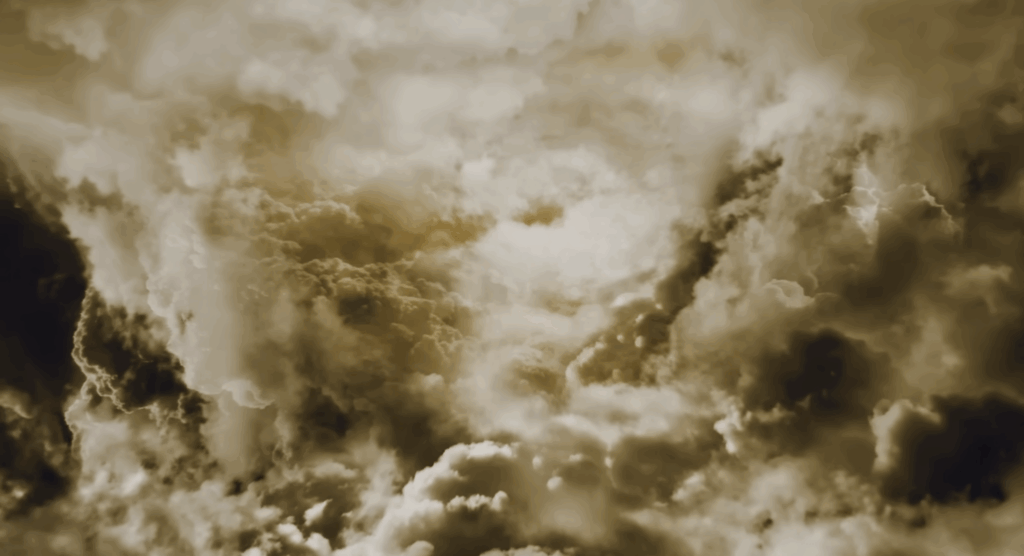
Temperatures in the upper atmosphere are brutally cold, dropping below -250 degrees Celsius. Clouds of ammonia ice drift through the sky, creating layers of toxic, frozen haze. It is a place where exposed human life would not survive for even a moment.
As you continue downward, the pressure begins to rise dramatically. What feels like empty space slowly turns into a crushing environment, far beyond anything found in Earth’s oceans. Conditions become so extreme that any spacecraft would need to withstand forces that increase exponentially with depth.
Eventually, you would reach what scientists loosely refer to as Saturn’s “surface.” Unlike Earth, Saturn has no solid ground. Its visible surface is simply the point where gas transitions into extremely dense layers under pressure.
Below this level, hydrogen and helium begin to behave in strange ways. Under enough force, these gases gradually transform into liquid, creating oceans of super compressed material surrounding the planet’s core.
Deeper still, conditions become almost unimaginable. Temperatures may rise above 11,000 degrees Celsius, while pressures reach levels thousands of times greater than anything experienced on Earth. At the center is believed to be a dense core, possibly several times the mass of our planet, surrounded by layers of exotic, high pressure matter.
In reality, there is no place to land, no solid ground to stand on, and no stable surface to explore. Saturn is not a world you can walk on. It is a planet that pulls everything downward into layers of increasing chaos until nothing recognizable remains.
Even if a spacecraft could somehow survive the journey, there would still be no true destination to arrive at.
And that is the ultimate reason humans will never set foot on Saturn.