Deep in the mountains of Bolivia, there is a road where a single mistake can turn an ordinary journey into a fight for survival. For decades, the North Yungas Road became infamous for its deadly conditions, earning a name that sounds more like a warning than a destination, the Road of Death.
Before 1994, the road was associated with an estimated 200 to 300 deaths every year. Vehicles regularly traveled along the narrow mountain route despite the enormous dangers surrounding them. Buses, trucks, cars, cyclists and pedestrians all had to navigate the same treacherous path while hundreds of meters of empty air waited below.
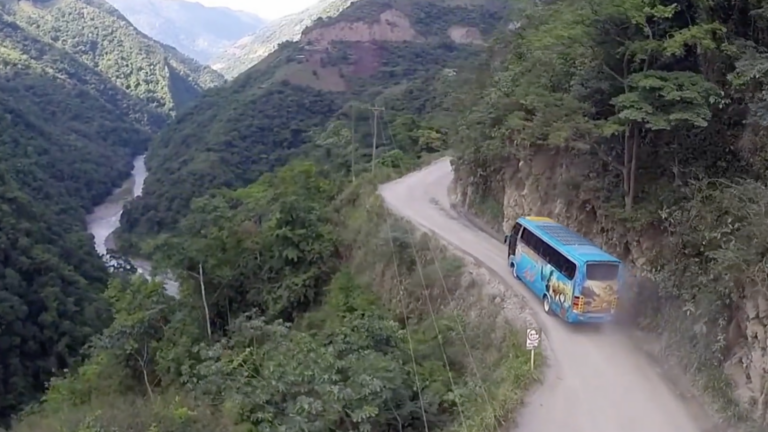
The North Yungas Road stretches for roughly 80 kilometers through the mountains near La Paz. In some sections, the road is only around 3.5 meters wide. That leaves very little room for two vehicles to pass, especially when one of them is a large bus or truck.
And then there are the cliffs.
Parts of the road run directly alongside enormous vertical drops reaching approximately 915 meters. There are no protective barriers in many areas, meaning that a vehicle leaving the road could plunge hundreds of meters down the mountainside.
The danger becomes even worse when the weather changes.
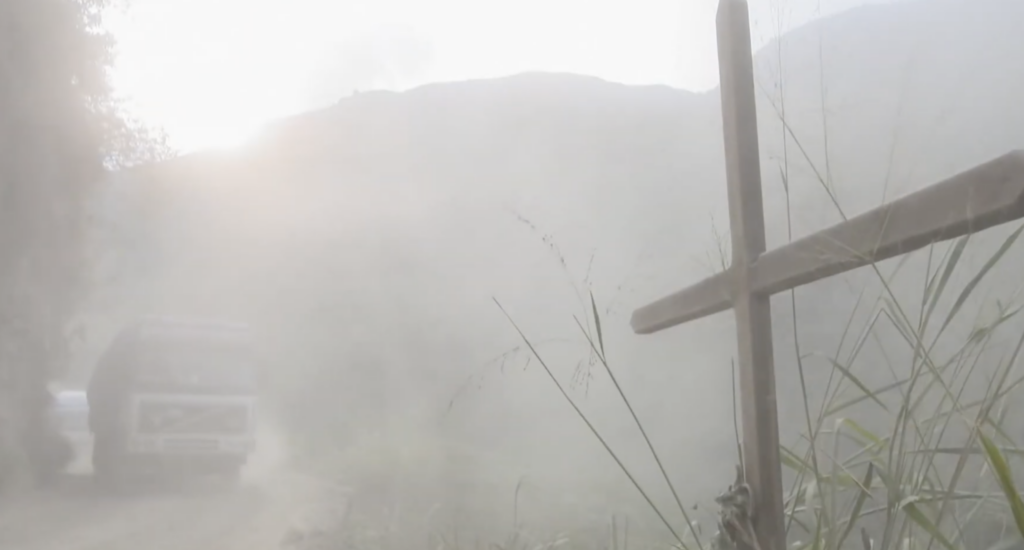
Heavy rain can turn sections of the road into slippery mud while thick fog can suddenly reduce visibility. Drivers may struggle to see what is ahead, while approaching vehicles can appear with almost no warning. Loose rocks and falling debris can also create additional hazards along the route.
The road contains hundreds of sharp bends, with some turns so tight that large vehicles have to maneuver carefully to avoid getting too close to the edge. A driver who misjudges a corner by only a few feet could find the vehicle heading toward the drop.
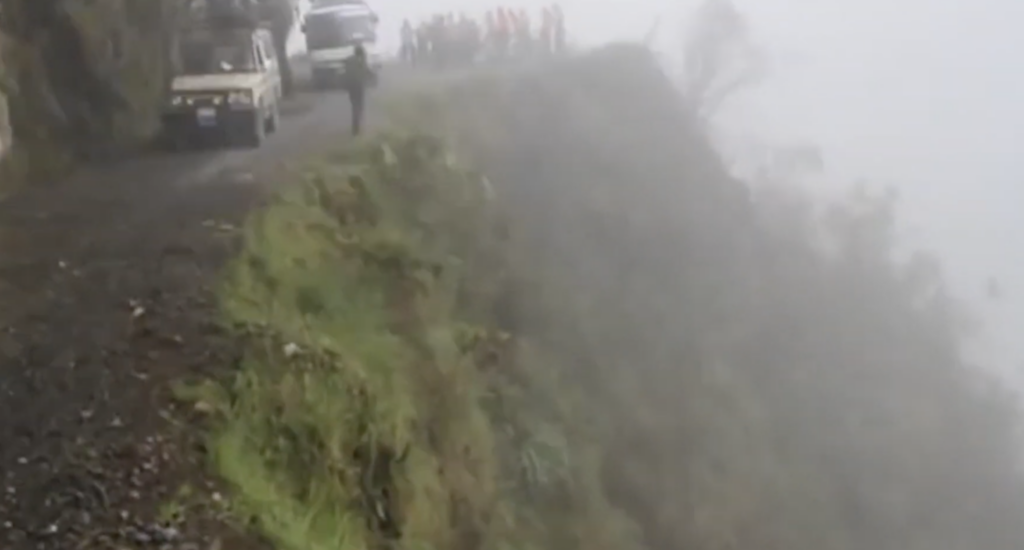
For passengers sitting inside a bus, the experience could be terrifying.
Imagine looking through a window and seeing nothing beneath you except a massive wall of fog and mountainside. Then, somewhere ahead, another vehicle suddenly emerges from the mist. The driver has only seconds to react, and there may be almost nowhere to move.
This was the reality faced by travelers using the road during its most dangerous years.
One of the most haunting aspects of the North Yungas Road is how quickly an accident could become a disappearance. When a vehicle went over the edge, it could fall hundreds of meters into the dense valleys below. Recovery efforts were difficult, dangerous and sometimes impossible.
That helped create the road’s terrifying reputation.
Although the original route is no longer the main highway between La Paz and the Yungas region, its history remains. A newer and safer road was constructed to handle most modern traffic, dramatically reducing the number of vehicles using the old route.
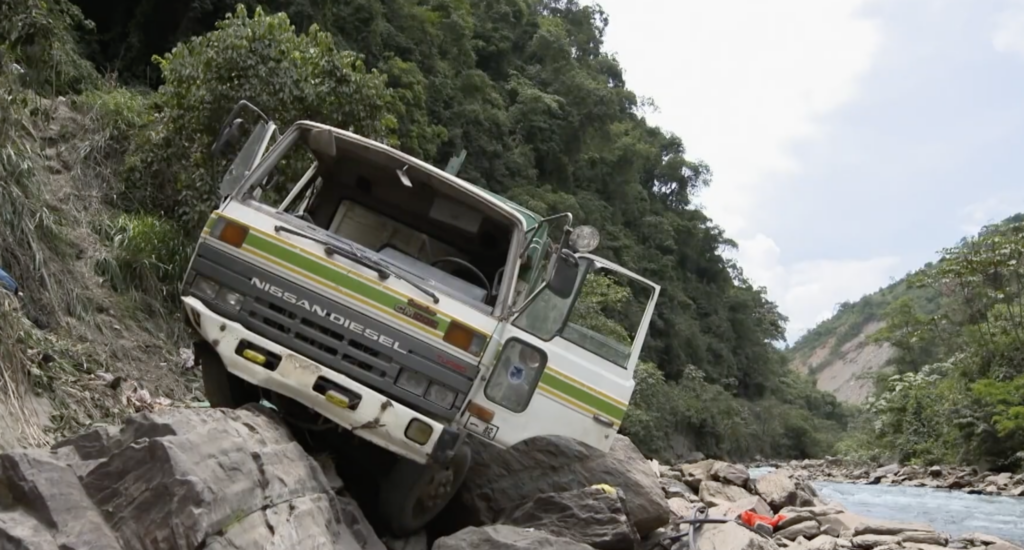
Today, the infamous road has become a destination for adventurous travelers and mountain cyclists. People deliberately come to experience the same landscape that once made the road one of the most feared routes in Bolivia.
But beneath the adventure is a grim history.
For years, the combination of narrow roads, enormous cliffs, poor visibility, unpredictable weather and heavy traffic created a deadly environment where a journey could end without warning.
The Road of Death is no longer responsible for the same level of tragedy it once was, but its name remains a reminder of what happened when hundreds of people had to travel along one of the most dangerous mountain roads on Earth.