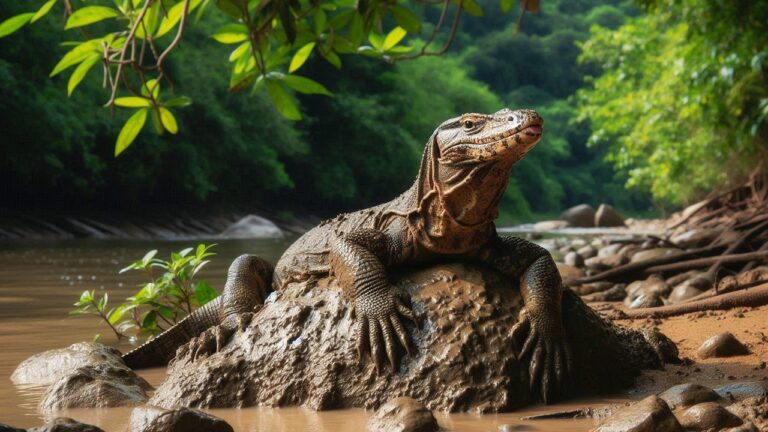
Komodo dragons, also known as Komodo monitors, are the largest lizards in the world. As adults, they have an almost-uniform stone color and can weigh around 70 kg (154 lb). The largest Komodo dragon ever found weighed 166 kg (366 lb) and was more than 3 m (10 ft) long.
They are powerful, voracious eaters with a taste for all kinds of meat. From small rodents up to a large water buffalo. Their wide jaws and strong throat muscles allow them to devour huge chunks rapidly. And they can eat up to 80% of their own body weight in one meal.
Sadly, they are an endangered species, with only 1,380 adult Komodo dragons left in the wild. They can be found on the Lesser Sunda islands of Indonesia. Most fitting, the island of Komodo.
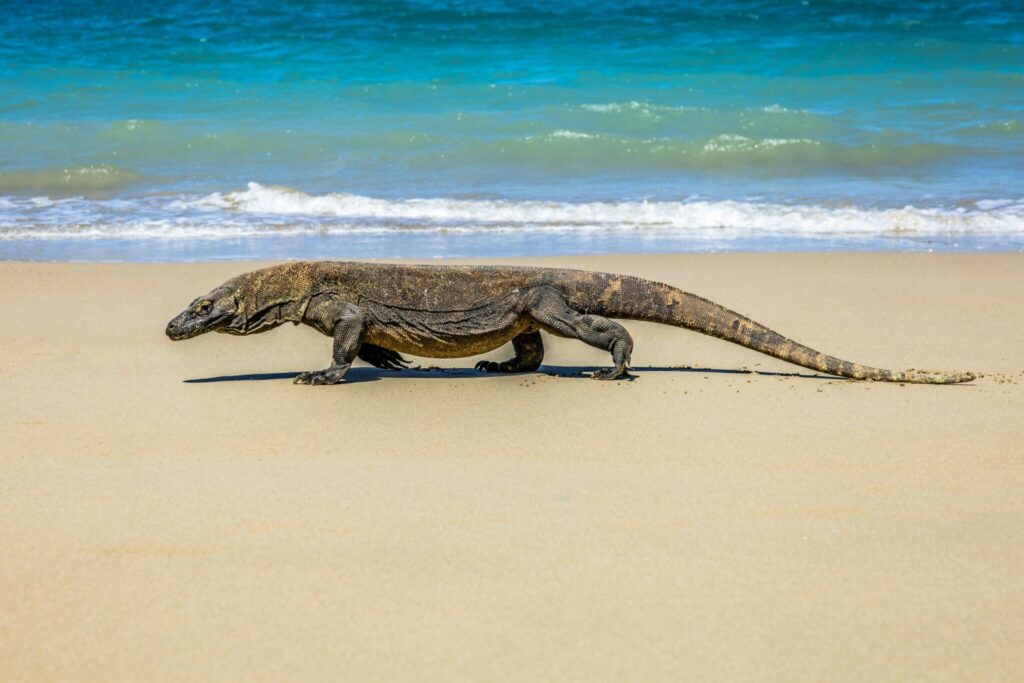
Arriving on the island of Komodo, you’d be excited and looking forward to some peaceful vacation time. But as you walk around the tropical forests, you’d be blissfully unaware that Komodo dragons could already be stalking you.
Their hunting strategy is all about stealth and power. It all comes down to their sense of smell when they are on the prowl for food. And they can pick up the trail of rotting flesh from up to 4 km (2.5 mi) away.
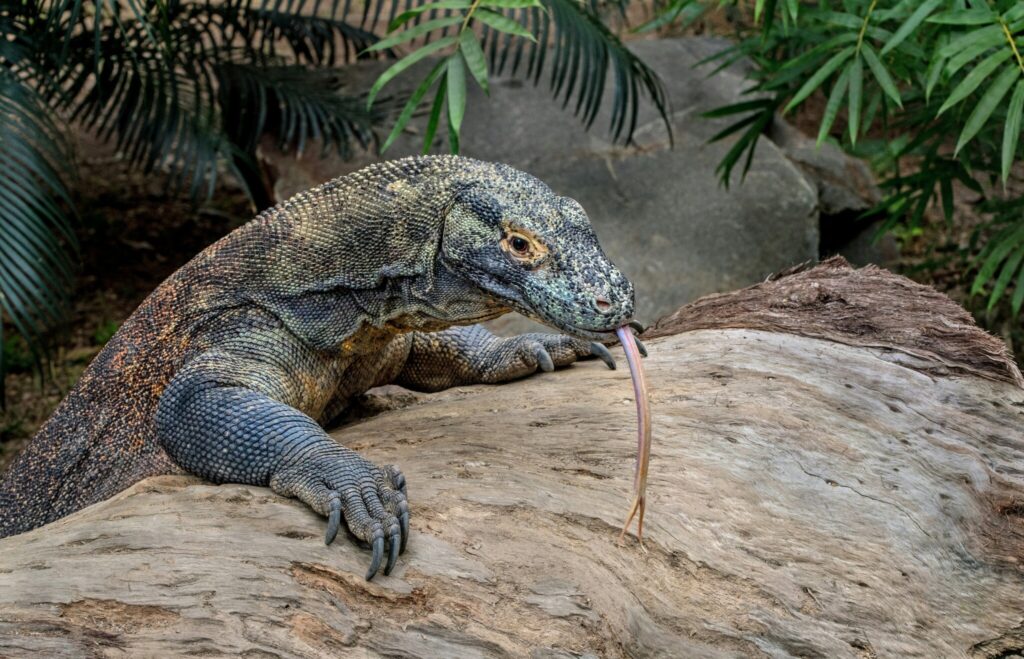
For the Komodo, it’s not about taking a whiff of air with their nose. Instead, their peculiar method involves sticking out their long forked tongue to sample the air. Then they roll it back in, touching it to the roof of their mouth. Here, the tongue rubs against a sensory organ that can detect different airborne molecules.
A Komodo can then use those molecules as a guide for what direction to head toward. Or it can stay perfectly still for hours, just waiting for their prey. In this case, that’s you.
The dragon would bite down hard on your ankle. The pain would be immense, but you’d fight back. You’d punch its neck, trying to force it to let go of you. But no luck. Maybe you’d better try prying open its massive jaws with your own bare hands. You will struggle and struggle, but it will work.
Although, it would come at a cost. Your hands would get sliced by the large, serrated teeth of the dragon. Now you’d be bleeding profusely from the leg and hands. Time to get away and find help before the giant lizard has you for lunch.
But a worse fate may now lay before you.
All over the Komodo dragon’s jagged teeth, there are bits of meat from its last meal. Those bits make the perfect breeding ground for dangerous strains of bacteria. And that bacteria would now be infecting your body.
From your bite wounds, you could be exposed to 50 different varieties of bacteria. Some of these are highly septic, potentially leading to severe infection.
But the worst still wouldn’t be over. You would now have venom coursing through your body too. This would lower your blood pressure and prevent your blood from clotting. You could only have a few minutes left before you bleed out.
It’s likely you wouldn’t have the time to make it somewhere safe. And the Komodo dragon’s hunt for you would resume.
Remember how they can smell rotting meat from kilometers away? Well, your injuries would now attract every Komodo around you. And while no Komodo dragon could swallow you whole on its own, a group of them would devour every scrap of your body.
As scary and horrible as this would all be, you could rest a bit easier knowing that it’s extremely rare. It happens, sure. But prior to a deadly Komodo dragon attack on a young child in 2007, there hadn’t been a single fatal incident on Komodo Island in 33 years.