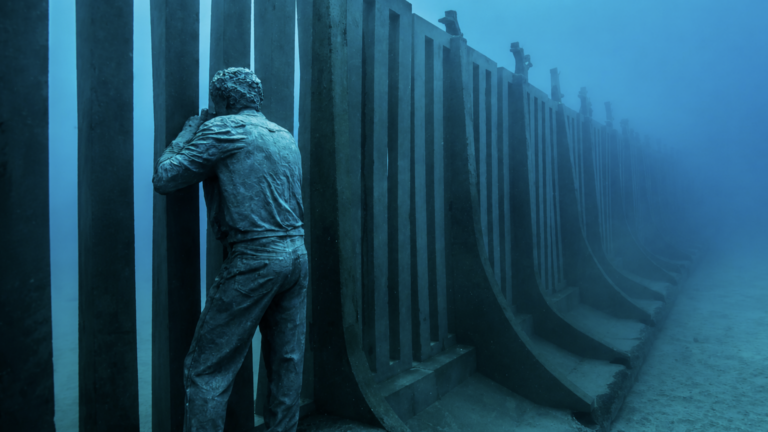
Beneath the crystal clear waters of the Atlantic Ocean, something unexpected is taking shape. Divers descending toward the seafloor are often met with a strange sight. At first glance, it looks like a lost civilization frozen in time. Human figures stand silently in the blue depths while schools of fish weave between them.
Covered in marine life and surrounded by coral, these mysterious sculptures seem as though they have been waiting underwater for centuries.
But this is not the remains of an ancient city.
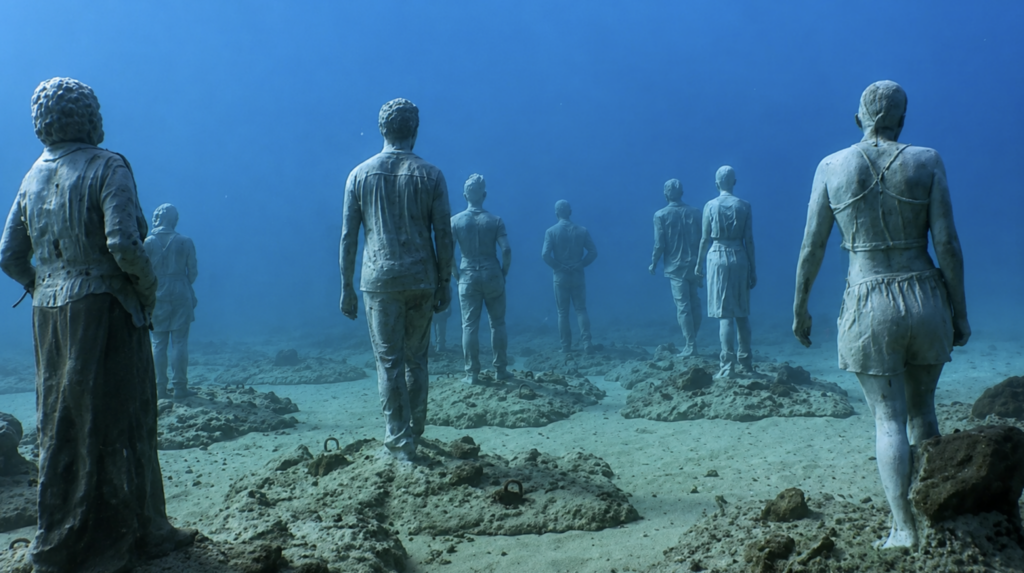
It is the world’s largest underwater art museum.
Located off the coast of Lanzarote in Spain’s Canary Islands, this remarkable attraction is known as the Museo Atlántico. Created by renowned sculptor Jason deCaires Taylor, the museum sits beneath the ocean’s surface and combines art, conservation, and marine science in a way that few places on Earth can match.
Unlike traditional museums filled with paintings and artifacts, the Museo Atlántico is entirely underwater. Visitors must dive beneath the waves to experience its collection. There, dozens of life sized sculptures emerge from the seafloor, creating a surreal landscape that feels both beautiful and haunting.
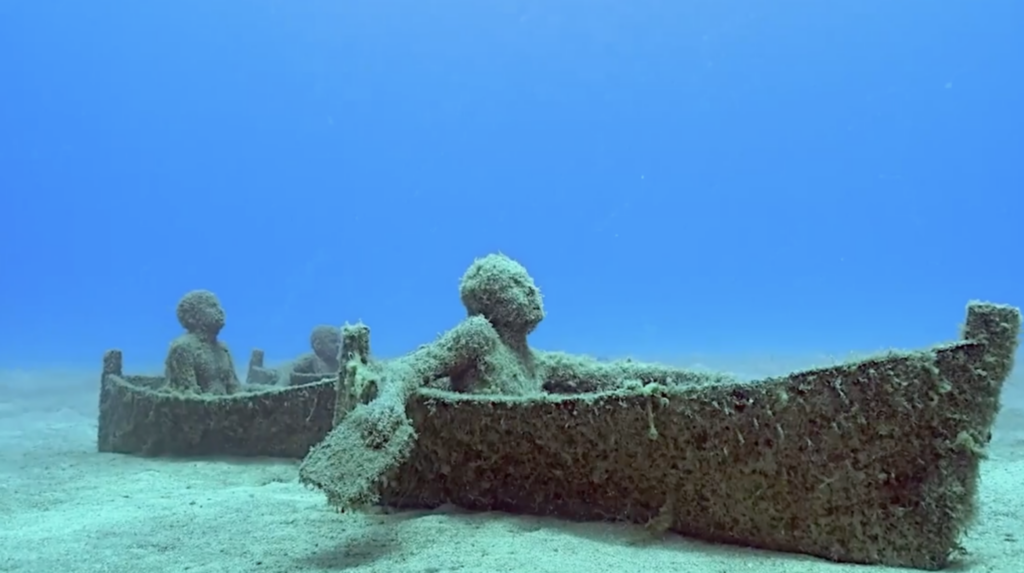
One of the museum’s most striking installations features hundreds of human figures standing together in silence. These sculptures were modeled after local residents from the Lanzarote region, turning ordinary people into permanent works of art beneath the sea.
The figures appear frozen in time, yet the environment around them is constantly changing as marine life transforms the sculptures into living reefs.
What makes this museum truly unique is that it was designed not only for people but also for nature. The sculptures were constructed using materials that are safe for marine ecosystems. Over time, algae, coral, and other organisms colonize their surfaces. Fish seek shelter among the structures, creating new habitats where marine life can thrive.
As the years pass, the artwork continues to evolve. No two visits are ever exactly the same because the ocean itself becomes part of the artistic process. Nature slowly reshapes every sculpture, adding new colors, textures, and life.
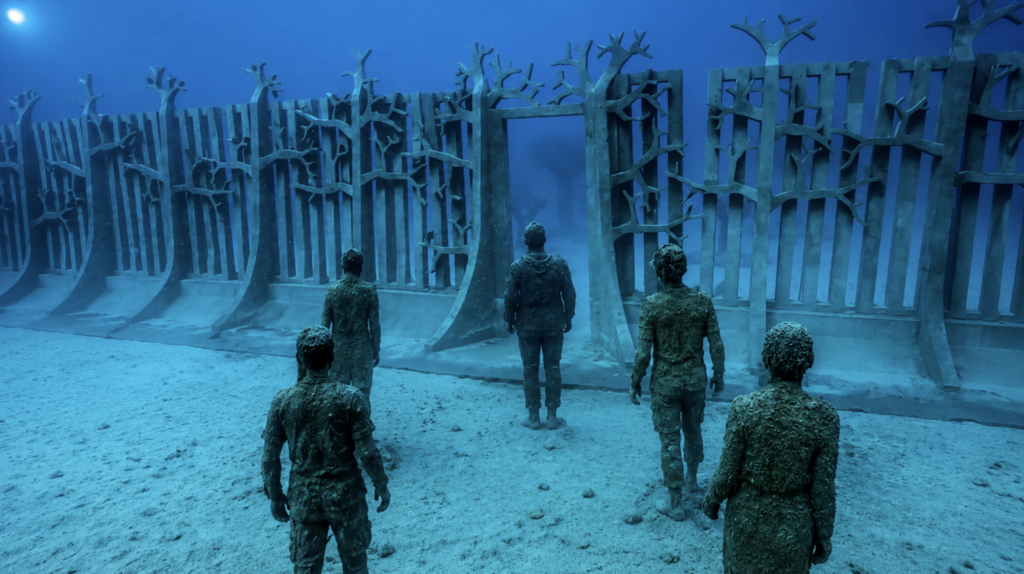
The project serves an important environmental purpose as well. Around the world, coral reefs face growing threats from climate change, pollution, and human activity. By creating artificial reef structures, underwater museums like this one can provide additional habitat for marine species while reducing pressure on fragile natural reefs.
Visitors who explore the museum gain a rare opportunity to witness thriving marine ecosystems up close without disturbing sensitive coral environments. The sculptures act as a bridge between people and the underwater world, encouraging greater awareness of ocean conservation.
Beyond its environmental mission, the museum also challenges our understanding of what art can be. Most artworks are protected from the elements and preserved exactly as their creators intended. Here, the opposite is true. The sculptures are deliberately surrendered to the sea. Currents, marine growth, and time itself become collaborators in the creative process.
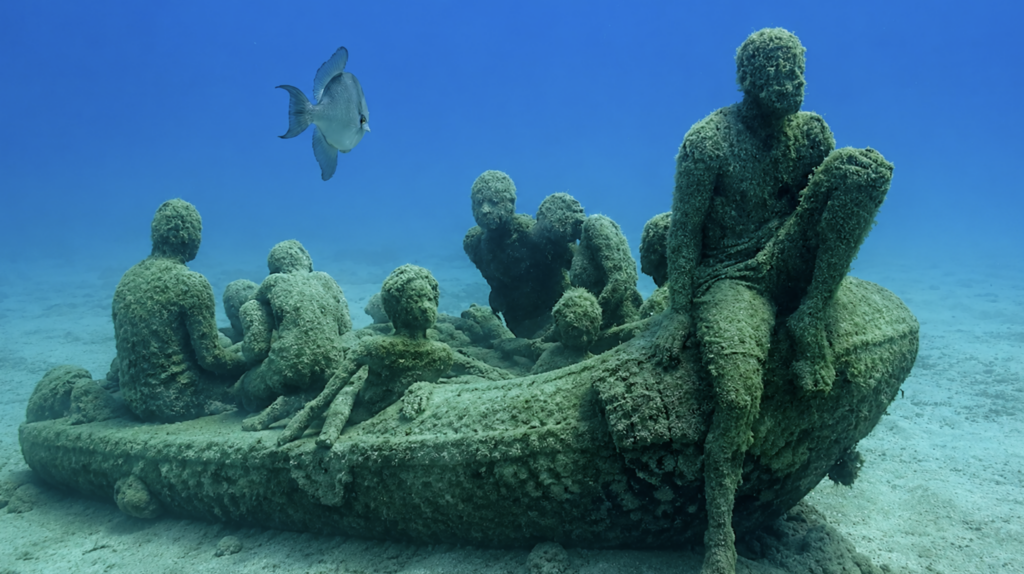
The result is an ever changing gallery unlike any other on Earth.
What begins as a collection of human made sculptures gradually becomes something much larger. Fish dart through the figures. Coral spreads across their surfaces. Entire communities of marine life take up residence among the artworks. The boundary between art and nature slowly disappears.
For divers, the experience is unforgettable. Floating silently above the sculptures while fish move between the figures feels like entering another world. It is part museum, part reef, and part environmental experiment.
So what is hiding inside the world’s largest underwater art museum?
The answer is more than art. Hidden beneath the waves is a living ecosystem, a conservation project, and a powerful reminder that creativity and nature can work together in extraordinary ways. As the ocean continues to transform the sculptures year after year, the museum becomes a masterpiece that is never truly finished.