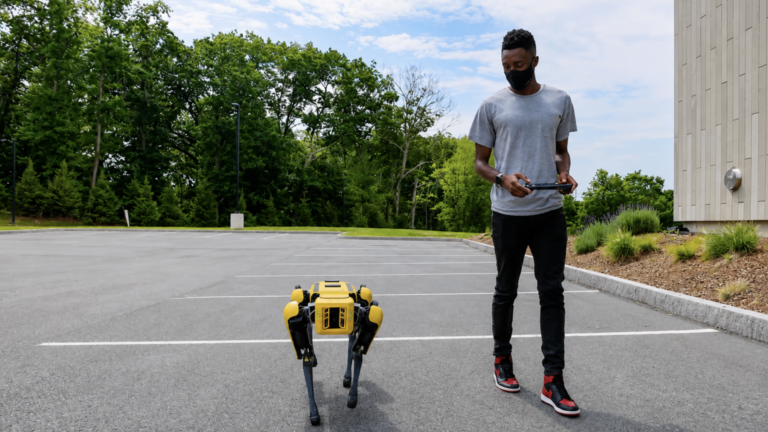
You might already know about Spot, the robotic dog developed by Boston Dynamics. It moves with eerie precision, climbs stairs, balances on rough terrain, and behaves in a way that looks strangely alive for something that is not. It is one of the most advanced quadruped robots ever built, designed to operate in environments where humans might struggle or be at risk.
Now imagine this. Not just one. But a whole pack of them.
It sounds like something from a science fiction movie, the kind where machines stop being tools and start becoming hunters. Suddenly, you are not dealing with a pet like robot anymore.
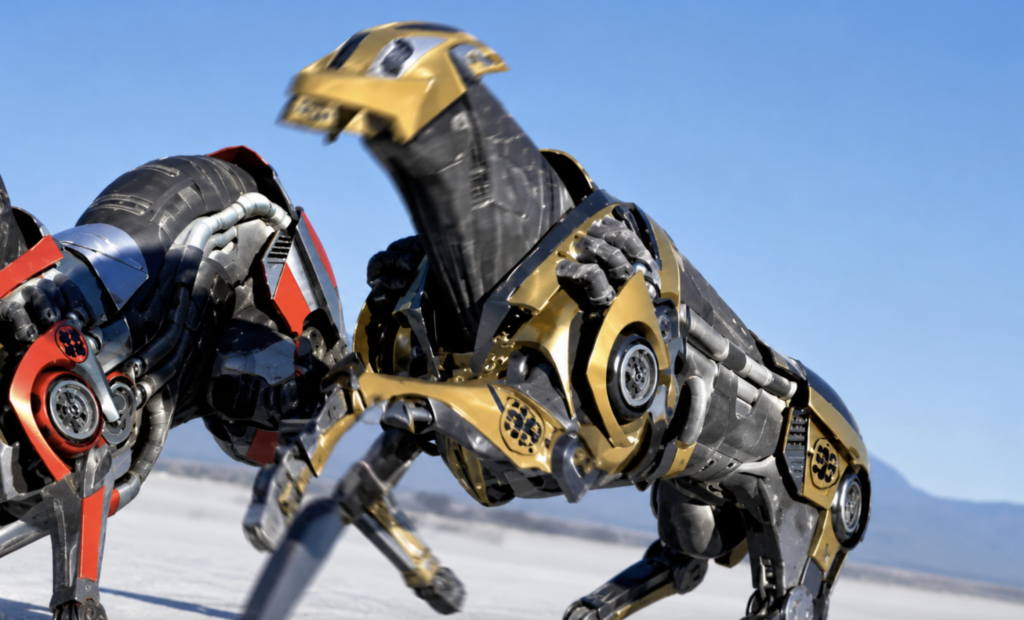
You are being chased by something fast, coordinated, and relentless. Which raises a serious question. Could a pack of robotic dogs actually outpace or even overpower a human?
When it comes to being chased, speed becomes everything. Humans are surprisingly fast in short bursts. The fastest recorded sprinter, Usain Bolt, has reached speeds of around 44 kilometers per hour. Most people, of course, are far slower than that in real life. But how does that compare to robotic dogs like Spot?
Right now, standard versions of Spot are not built for extreme speed. They move at around 6 kilometers per hour, which means an average person could easily outrun one without much effort. In a direct chase scenario, a human would still have the advantage.
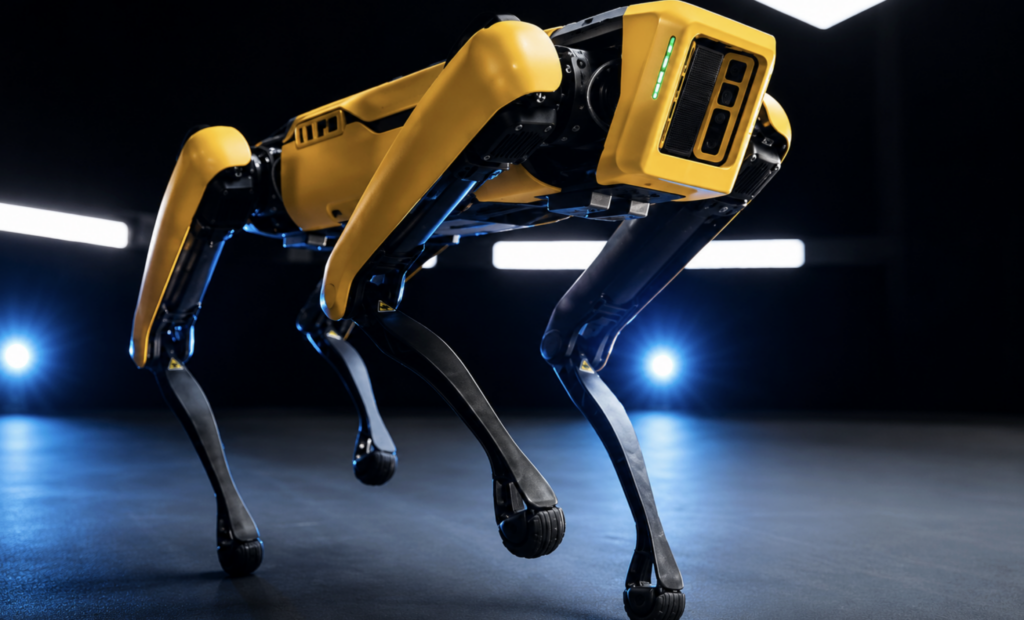
However, robotics does not stay still for long. Engineers have already built experimental legged robots inspired by animals like cheetahs. In testing, some of these machines have reached speeds of over 45 kilometers per hour, matching or even surpassing elite human sprinters.
Instead of traditional limbs, they use mechanical structures that mimic muscle and spine movement, allowing them to accelerate in a way that feels almost unnatural.
So while today’s robotic dogs may be slow, future versions could be much faster, potentially fast enough to keep up with or outrun a human in open space.
But speed is only one part of the equation. The next question is whether they would actually attack.
In reality, robots like Spot are not designed for aggression. They are built for inspection, data collection, industrial work, and environments that are too dangerous for humans. They are controlled by operators and follow programmed tasks rather than independent intent. On their own, they do not have desires, instincts, or goals.
Even if you imagine a scenario where multiple robotic dogs are deployed together, they would still be tools rather than predators. They might track, follow, or monitor, but not hunt in the way living creatures do.
There is also the practical side. These machines are expensive, often costing tens of thousands of dollars each, and their use is usually limited and highly regulated. They are not freely roaming autonomous packs. In most cases, they are carefully controlled units operated by humans, often with strict safety boundaries.
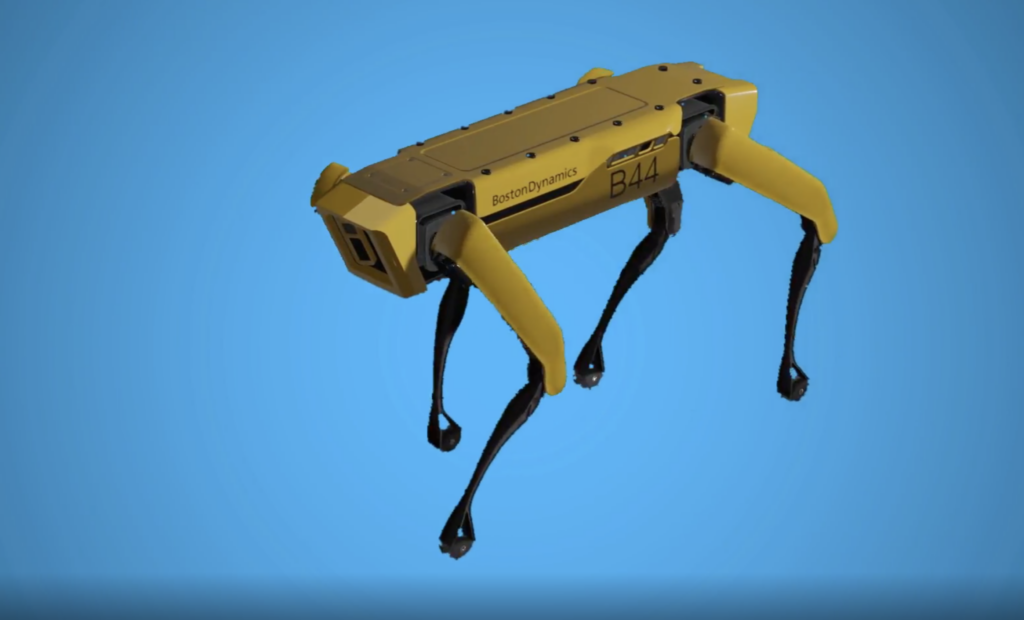
Of course, in a purely fictional scenario, it is easy to imagine things going wrong. A pack of robotic dogs moving together through empty streets, silent, coordinated, and unblinking. But even then, their limitations matter. They do not climb trees, they do not break through barriers easily, and they can be physically stopped or disabled like any machine.
The more interesting question is not whether they would suddenly turn into hunters, but whether we are comfortable living in a world where machines can move, react, and follow us in ways that feel almost alive.
Because the unsettling part is not that robotic dogs might chase you. It is how realistic they look while doing everything except thinking for themselves.
And for now, that is the key difference. They are not living beings. They are tools being guided, monitored, and controlled by humans. The “pack” only exists if someone decides to create one.
So while the idea of being chased by robo dogs sounds like a nightmare scenario, the reality is far less dramatic. At least for now.
Still, it does raise a bigger question. If machines like Spot continue to evolve, becoming faster, smarter, and more autonomous, where exactly does the line between tool and creature begin to blur?
And if robotic dogs are only the beginning, the next step might not be them chasing us at all. It might be something far more complex. Something closer to us.