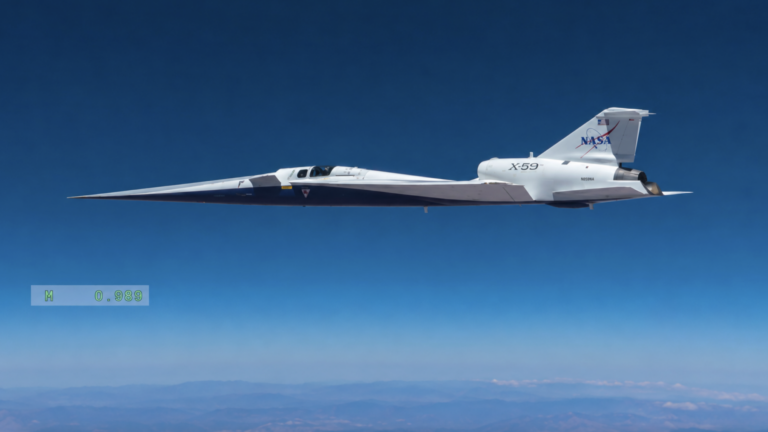
For the first time, its experimental X 59 aircraft has successfully broken the sound barrier. But unlike every supersonic jet that came before it, this aircraft is designed to fly faster than sound without producing the thunderous sonic boom that has always come with it. If this technology works as intended, flying across entire countries could soon take half the time it does today.
On June 5th, NASA’s X 59 completed a supersonic flight for the first time, reaching Mach 1.1, or about 713 miles per hour. However, this is not humanity’s first experience with breaking the sound barrier.
Back in 1947, test pilot Chuck Yeager made history in the rocket powered Bell X 1, becoming the first person to officially fly faster than sound. At the time, many engineers were not even sure this was possible.
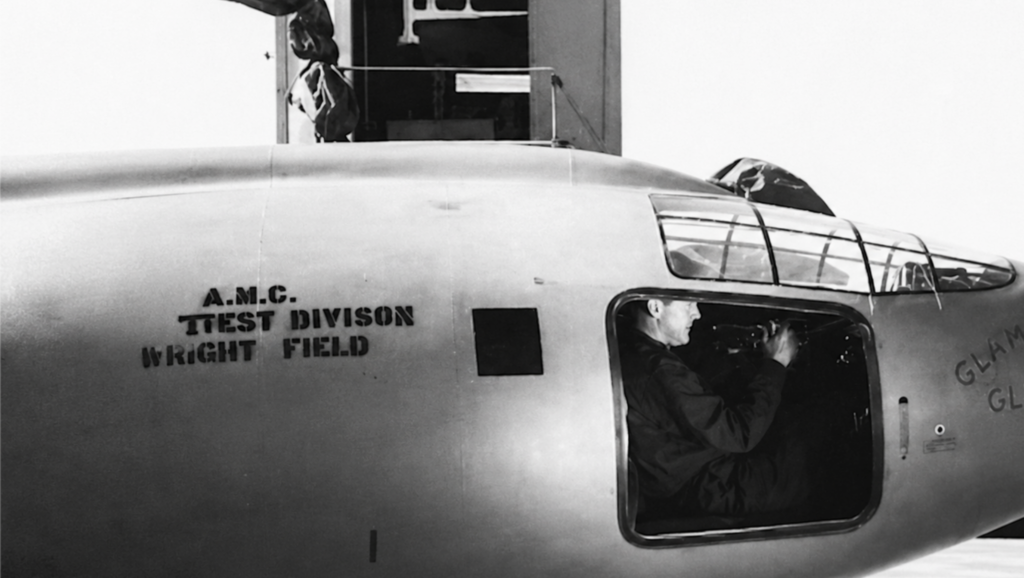
Some even feared that aircraft would break apart as they approached what was known as the sound barrier.
Those fears turned out to be wrong, and Yeager successfully pushed through at more than 700 miles per hour, opening the door to a new era of aviation.
However, every supersonic flight came with a major drawback. Aircraft that broke the sound barrier created a sonic boom, an explosive shockwave so powerful it could rattle windows and be heard for miles. Over time, sonic booms became such a serious issue that supersonic commercial flights over land were heavily restricted in the United States.
Even the legendary Concorde, which could fly from New York to London in less than three and a half hours, was limited by the noise it produced. While it proved that ultra fast passenger travel was possible, it also showed that speed alone was not enough. The challenge was making supersonic flight acceptable for people on the ground.
To solve this problem, NASA developed something entirely different.
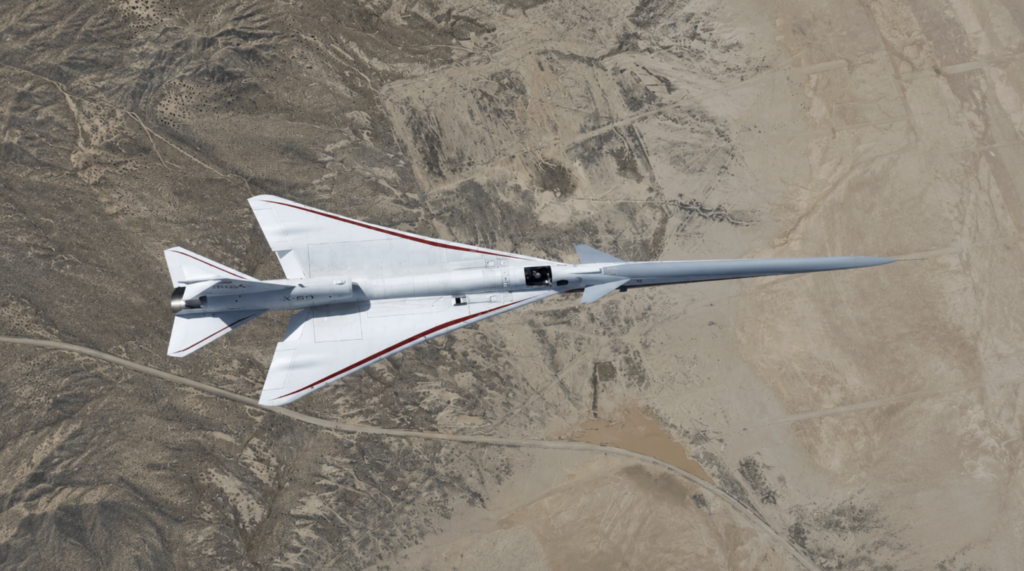
The X 59 looks unlike any traditional aircraft. It has a long, needle shaped design with a sharply extended nose. This structure is specifically engineered to spread out shockwaves that normally combine into a loud sonic boom.
Instead of an explosive sound, people on the ground are expected to hear something closer to a distant car door closing.
This design is not just about reducing noise, but about reshaping how supersonic physics behaves around the aircraft. By carefully controlling how pressure waves move over the fuselage, NASA hopes to prove that supersonic flight can exist without disrupting life below.
During its historic test flight, NASA pilot Jim Clueless guided the aircraft to an altitude of more than 43,000 feet before pushing it beyond the speed of sound for the first time. The moment marked a major milestone in a long development program that has taken years of testing, simulations, and wind tunnel experiments.
But this is only the beginning.
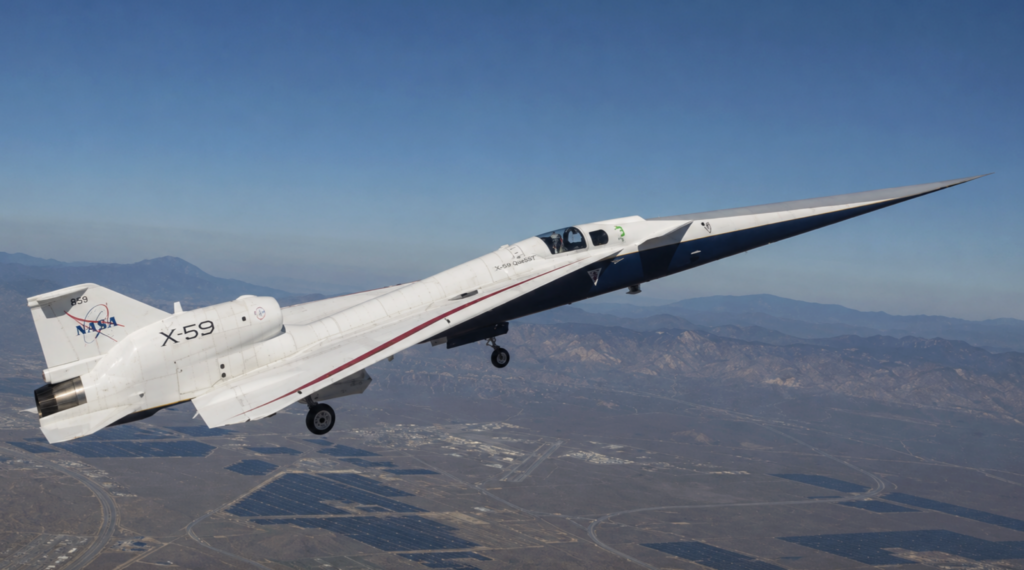
NASA now plans to fly the X 59 over selected communities across the United States and ask people on the ground a simple question: did you hear anything? These community response tests are critical because they will determine whether the concept of “quiet supersonic” flight is truly viable outside controlled conditions.
If the aircraft can consistently fly faster than sound without disturbing people below, it could open the door to a new generation of commercial supersonic passenger jets. That would mean long international routes could be completed in a fraction of today’s travel time, potentially reshaping global business, tourism, and emergency travel.
Engineers also believe this technology could influence the future of military aviation and even space plane development, where efficient high speed atmospheric flight is essential.
For now, the X 59 remains an experimental step forward, but its success signals a clear direction for the future of aviation.
Would you fly in an aircraft that moves this fast?