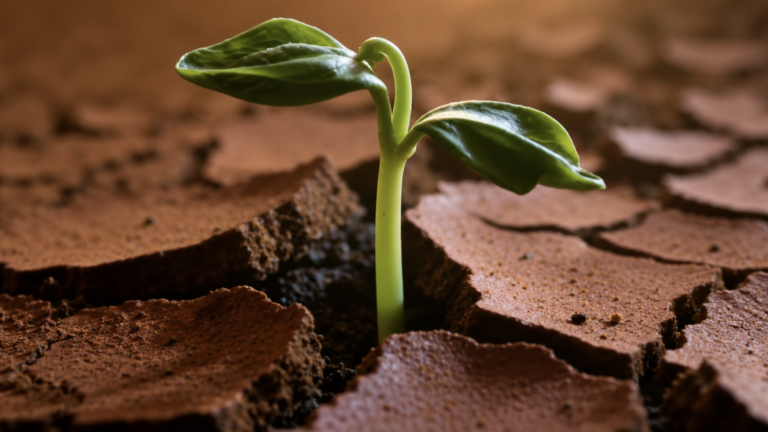
What if humans could actually grow food on Mars? Not inside sealed laboratories or artificial hydroponic systems, but directly in the Martian ground itself. Could alien soil really support agriculture? Or is Mars simply too hostile for anything to grow?
The challenge starts with the soil itself. Martian ground is not like Earth soil. It contains no usable nitrogen, no phosphorus, and no potassium, which are the three essential nutrients every plant needs to survive. On top of that, it is filled with reactive chemicals that would be toxic to most forms of life on contact.
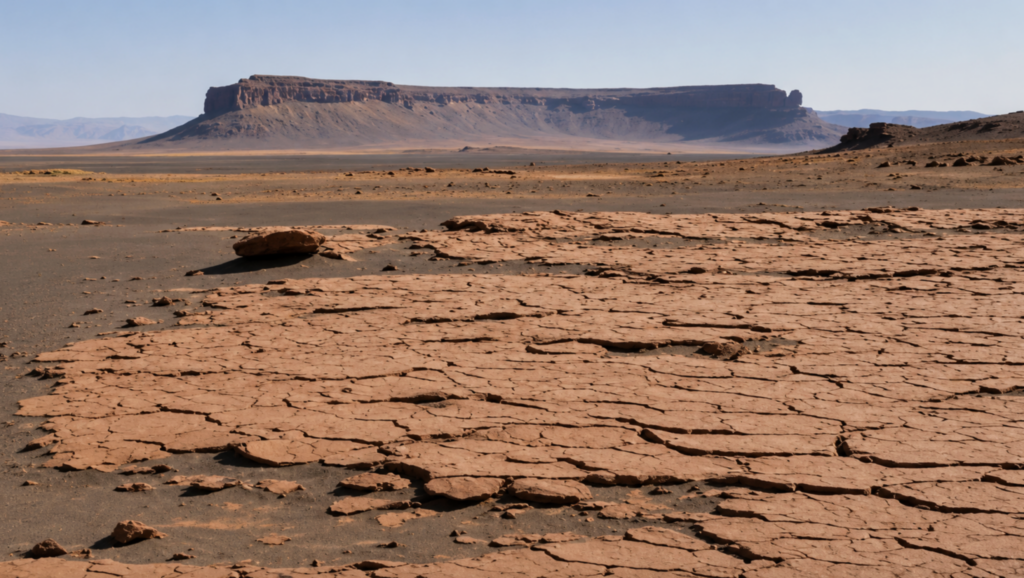
By Earth standards, it is closer to crushed rock dust mixed with poison than real soil. Right now, growing crops in it is considered impossible.
But scientists are beginning to rethink that limit.
Researchers from the United States and Brazil have proposed an unexpected solution. Fungi.
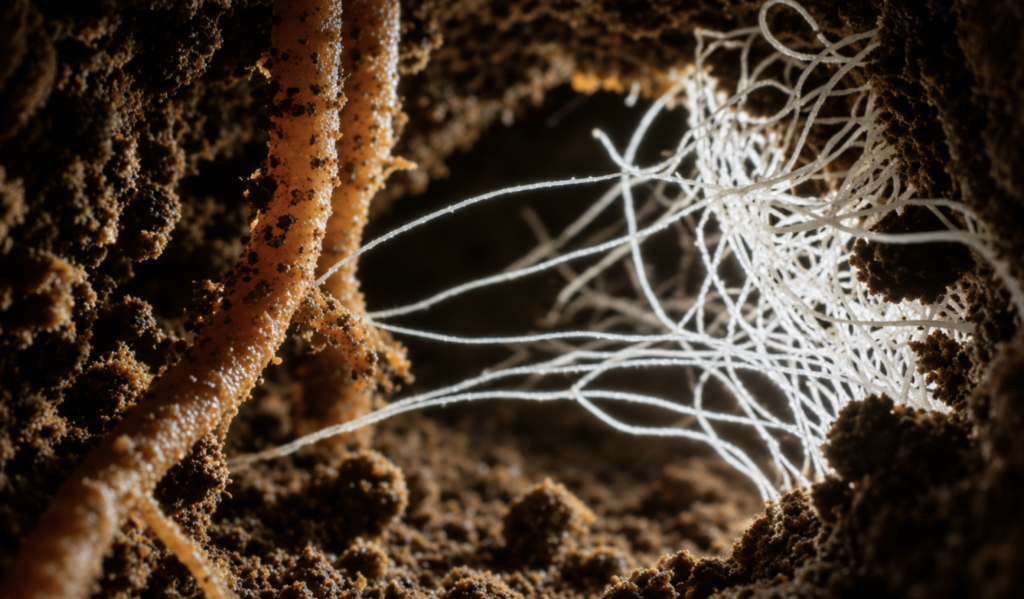
Not the kind you see on food or in nature trails, but specialized fungal species that act like an extension of plant roots. These organisms can spread through soil, breaking down materials and unlocking nutrients that plant roots alone cannot reach. In a sense, they become a second hidden root system.
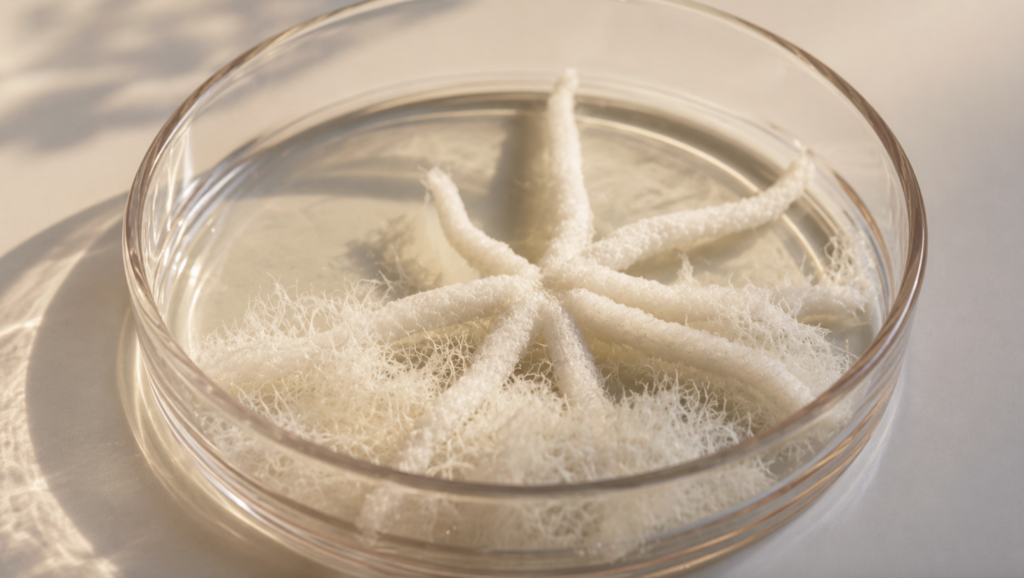
This is not a new idea on Earth. Farmers have used fungal partnerships with plants for centuries, even before modern science fully understood how they worked. These relationships help crops survive in poor soil by improving nutrient absorption and breaking down minerals into usable forms.
Scientists now believe this same strategy could work on Mars.
The idea is that fungi could slowly transform Martian regolith, which is the loose surface material covering the planet, into something closer to usable soil. Over time, they could help release trapped nutrients from rock and reduce the impact of toxic compounds. In theory, this could create a growing environment where plants might actually survive.
A recent peer reviewed study published in Frontiers in Astronomy and Space Sciences outlines how this fungi based system could become the foundation of future Martian agriculture. It is part of a broader approach NASA describes as living off the land, meaning future missions would rely on Martian resources instead of constant shipments from Earth.
And this idea changes everything.
The long term goal is not just to grow a few experimental plants. It is to eliminate the need to transport food from Earth entirely. Any permanent human settlement on Mars would have to be self sufficient. Supply missions would be too slow, too expensive, and too limited to support a growing population.
That means survival would depend on something much smaller than rockets or machines.
Microorganisms.
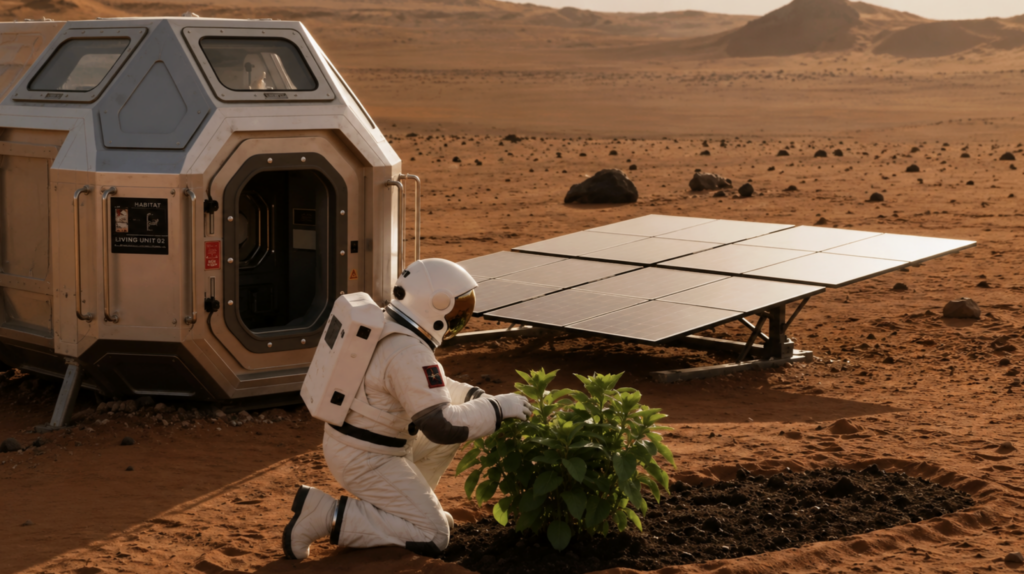
The first humans to spend years on Mars may not survive on supplies sent from Earth. Instead, they may depend on carefully engineered ecosystems where fungi, bacteria, and plants work together to produce food in alien soil.
Some early experiments already suggest this might be possible. In one test using Martian soil simulant, just one gram of cyanobacteria helped produce 27 grams of plant material. That may not sound like much, but in a place 140 million miles away from the nearest grocery store, it becomes a powerful proof of concept.
Mars may not be as lifeless as it seems. It may simply be waiting for the right biology to unlock it.
The question is no longer whether we can imagine farming on Mars.
It is whether we are ready to trust what might grow there.