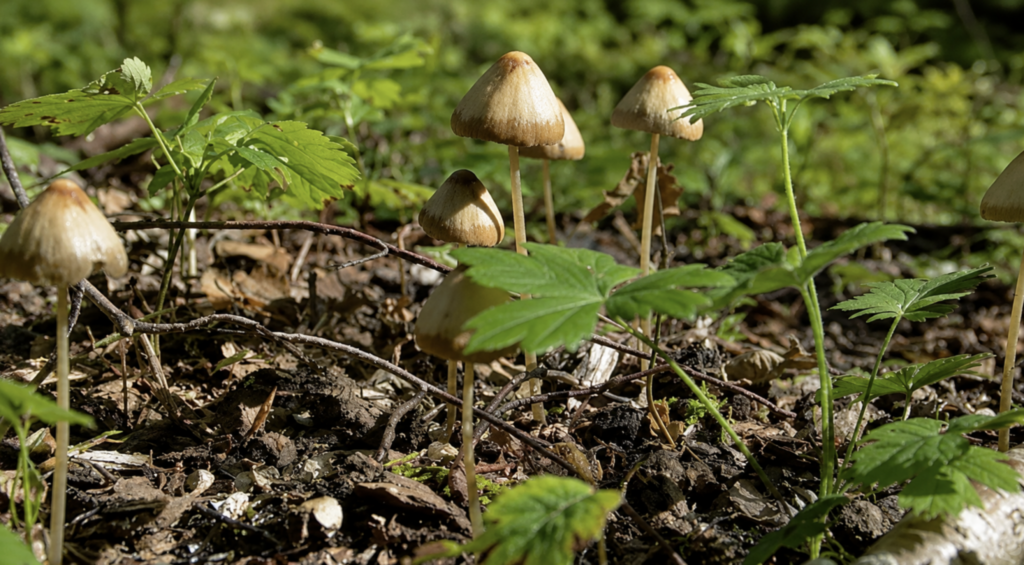
For decades, antidepressants have been the standard treatment for depression, helping millions of people manage symptoms that can otherwise become overwhelming. But a surprising new contender is attracting serious attention from researchers around the world. Psilocybin, the naturally occurring psychedelic compound found in so called “magic mushrooms,” could soon transform the way depression is treated.
While these mushrooms have long been associated with recreational use and psychedelic experiences, scientists now believe they may offer something far more valuable. If current research continues to deliver promising results, psilocybin based therapies could become a mainstream treatment within the next few years.
Leading this research is Imperial College London, where scientists are investigating whether psilocybin can provide relief for people suffering from mild, moderate, and severe depression. In one clinical trial involving 60 participants, researchers observed remarkable changes after patients underwent carefully supervised psilocybin therapy.
Many participants described feeling an emotional breakthrough rather than simply masking their symptoms. Instead of feeling emotionally numb, several reported experiencing a sense of release, allowing them to process feelings they had struggled with for years.
This differs significantly from how many conventional antidepressants work. Although these medications help countless people, some patients report feeling emotionally flattened or disconnected while taking them. In addition, antidepressants can produce side effects that range from nausea and weight changes to insomnia, fatigue, and reduced sexual function.
Psilocybin appears to offer some important advantages. Current research suggests it carries a relatively low risk of addiction, and unlike many other substances, fatal overdoses are considered extremely rare. These characteristics have made scientists increasingly interested in its medical potential.
However, psilocybin is far from a perfect solution.
One of its greatest risks is the possibility of an intensely frightening psychedelic experience, often referred to as a “bad trip.” During these episodes, users may experience severe anxiety, paranoia, confusion, or vividly relive traumatic memories. For this reason, researchers stress that psilocybin therapy should only be administered in controlled clinical environments with trained medical professionals present throughout the experience.
The renewed excitement surrounding psychedelic medicine is not entirely new. During the 1950s and 1960s, researchers across several countries actively studied substances such as psilocybin and LSD. Early findings suggested these compounds could help treat addiction, depression, anxiety, and psychological trauma.
Much of that promising work came to an abrupt halt during the late 1960s. Public concern over recreational drug use, combined with controversial government experiments such as the CIA’s infamous MKUltra program, dramatically changed public opinion. As governments launched the War on Drugs, psychedelic research was largely abandoned for decades.
Today, attitudes are beginning to shift once again.
Modern clinical studies are conducted under strict ethical guidelines, and researchers are revisiting questions that remained unanswered for nearly half a century. Many scientists argue that psychedelic substances deserve to be evaluated based on scientific evidence rather than historical stigma.
Some researchers even point out that legal substances such as alcohol and tobacco are responsible for significantly greater health risks than psilocybin. Meanwhile, antidepressant prescriptions continue to climb. In 2018 alone, more than 70 million antidepressant prescriptions were issued, and those numbers have continued to increase as depression becomes more common worldwide.
Despite the encouraging results, experts emphasize that psilocybin is not yet ready to replace traditional antidepressants. Larger clinical trials are still needed to confirm its long term safety, determine which patients benefit the most, and establish standardized treatment protocols.
Still, the evidence gathered so far has been difficult to ignore. For some patients who have not responded to existing medications, psilocybin therapy could eventually provide an entirely new path toward recovery.
The idea that a naturally occurring mushroom might reshape modern mental health treatment once sounded like science fiction. Today, it is becoming one of the most closely watched areas of psychiatric research, and it may not be long before these once forbidden fungi find a place inside hospitals instead of being confined to the fringes of medicine.