Nothing about a sloth suggests danger. It hangs around in trees, moves at a pace that barely registers as movement, and wears what looks like a permanent smile.
That face has done a lot of work for its reputation.
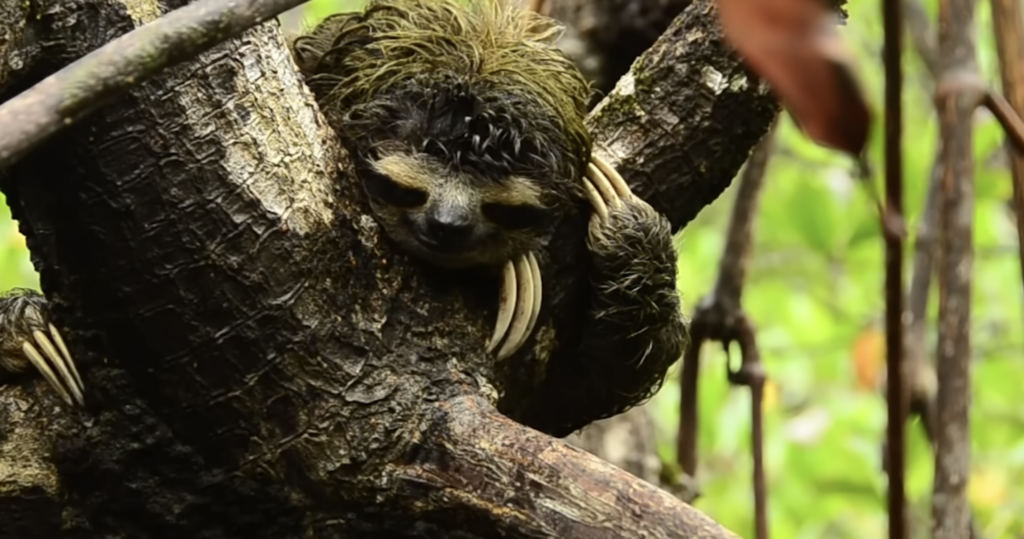
Underneath it sits an animal carrying curved claws roughly 10 centimeters long, and the willingness to use them on anything that corners it.
Sloths live throughout the tropical rainforests of Central and South America, growing to around 60 centimeters long depending on the species.
Everything about their bodies is built for life above the ground, where they spend most of their time suspended upside down from branches.
Those claws are the reason it works. They hook over branches and hold the animal’s entire weight indefinitely, which is why they’re shaped the way they are.
At rest they look almost decorative. That changes the moment a sloth decides it’s in trouble.
The slowness misleads people too.
Their famously unhurried movement is about energy, not incapacity. Sloths run an extremely low metabolic rate and organize their entire existence around spending as little energy as possible, so they move slowly because there’s usually no reason not to.
Give them a reason and the calculation shifts.
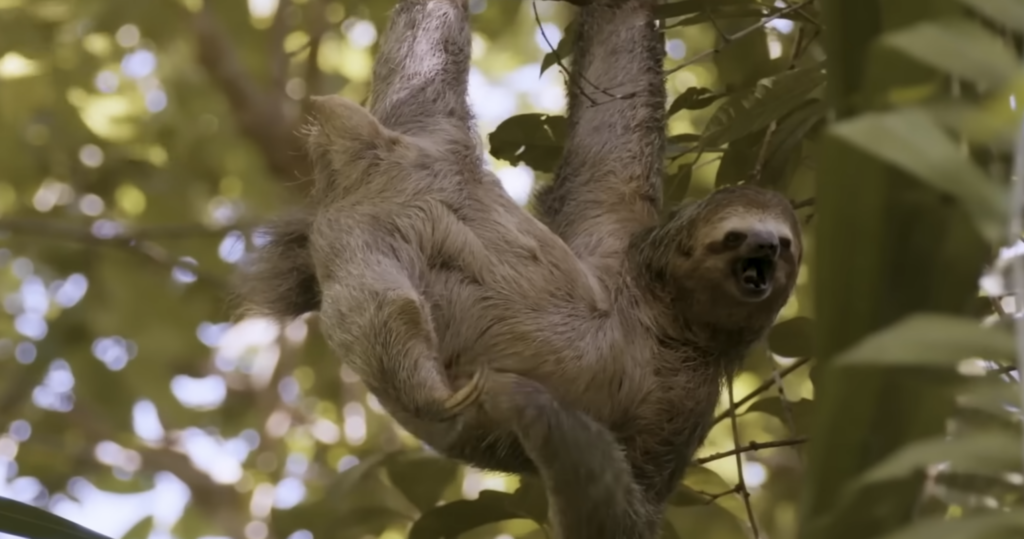
A frightened sloth will use both claws and teeth, grabbing onto whatever is threatening it and delivering serious scratches and bites. The length of those claws helps here, letting the animal anchor itself while its limbs do the work.
Which is a good argument for admiring them from a distance.
Their preference is always to stay up in the canopy, where camouflage does most of their defending for them. Algae grows in sloth fur, giving them a greenish tint that makes them remarkably difficult to pick out among the leaves.
A sloth has no interest in attacking anybody. It wants to be left alone in a tree.
Problems start when someone approaches too closely or tries to pick one up. An animal that feels trapped has limited options, and a sloth’s remaining option causes genuinely painful injuries.
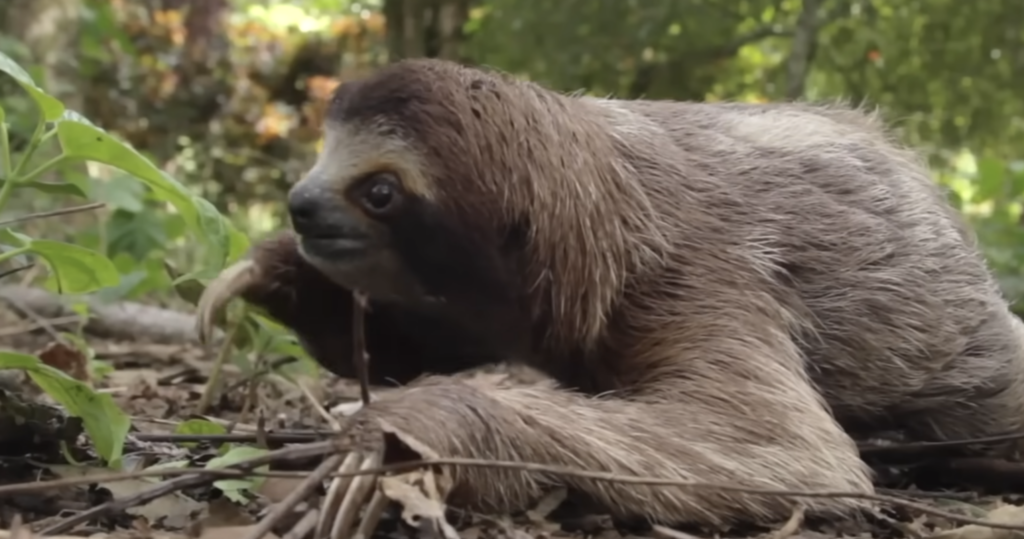
They do come down occasionally, though far less often than they stay up.
The strangest reason for the trip is to defecate, which they do roughly once a week, descending all the way to the forest floor to manage it before climbing straight back up.
That slow, deliberate lifestyle has kept the species going for millions of years. It has also produced a persistent misunderstanding, because people see an animal that never rushes and assume it cannot defend itself at all.
Nothing about that follows.
No sloth is going to pursue you through the rainforest. Corner one and the encounter reshapes itself quickly, because equipment designed to hold an animal to a tree works just as well for holding onto you.
So the next time one of them smiles down from a branch, appreciate how misleading that expression actually is.
The slowest mammal on the planet is still perfectly capable of fighting back.