Your hand is caught, and the animal holding it has no intention of letting go.
Everything in your body is telling you to wrench free. That instinct is about to make this considerably worse, because pulling against those jaws tears the wound wider and pushes more venom into it.
The lizard can hold this position for several minutes. What you do during those minutes determines how badly this ends.
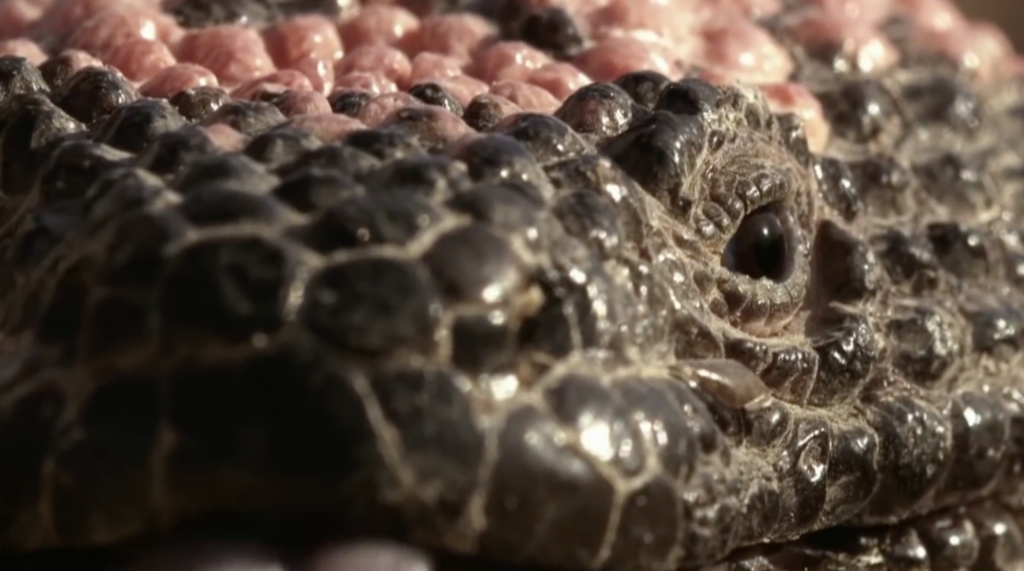
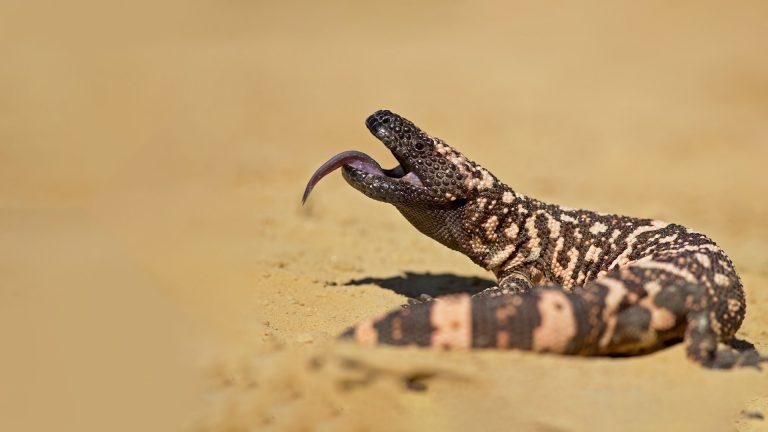
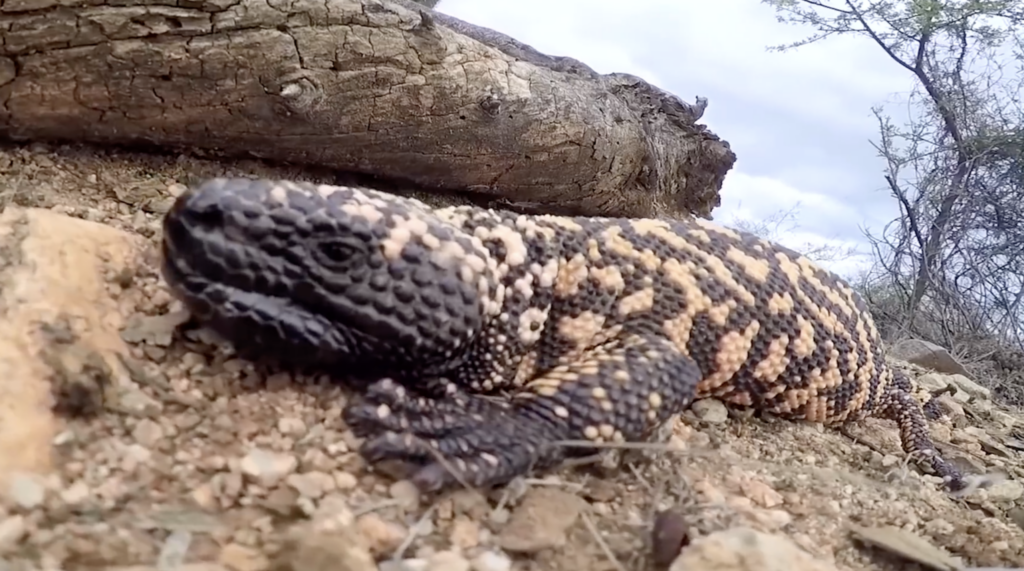
The Gila monster looks built for intimidation, with bright warning colors, rough beaded skin, and a name that suggests something considerably more aggressive than reality.
In practice it’s one of the least energetic predators you’ll encounter. Most of its existence happens underground, sheltering from desert heat and conserving energy between meals.
Those meals are worth mentioning though, because when it does eat, it can put away close to a third of its own body weight in one sitting.
Eggs, small mammals, and birds make up the menu. People do not appear on it anywhere.
What people do trigger is the defense mechanism, and that’s where the danger starts.
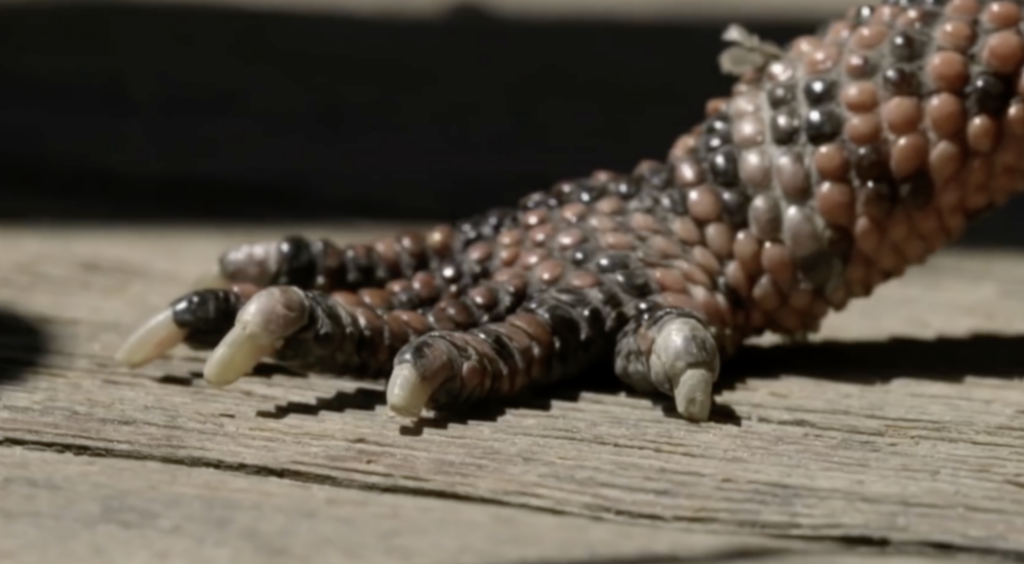
Snakes deliver venom through hollow fangs in a single strike. A Gila monster works differently, channeling venom along grooves in its teeth while it bites and chews, which means the dose depends entirely on how long it stays attached.
Victims report extreme pain, swelling, nausea, dizziness, and dangerous shifts in blood pressure.
And there is no specific antivenom for it.
Step 1: Stay away
Almost every bite is avoidable, because these animals genuinely do not want the encounter.
They move at roughly 1.6 km/h, which rules out any possibility of being chased, and they avoid confrontation whenever they can.
Bites happen when people reach for them, pick them up, or crowd them. Admire from a distance and the risk is close to zero.
Step 2: Do not pull away
If it does take hold, resist the instinct that arrives first.
Gila monsters have powerful jaw muscles and a stubborn feeding response, so yanking your hand back makes the animal clamp down harder. You get more tissue damage and more venom for the effort.
Stay still. Sudden movement is the enemy here.
Step 3: Try to calm the animal
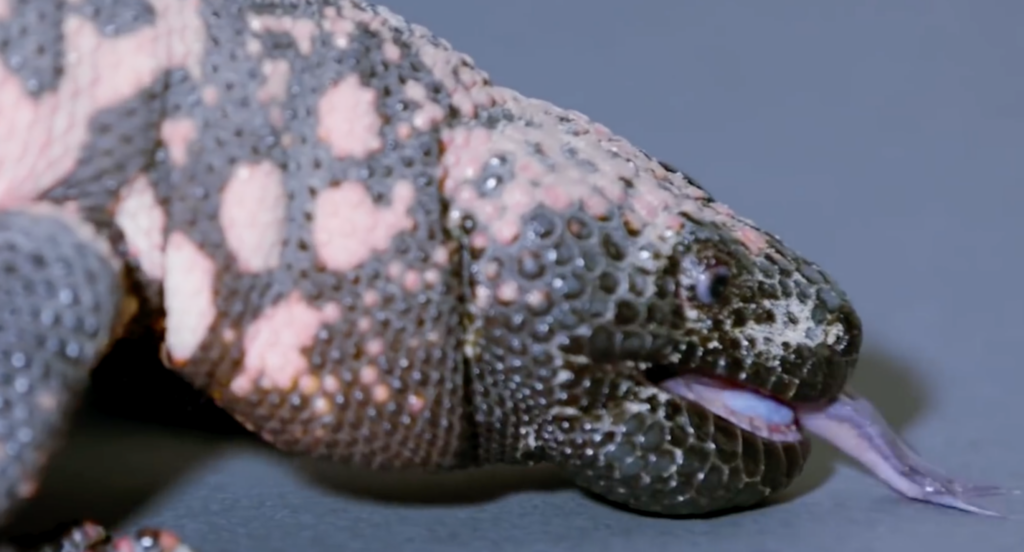
Once you’re bitten, the objective shifts to lowering the animal’s stress level.
Bringing it down toward the ground can help, since it feels less threatened with something solid beneath it. Fighting it does the opposite.
There’s a documented case that shows exactly how this plays out.
In 2001, zoologist Kip Siemens was cleaning a Gila monster enclosure at a zoo when the animal bit his hand without warning.
The pain was immediate and overwhelming. His first move was to shake the lizard off, and predictably, the grip only tightened.
It would not let go.
Step 4: Release the grip
Several minutes passed before he managed to work a spoon into the animal’s mouth and pry the jaws apart.
Getting free turned out to be the easy part.
The venom went to work shortly afterward, bringing severe pain, blurred vision, tingling through his limbs, and tightness in his chest. His condition deteriorated to the point where emergency treatment became necessary.
Step 5: Get medical help immediately
Any Gila monster bite needs urgent attention, and it’s worth understanding what treatment actually involves.
With no antivenom available, doctors cannot neutralize anything. They manage symptoms, control the pain, and support the body while it processes the venom out on its own schedule.
Siemens recovered fully. He also decided he was finished working with Gila monsters permanently.
Which is the real lesson in all of this. We tend to measure how dangerous an animal is by how fast it moves or how aggressively it hunts.
Some of them don’t need either. They just need to get hold of you and wait.