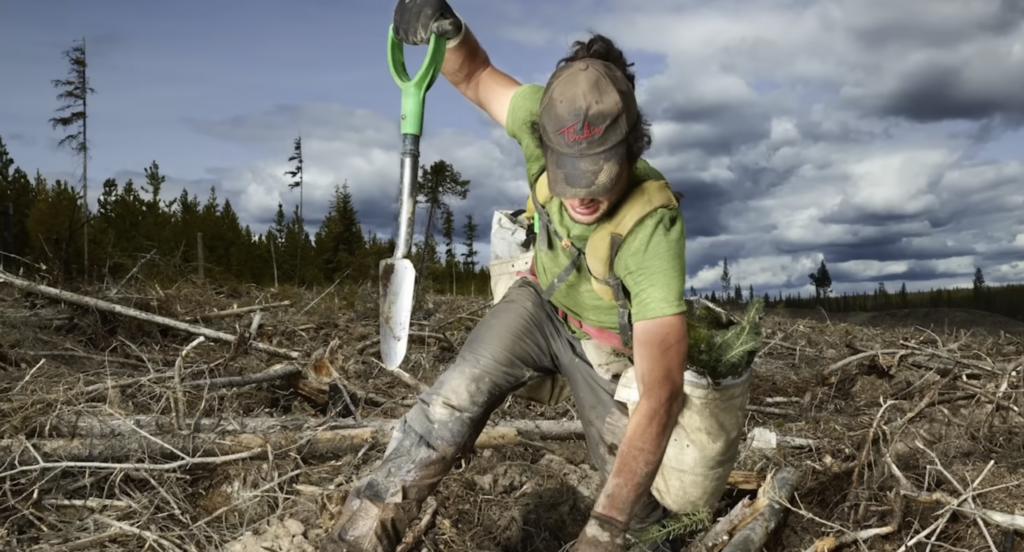
Before sunrise, deep in remote terrain, a single worker steps out of a tent into cold, uncertain weather. The job ahead is simple in theory but brutal in practice. Shovel in hand, heavy gear on their back, and no guarantee of safety or comfort, they begin planting trees one by one. On a strong day, a skilled planter might manage a few thousand trees over long hours of physical labor.
Now multiply that effort across weeks, months, and years. The scale becomes almost incomprehensible. Reforestation is not a symbolic task. It is slow, repetitive, physically demanding work that takes place in unpredictable environments filled with insects, uneven ground, and rapidly changing weather conditions.
Despite its difficulty, this work exists for a critical reason. Earth’s climate is already changing, and the consequences are becoming more visible each year. Since the beginning of the 20th century, global temperatures have steadily increased, and even small changes in average temperature can have large effects on weather systems, ecosystems, and agriculture.
If global temperatures continue to rise, the impact will extend far beyond simple warming. Heatwaves would become more intense, flooding events more frequent, and food production increasingly unstable. Entire ecosystems could be pushed beyond their ability to adapt, leading to large scale species loss across the planet.
This is why climate action has become one of the most urgent challenges facing humanity. Various ideas have been proposed to manage rising temperatures, including large scale engineering solutions such as space based reflectors that could reduce incoming solar radiation. However, these remain theoretical and extremely complex.
On Earth, one of the most natural tools available for climate regulation already exists: forests. Trees absorb carbon dioxide from the atmosphere and store it while releasing oxygen. They act as living systems that help regulate the composition of the air we breathe.

However, the current global forest system is under pressure. While Earth still contains trillions of trees, billions are lost each year due to deforestation, land use change, and wildfires. In many regions, the rate of tree loss exceeds the rate of natural or artificial regrowth.
This imbalance has significant consequences. A large portion of global greenhouse gas emissions is linked to deforestation and land degradation. When forests are removed, stored carbon is released back into the atmosphere, contributing further to climate instability.
Reversing this trend would require an enormous coordinated effort. One of the most widely discussed proposals is large scale reforestation on a global scale, potentially involving the planting of a trillion new trees across different ecosystems and regions.
If achieved, this level of reforestation could significantly offset carbon emissions over time. Trees would gradually absorb large amounts of carbon dioxide, helping to stabilize atmospheric conditions and slow the rate of climate change. However, the benefits would not be immediate, as forests take decades to mature and reach full absorption capacity.
The scale of such a project is difficult to grasp. Planting a trillion trees would require global coordination across governments, industries, and communities. It would involve land management planning, species selection, and long term ecological monitoring to ensure forests grow in sustainable ways.
Even if every person on Earth participated, the task would still require long term commitment and structured systems. Each individual contribution would be small compared to the total goal, but combined efforts would be essential to making progress.
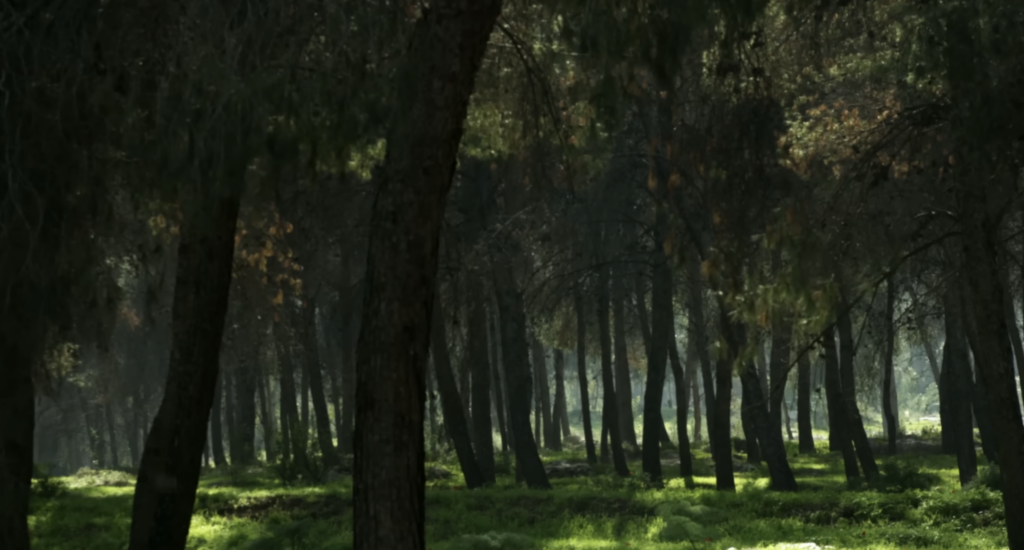
Despite its scale, reforestation is still considered one of the more practical climate solutions compared to many high technology alternatives. It does not rely on untested engineering systems or space based infrastructure, but instead builds on natural processes that already exist.
At the same time, forests alone cannot solve every aspect of climate change. They must be combined with reductions in emissions from energy production, transportation, and industry in order to create a stable long term balance.
New technologies are also emerging to support reforestation efforts. Automated systems, including drone based tree planting, are being developed to accelerate the process by dispersing seeds across large areas of land more efficiently than manual planting alone.
These systems could potentially plant thousands or even hundreds of thousands of seeds per day, significantly increasing the speed of restoration efforts in damaged ecosystems. However, they still require careful oversight to ensure that planted forests are ecologically suitable and sustainable.
There is also growing interest in combining traditional forestry work with modern technology and data systems. Satellite monitoring, artificial intelligence, and environmental mapping tools are increasingly used to track forest health and guide reforestation strategies.
Ultimately, the idea of planting a trillion trees represents more than just a number. It reflects a larger shift in how humanity approaches environmental responsibility and long term survival on a changing planet.
While the challenges are immense, the underlying principle remains simple. Restoring natural systems is one of the most powerful tools available for stabilizing Earth’s climate and protecting future generations.
Whether through human effort, technological support, or global cooperation, large scale reforestation represents a critical path forward in the ongoing effort to balance human activity with the natural world.