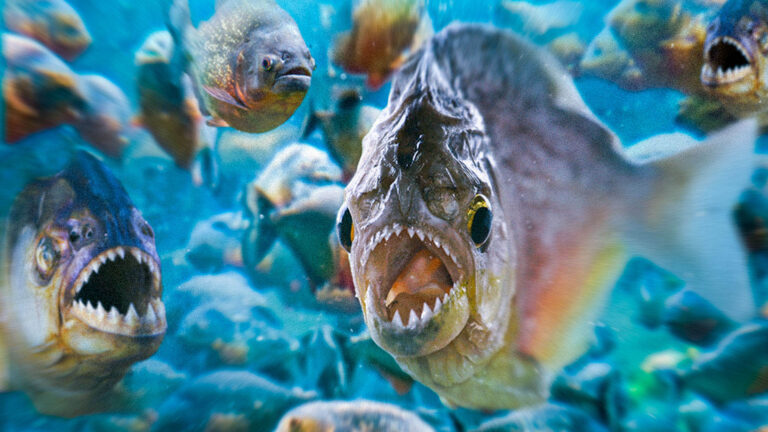
Few animals in freshwater ecosystems have a reputation as intense as piranhas. Popular culture often shows them as aggressive predators capable of stripping flesh in seconds, turning any river encounter into a life threatening situation.
But what actually happens if you end up in waters where piranhas live? Are they truly the relentless attackers they are made out to be, or is the reality far more controlled and predictable?
Red bellied piranhas are native to South America, especially the Amazon Basin, along with parts of the Orinoco and Paraná river systems. These environments are vast, complex, and home to many species that interact in a delicate ecological balance.
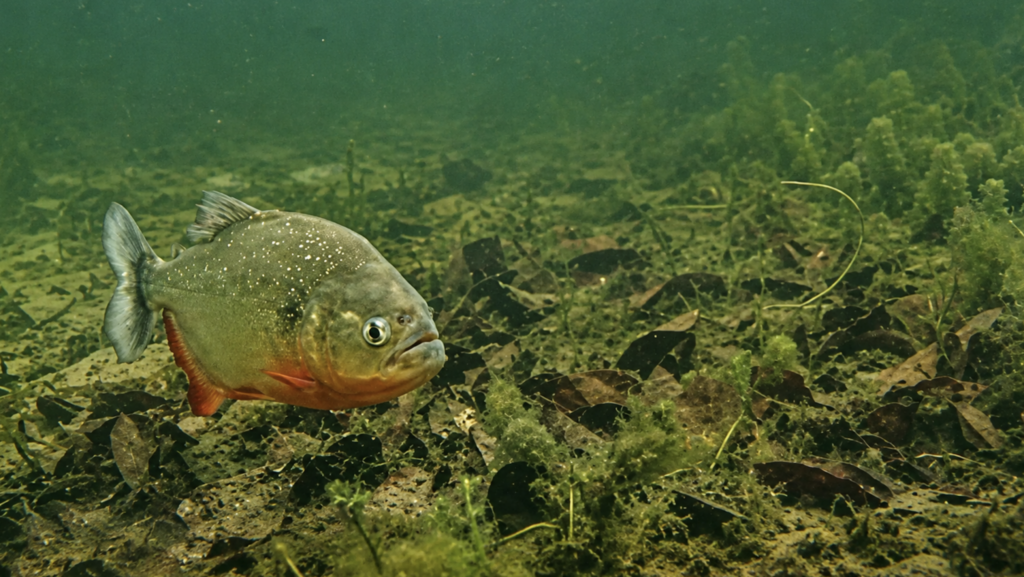
Despite their reputation, piranhas are not mindless killing machines. Most species are scavengers or opportunistic feeders. Even the red bellied piranha usually feeds on insects, smaller fish, and dead animals rather than actively hunting large prey.
Human encounters are rare and usually depend on specific environmental conditions. These can include low water levels, limited food availability, or the presence of blood or movement in the water that attracts attention.
Even in these situations, piranha behavior is typically defensive or investigative rather than coordinated mass feeding. The idea of constant aggressive attacks is largely overstated.
If a person finds themselves in water where piranhas are present, the priority is simple: exit the water as quickly and calmly as possible. The longer someone remains in shallow, confined water, the higher the chance of interaction.
Sudden movements and frantic splashing should be avoided. Vibrations in the water can travel quickly and may draw attention, as piranhas are highly sensitive to movement.
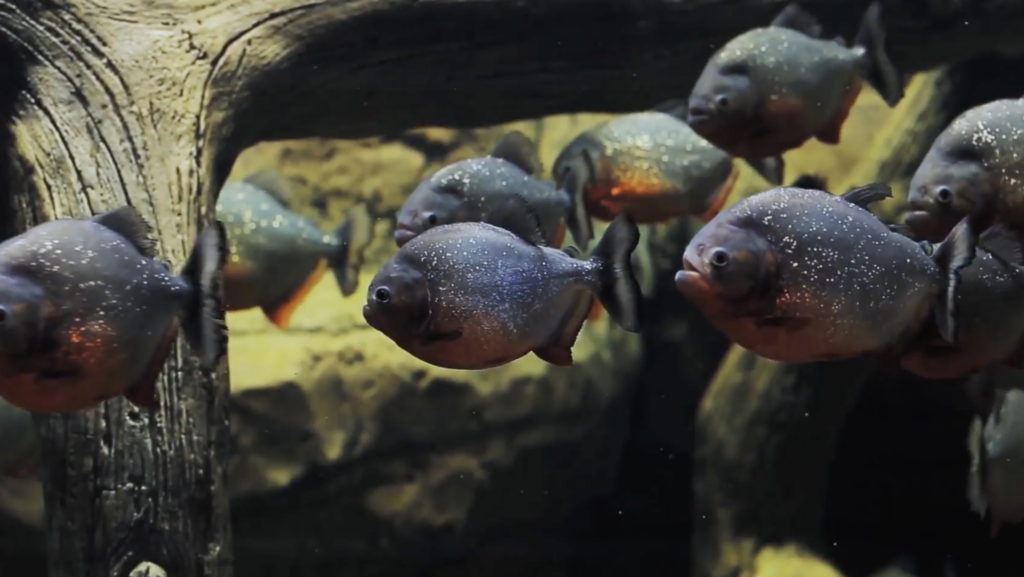
Piranhas rely heavily on sensory input to detect disturbances in their environment. Rapid splashing can resemble the signals of injured or struggling prey, which may increase curiosity or defensive responses.
However, in normal conditions, they are not actively hunting humans and will generally avoid larger animals unless provoked or forced into extreme conditions.
Another factor that can influence risk is injury. Open wounds release scents and particles into the water, which may attract attention in certain circumstances. While this does not automatically lead to an attack, it can increase the likelihood of investigation.
Because of this, caution is especially important in areas where fish populations are concentrated, such as during dry seasons when water levels drop and competition for food becomes more intense.
Once safely out of the water, any injuries should be treated promptly. Piranha bites can cause sharp cuts due to their teeth structure, and even minor wounds should be cleaned carefully to reduce infection risk.
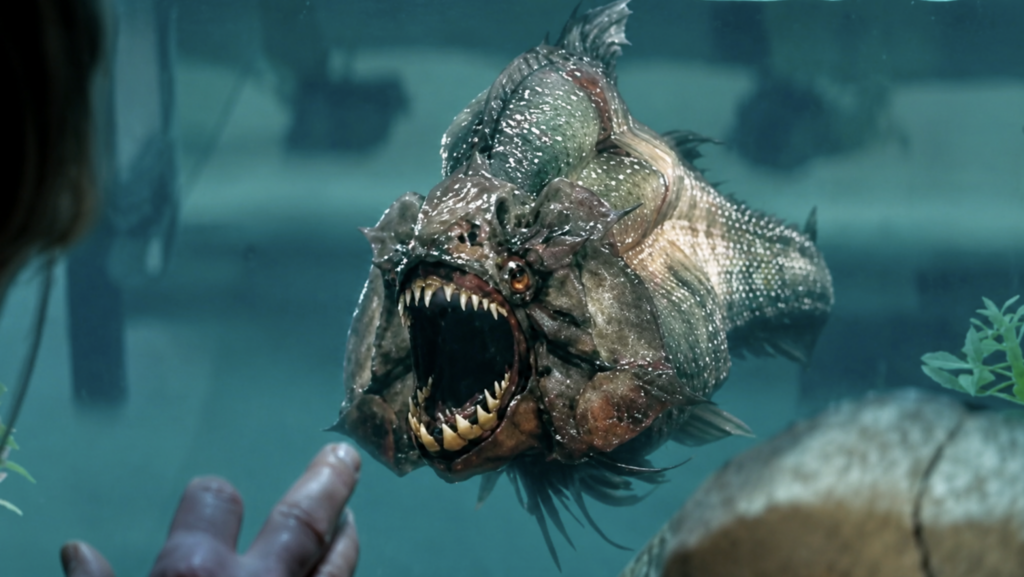
Despite their fearsome reputation, most real world encounters with piranhas result in little to no harm. Serious attacks on humans are extremely rare, and in many regions people share the same waterways without incident.
The popular image of a rapid, coordinated feeding frenzy is largely a myth shaped by media and entertainment. In reality, piranhas play an important ecological role as scavengers and help maintain balance in freshwater ecosystems.
Understanding their behavior is key to reducing risk. Survival in their environment is not about confrontation, but about awareness, calm movement, and quickly leaving the water when necessary.
In most cases, piranhas are not the threat they are believed to be. The real danger is panic, not the fish themselves.