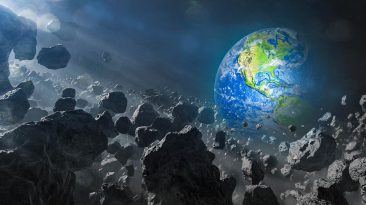
In 2015, NASA’s Kepler Space Telescope identified one of the most Earth like planets ever discovered, Kepler 452b. It orbits a Sun like star and sits in what scientists call the habitable zone, where conditions could allow liquid water to exist. Because of its similarities, it is often referred to as Earth 2.0, even though it lies far beyond our Solar System.
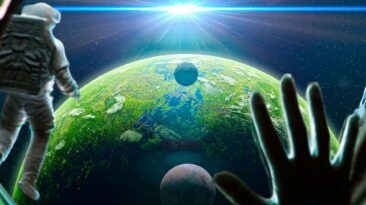
Now imagine a completely different scenario. Instead of a distant planet thousands of light years away, what if a second Earth existed right here in our own Solar System. A twin planet sharing similar size, gravity, atmosphere, and possibly even life. At first, this idea sounds stable and almost peaceful, but the reality would be far more complex.
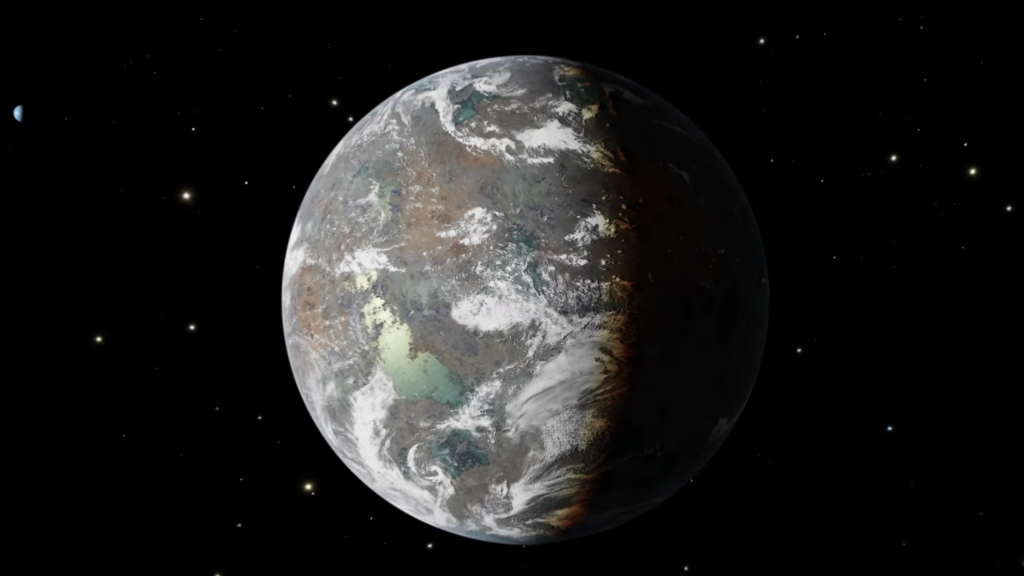
If another Earth were placed somewhere in our planetary neighborhood, the most likely region would be between Earth and Mars. This area sits within the Sun’s habitable zone, where temperatures are not too extreme for Earth like conditions. However, simply placing a second planet there would immediately create gravitational complications.
Two planets of nearly identical size sharing a similar orbital region would not remain stable in the long term. Their gravitational influence would constantly affect each other, gradually altering their paths around the Sun. Over time, this interaction could lead to one of several outcomes, none of which are particularly stable.
In the worst case, the two planets could eventually collide, creating a catastrophic event on a planetary scale. In another scenario, one planet could be pushed into a closer orbit toward the Sun while the other drifts outward, breaking the balance of the system entirely.
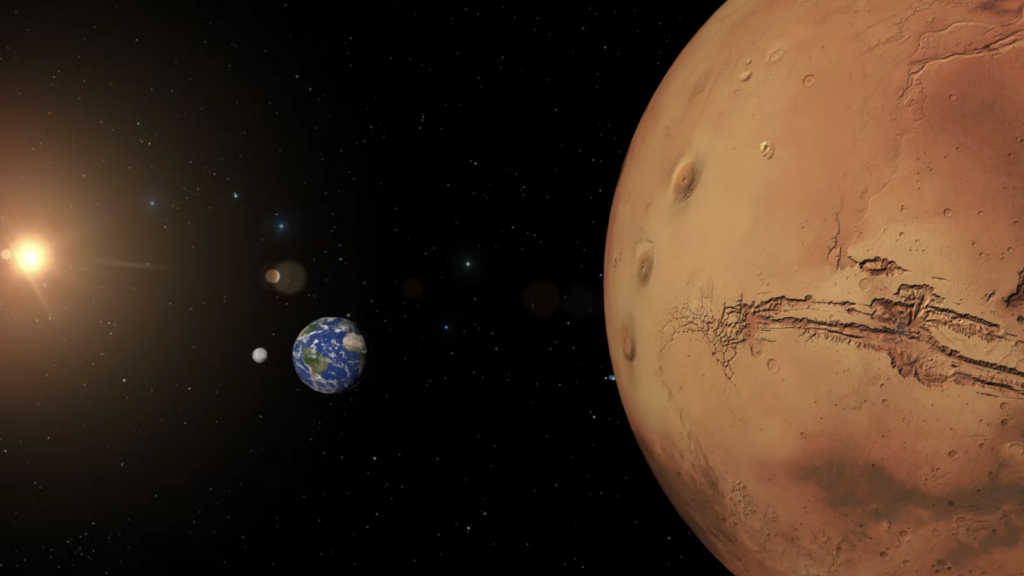
There is also a more unusual possibility where both planets could share an orbital region for long periods of time. In this case, they would effectively co exist in a shared path around the Sun, maintaining a delicate gravitational balance that could last for millions or even billions of years under ideal conditions.
Another theoretical arrangement is a binary planet system, where two Earth sized worlds orbit each other while jointly orbiting the Sun. This would resemble the relationship between a planet and its moon, but on a much larger and more complex scale.
However, physics suggests that such a system would still be unstable over long periods. Instead of remaining fixed, the two planets would likely exchange orbital positions over time, influenced by subtle gravitational shifts between them and the Sun.
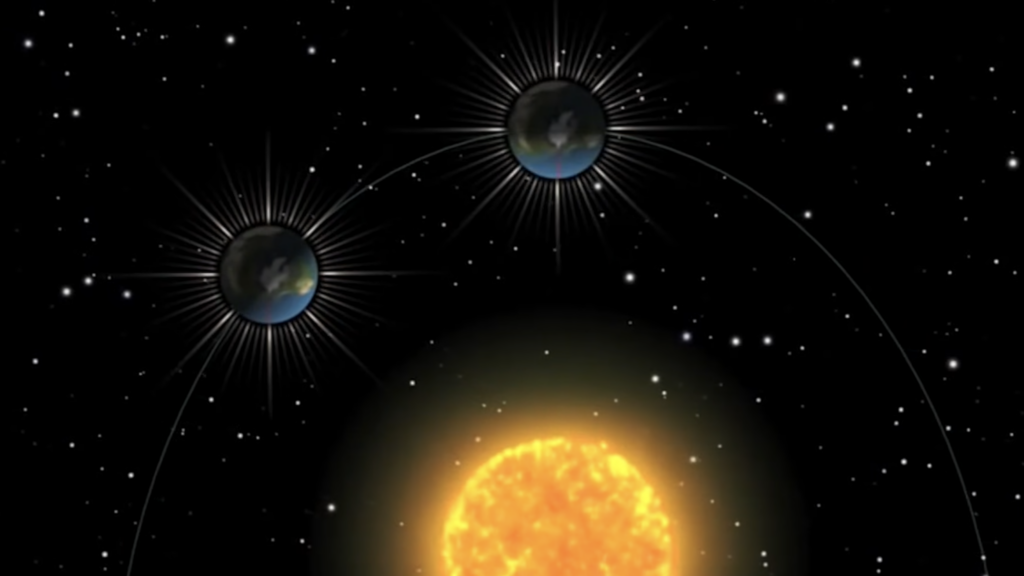
We see a similar type of orbital interaction in the Saturn system between the moons Epimetheus and Janus. These two moons effectively swap orbits every few years due to their gravitational relationship, creating a rare example of orbital exchange in a natural system.
As they approach each other, gravitational forces cause one moon to speed up while the other slows down. This interaction results in a swap in orbital positions, after which the process gradually repeats over time. While this works for small moons, scaling it up to Earth sized planets introduces far greater instability.
If a second Earth existed and followed similar orbital behavior, the long term effects on both planets would depend heavily on timing, distance, and gravitational resonance. Even small changes could drastically alter climate systems, orbital stability, and environmental conditions on both worlds.

Assuming both planets developed life independently, the question of interaction becomes even more fascinating. There is no guarantee that intelligent life on both worlds would evolve in similar ways, even if environmental conditions were nearly identical.
Biology, culture, and communication could differ completely between the two planets. Similar environments do not automatically produce similar civilizations, meaning that contact could range from complete understanding to total incomprehension.
The first step in such a scenario would likely be remote communication. Radio signals or other forms of electromagnetic transmission could serve as the initial bridge between civilizations, long before any physical contact became possible.
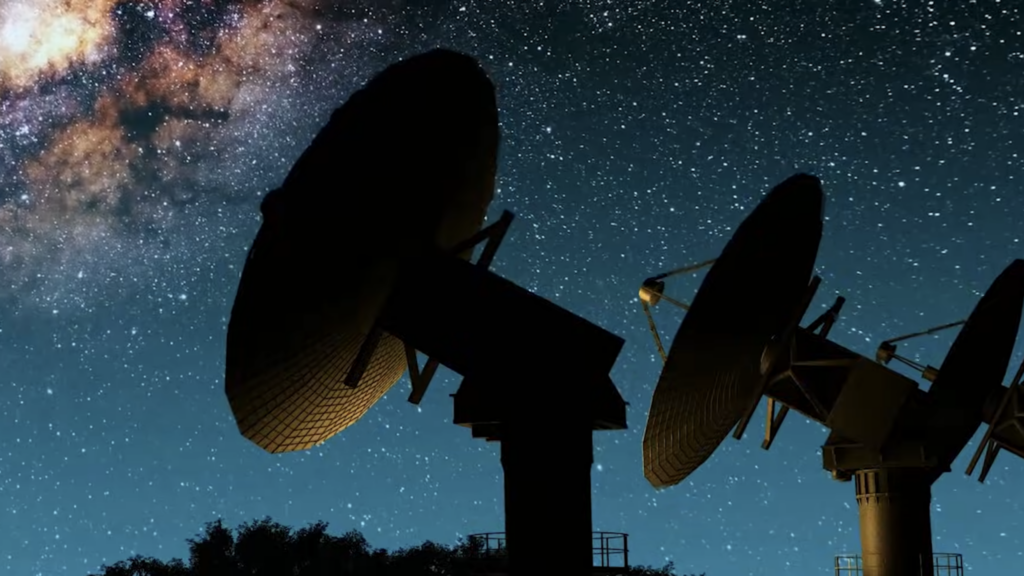
Over time, if communication were successful, more advanced forms of interaction might develop. However, the challenges would remain enormous, from language differences to technological compatibility and mutual understanding of intent.
Human history shows that even small gaps in language and culture can create significant misunderstandings. When scaled to an entirely separate planet, these differences could become even more profound and difficult to overcome.
Despite all the uncertainty, the idea of a second Earth highlights an important truth about our own planet. Earth is not just rare in its physical properties, but also in the precise conditions that allow it to remain stable, habitable, and relatively peaceful over long periods of time.
For now, the concept of a twin Earth remains a thought experiment, one that helps us better understand both the fragility and uniqueness of our own world within the vast structure of the Solar System.