Many people have a bucket list filled with exciting experiences they hope to enjoy one day. But what if you made the opposite kind of list? An anti bucket list would include the things you never want to experience in your lifetime. Near the top of that list for most people would be getting struck by lightning.
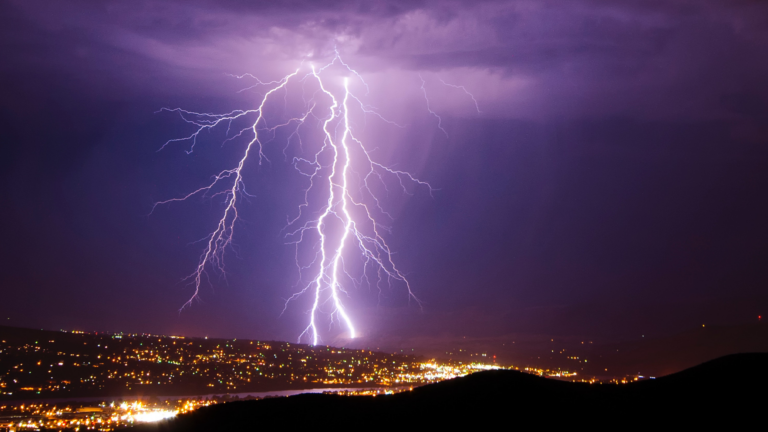
It might seem like an incredibly rare event that only happens to someone else, but lightning is far more common than many people realize. Every second, about 100 lightning bolts strike Earth’s surface. That adds up to more than 8 million strikes every day and roughly 3 billion every year.
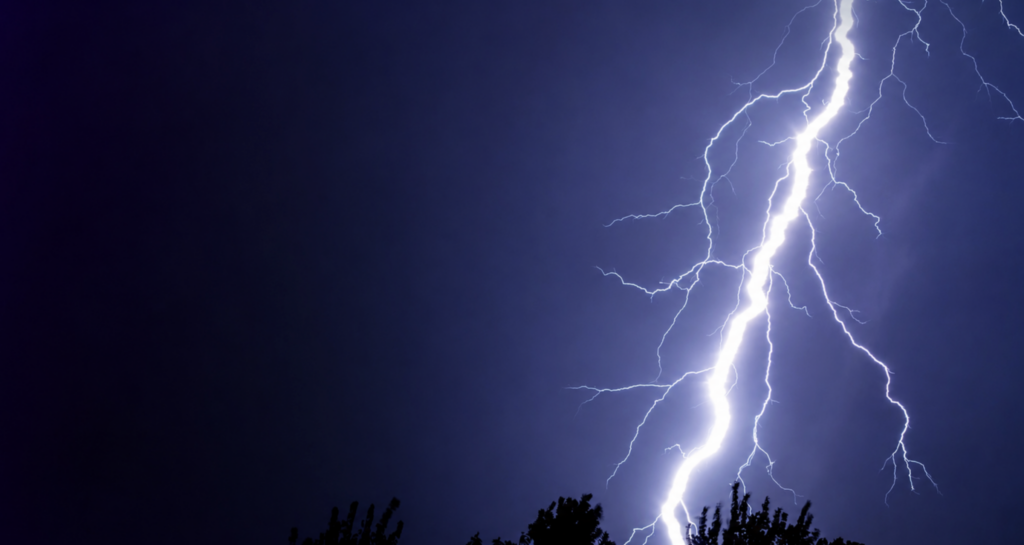
Each bolt is astonishingly powerful. A typical lightning strike carries around 15 million volts of electricity, making it one of nature’s most dangerous forces.
While many people imagine severe burns as the main consequence of a lightning strike, medical research shows that survivors are more likely to suffer neurological damage, including traumatic brain injuries, memory problems, and long term nerve disorders. In many cases, a lightning strike can also be fatal.
Fortunately, science offers several simple ways to reduce your risk during a thunderstorm.
One of the most important rules is to stay away from open fields, hilltops, and other exposed locations. Lightning naturally seeks the tallest object in an area. If you are standing alone in an open space, you could become the easiest target. Instead, move toward lower ground such as a valley or ravine if no sturdy shelter is available.
If you cannot reach shelter, crouch low with your feet close together and your head tucked down. This position reduces your height while limiting contact with the ground. Never lie flat on the ground. Although it may seem safer, it actually increases your exposure to ground current.

Ground current is one of the leading causes of lightning related injuries and deaths. After a bolt strikes the ground, electrical energy spreads outward across the surface. This current can travel up to 30 meters, or about 100 feet, from the point of impact. By keeping your contact with the ground as small as possible, you reduce the chance that this current will pass through your body.
Water is another major hazard during thunderstorms. If you are swimming outdoors and hear thunder, get out of the water immediately. Lakes, rivers, beaches, and outdoor swimming pools should all be avoided until at least 30 minutes after the last sound of thunder or visible lightning. Water conducts electricity efficiently, allowing dangerous currents to spread over large distances.
Even indoor swimming pools can present risks if they are connected to plumbing or electrical systems. During an active thunderstorm, it is safest to stay completely out of the water.

If you are boating and cannot reach shore before the storm arrives, lower your profile by dropping anchor if it is safe to do so and crouching as low as possible inside the boat. Avoid standing or making yourself the highest point on the water.
Trees may seem like a good place to hide from rain, but they are among the worst places to seek shelter during a lightning storm. Lightning frequently strikes tall, isolated objects, including trees, utility poles, light posts, and traffic signs.
If you are in a forest, move toward an area with shorter trees rather than standing beside the tallest one. Avoid leaning against tree trunks, as electricity can travel through the tree and into the ground around it.
Even carrying certain objects can increase your risk. Holding an open umbrella above your head may make you the tallest object nearby, especially in an open area. During a thunderstorm, it is safer to put the umbrella away and focus on reaching proper shelter.

The safest place to be during a thunderstorm is inside a substantial building or a fully enclosed vehicle with a metal roof. Both provide protection by directing electrical current around the outside rather than through the occupants. Once inside, stay away from windows, avoid using corded electrical devices, and avoid contact with plumbing until the storm has completely passed.
The moment you hear thunder, you are close enough to be struck by lightning. It does not matter if the storm seems far away or the sky above you still looks clear. Lightning can strike several kilometers ahead of the main storm.
Getting struck by lightning may be one of the last things anyone wants to experience, but understanding how lightning behaves can dramatically improve your chances of staying safe. By avoiding open spaces, staying away from water and tall objects, minimizing contact with the ground, and seeking proper shelter as soon as thunder begins, you can greatly reduce your risk and let the storm pass without becoming part of its path.