What could be the most brutal way for an insect to die?
Being struck out of the air by a predator? Snatched in a split second by a reptile’s tongue? Or something far more disturbing, where the body keeps moving while something else is in control?
In forests across the world, scientists have documented a phenomenon that sounds fictional but is very real. A mysterious fungus that invades insects and turns them into controlled carriers of its own life cycle.
It is called Cordyceps, and it survives by turning insects into what looks like zombies.
Not the movie kind. No walking corpses. Instead, living insects that slowly lose control of their behavior while the fungus takes over from the inside.
Cordyceps is not a single species. It is a large group of parasitic fungi with more than 400 known varieties, each adapted to infect specific insects. Some target only one host species, such as carpenter ants. Others are far less selective and can infect multiple types of insects.
Their mission is simple. Use a living insect as a platform to reproduce and spread. It begins with microscopic spores drifting through the environment. When an insect comes into contact with them, the spores attach to its body and eventually penetrate the outer shell.
Inside, the fungus begins to grow slowly, feeding on internal tissues over several days.
At first, the insect shows no obvious signs of pain. But its behavior starts to shift in strange and unsettling ways. Movement becomes erratic. Activity increases. Instincts begin to fail.
Then the behavior changes even further, and the insect begins moving as if it is being directed toward a specific location.
One of the most surprising discoveries about Cordyceps is that it does not always need to fully invade the brain to influence behavior. Instead, it releases bioactive compounds that interfere with the insect’s nervous system. These chemicals can disrupt normal signaling, alter movement patterns, and influence reward systems such as dopamine. In some cases, genetic activity in the host may also be affected.
The result is not traditional mind control, but a form of biological manipulation that reshapes behavior from within.

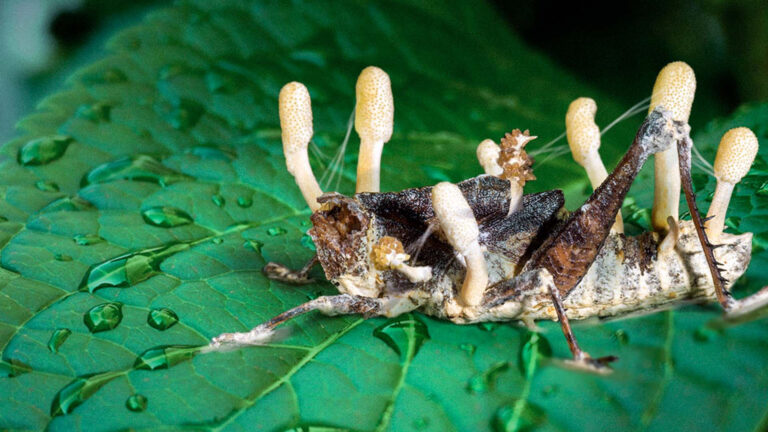
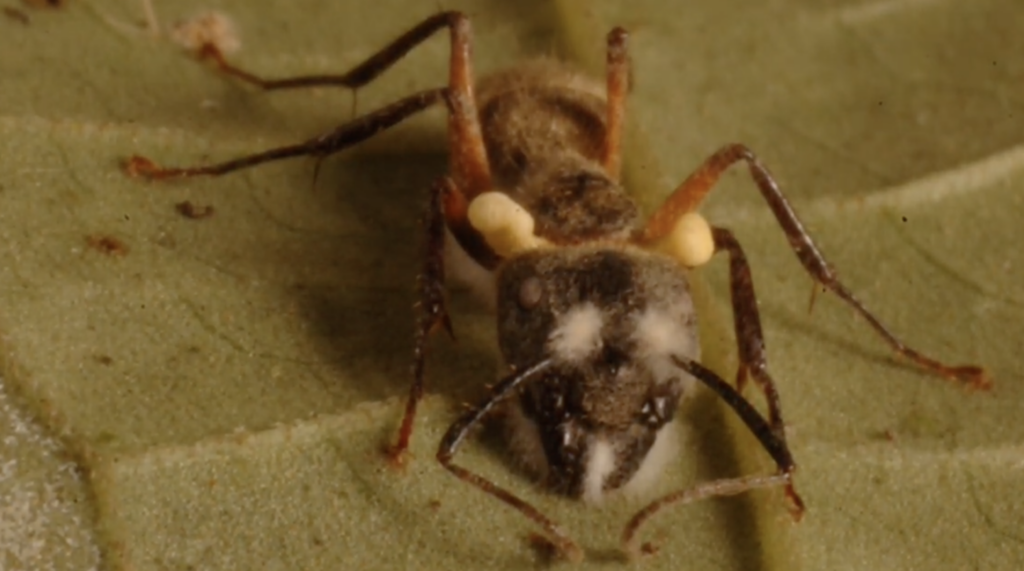
One of the most well known examples is the so called death grip behavior in infected ants. An ant under the influence of the fungus is driven to climb vegetation until it reaches an elevated position. There, it clamps down with extraordinary force and locks itself in place.
This is not random. The location provides the ideal conditions of humidity and temperature for the fungus to grow and reproduce.
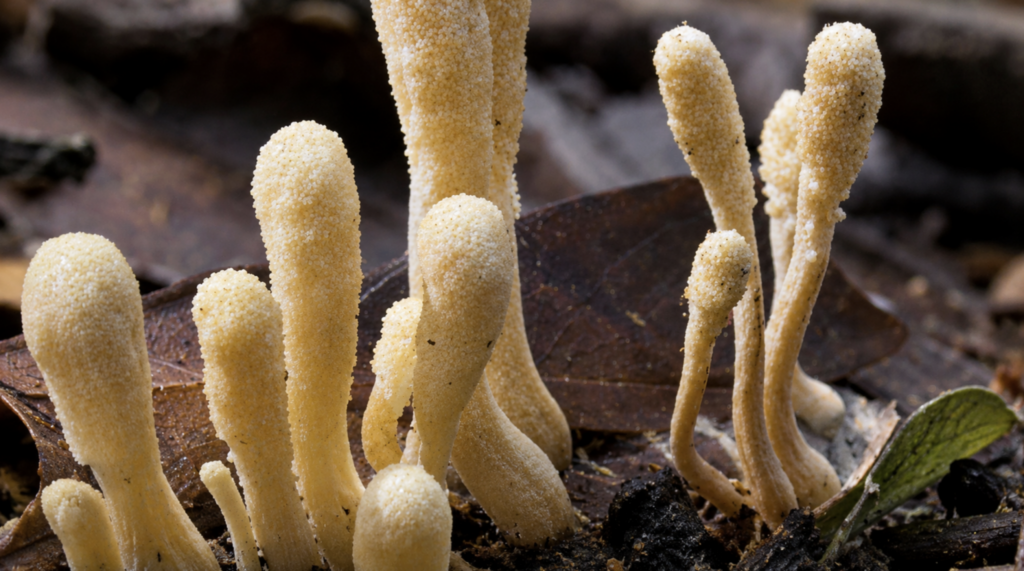
While the ant remains fixed, the fungus consumes what is left of its internal organs. Eventually, a stalk like structure emerges from the ant’s body and releases new spores into the air, continuing the cycle of infection. Entire colonies can be wiped out this way.
However, ants are not defenseless. In some cases, healthy members of a colony are observed removing infected individuals or cleaning spores from their bodies to slow the spread.
Cordyceps is not the only organism capable of this kind of control. Another fungus known as Massospora infects periodical cicadas, insects that spend most of their lives underground before emerging after 13 to 17 years.
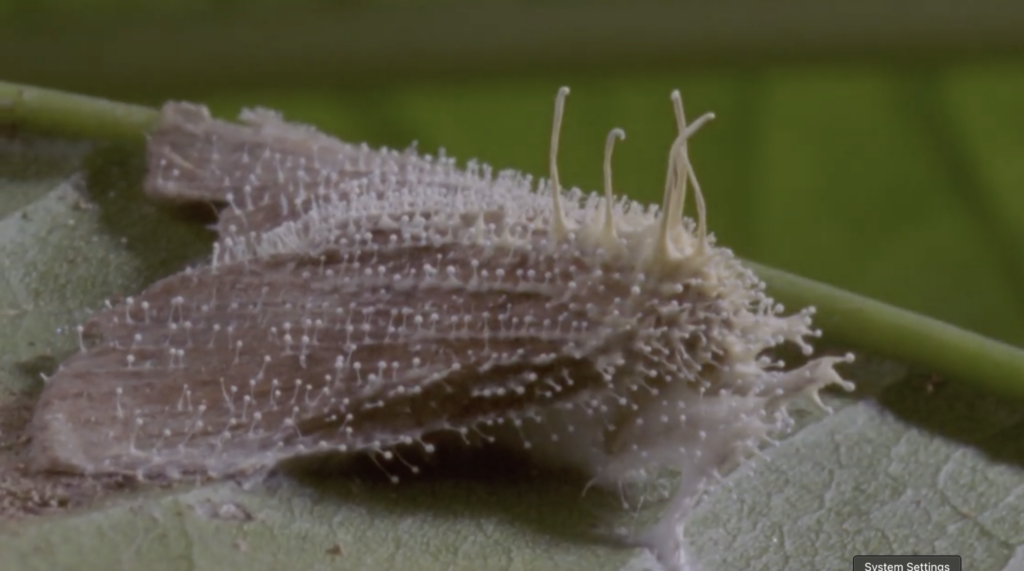
When infected, the cicadas undergo a disturbing transformation. The fungus consumes internal tissues and replaces parts of the body, eventually causing the rear section to break away and be replaced by fungal material.
Even more unusual, Massospora produces compounds that affect behavior, including substances similar to psychoactive chemicals such as psilocybin and amphetamine. Instead of slowing down, infected cicadas become unusually active, continuing to move and spread spores as they interact with others. This makes the infection extremely effective at spreading through populations.
In rare cases, there has been curiosity about consuming infected insects. This is extremely dangerous. They may contain harmful biological compounds, environmental toxins, or trigger severe allergic reactions. Any psychoactive effects would require consuming large amounts and would come with serious health risks.
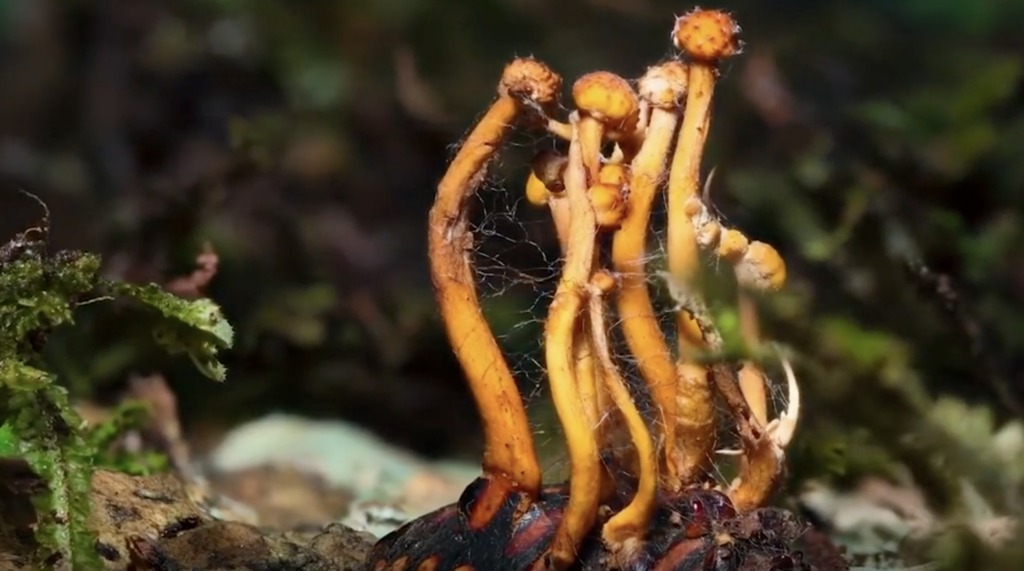
Cordyceps itself, however, has a different reputation in human use. Certain species have been studied and used in traditional practices and modern supplements, where they are explored for potential effects on energy and immunity.
What makes Cordyceps and similar fungi so fascinating is not just their ability to kill, but their ability to redirect life. They do not simply destroy their hosts. They transform them into tools for reproduction.
In nature, survival is not always about strength or speed. Sometimes it is about chemistry, timing, and control operating quietly inside a living body. And in that hidden world, insects are not just victims. They become carriers of a life form that has completely rewritten their behavior from within.