Imagine waking up in London, teleporting to your office in Tokyo, meeting friends for lunch in Mexico City, and ending the evening at an opera in Rome. It sounds like something from a science fiction movie, but scientists believe that one piece of the puzzle behind teleportation already exists.
While humans are nowhere near stepping into a teleportation machine, research into quantum physics suggests the concept may not be as impossible as it once seemed.
The kind of teleportation researchers are studying is very different from the instant travel seen in movies. Instead of physically moving an object through space, scientists focus on transferring information.
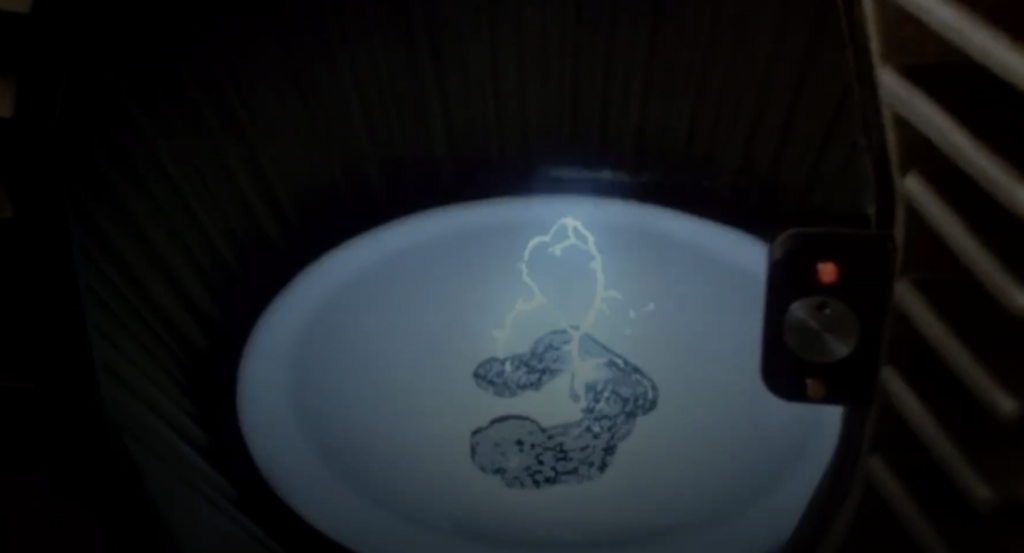
This process is known as quantum teleportation, and although it has already been demonstrated in laboratories, scaling it up to something as large and complex as a human being remains one of the greatest scientific challenges imaginable.
At the heart of quantum teleportation is a strange phenomenon called quantum entanglement. When two particles become entangled, they remain linked in a unique way, even if they are separated by enormous distances. Measuring the state of one particle instantly determines the state of the other, making them behave as though they are still connected.
A simple analogy helps explain the idea. Imagine placing a red card and a blue card into two sealed envelopes. You randomly send one envelope to another country while keeping the other at home. Until either envelope is opened, you do not know which color is inside.
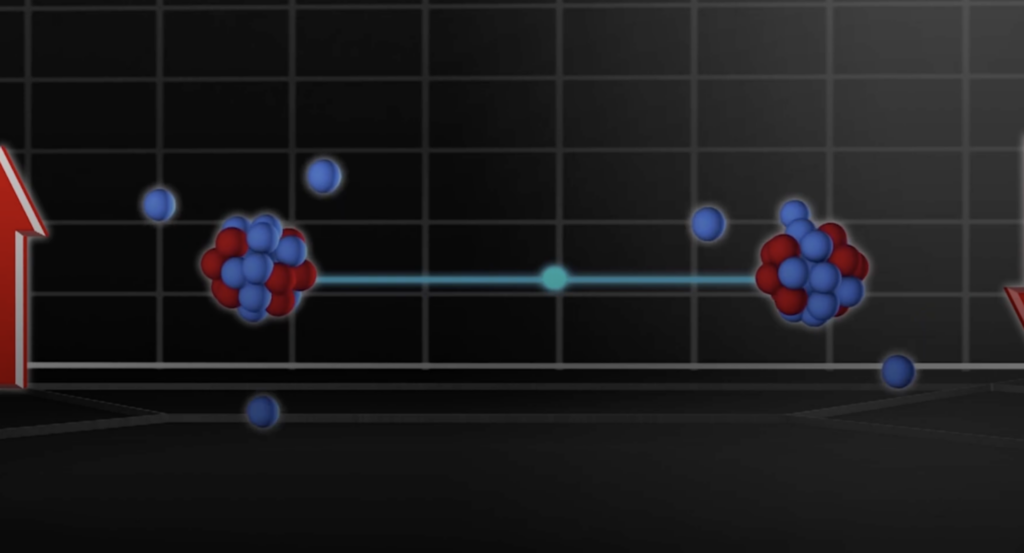
The moment you open your envelope and see the red card, you instantly know the distant envelope contains the blue one. Quantum entanglement is far stranger than this example, but it captures the idea that linked particles share information in an unusual way.
Scientists have already used quantum teleportation to transfer the quantum state of particles over impressive distances. In one notable experiment, researchers successfully teleported quantum information between Earth and a satellite orbiting hundreds of kilometers above the planet.
These experiments prove that quantum teleportation is not merely a theory. It is a real physical process, even though it currently works only with tiny particles under carefully controlled conditions.
This success naturally raises an exciting question. If information can be teleported between particles, could the same principle eventually be applied to humans?
In theory, every person is made up of an unimaginably large collection of atoms. Each atom has its own position, energy level, and quantum properties. Together, these details form the incredibly complex structure that makes every human body unique.
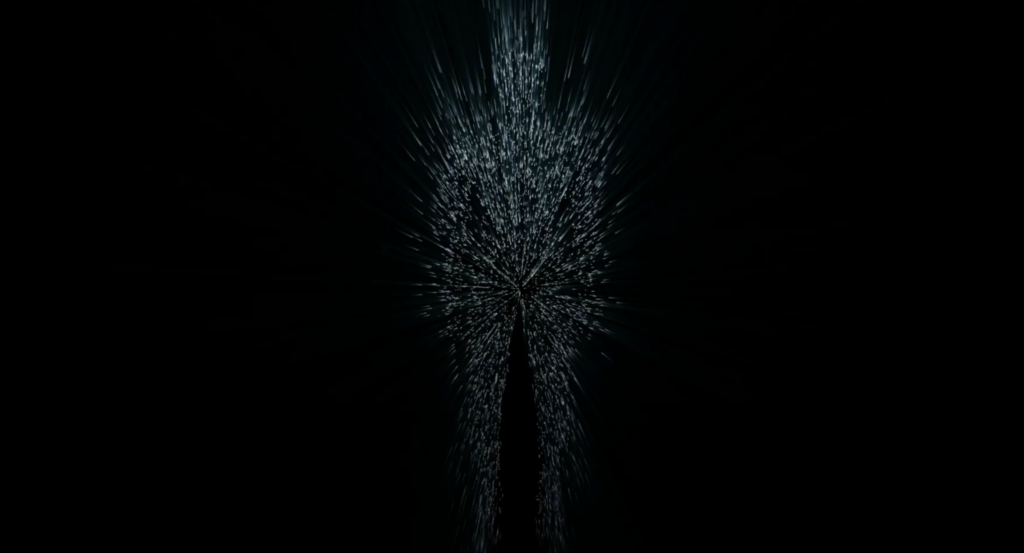
If every single one of those atomic details could somehow be recorded, transmitted to another location, and perfectly reconstructed, a copy of that person could theoretically appear somewhere else.
The problem is the sheer amount of information involved. A human body contains roughly seven octillion atoms. Recording the complete quantum state of each one would require technology far beyond anything that currently exists. Even storing that much information would overwhelm today’s most powerful computers.
There is another, even more unsettling obstacle. According to current theories, accurately measuring every quantum property of a human body would destroy the original state during the scanning process. In other words, creating a perfect teleportation blueprint could require completely disassembling the original person before reconstructing them somewhere else.
This creates one of the biggest philosophical questions in science. Would the reconstructed person truly be you, or would they simply be an identical copy with all your memories and experiences? Meanwhile, the original version would no longer exist. Scientists and philosophers continue to debate whether this could ever count as genuine transportation or something entirely different.
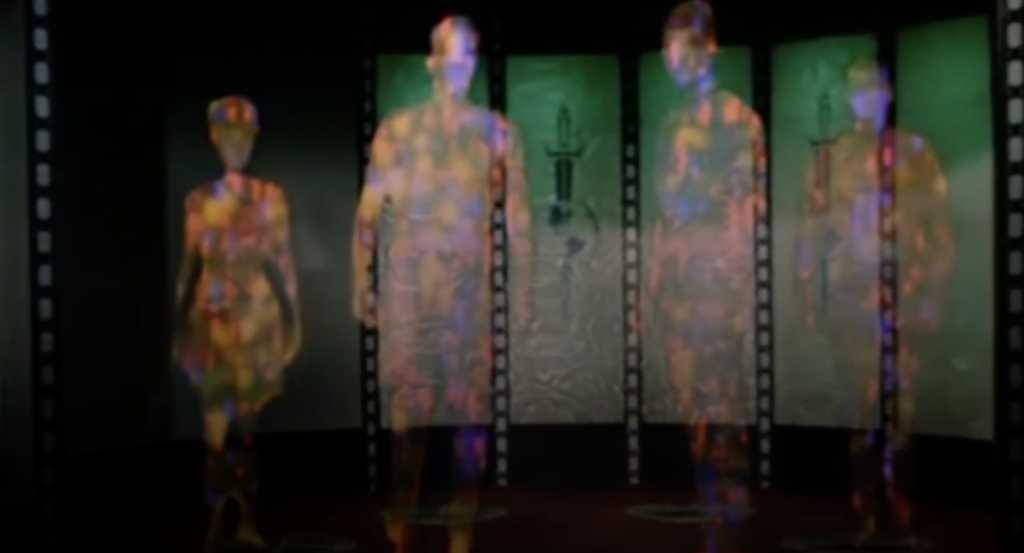
Even without human teleportation, the technology being developed today has enormous potential. Quantum teleportation could revolutionize secure communication by helping create virtually unhackable quantum networks. Future quantum computers may also use these principles to process information in ways that are impossible with today’s machines.
So, are we close to teleporting people across the globe? Not even remotely. The engineering challenges remain staggering, and many fundamental scientific questions have yet to be answered. But the fact that researchers have already demonstrated quantum teleportation with particles shows that the underlying science is real.
Teleportation is no longer just a fantasy reserved for science fiction. While you will not be beaming to another city anytime soon, scientists are steadily uncovering the principles that could one day transform how information and perhaps even matter move across the universe. The journey toward true teleportation has only just begun, and every new discovery brings what once seemed impossible a little closer to reality.