In the summer of 1672, the Netherlands found itself facing a political and military crisis that would completely change the country’s future. A nation that had enjoyed enormous wealth and influence was suddenly surrounded by enemies, frightened citizens, and growing political anger.
At the center of the crisis was Johan de Witt, one of the most powerful political figures in the Dutch Republic. He had built his reputation through diplomacy and negotiation, helping maintain peace with major European powers while the Dutch economy flourished through international trade.
For years, de Witt appeared to represent stability. His political influence was considerable, and his family had become closely associated with the leadership of the republic.

Then everything began to collapse.
In 1672, France, under King Louis XIV, launched an invasion of the Dutch Republic. England also joined the conflict against the Dutch, placing the country under enormous military pressure.
The invasion created panic among the population. Cities were threatened, the government appeared incapable of stopping the attack, and people desperately wanted someone to blame.
That person became Johan de Witt.
His political opponents quickly gained support by presenting an alternative. Many citizens turned toward William III of Orange, a member of the House of Orange Nassau and de Witt’s major political rival.

The political struggle became increasingly bitter. As public confidence in de Witt disappeared, pressure mounted for William to take a more powerful position within the republic.
Johan’s brother, Cornelis de Witt, soon became caught in the conflict. Cornelis was accused of plotting against William III and was arrested and subjected to torture during an investigation into the alleged conspiracy.
Cornelis was eventually released, but the political atmosphere remained extremely volatile. Johan traveled to The Hague to visit his brother. He apparently intended to help Cornelis and resolve the situation.
Instead, he walked directly into a disaster.
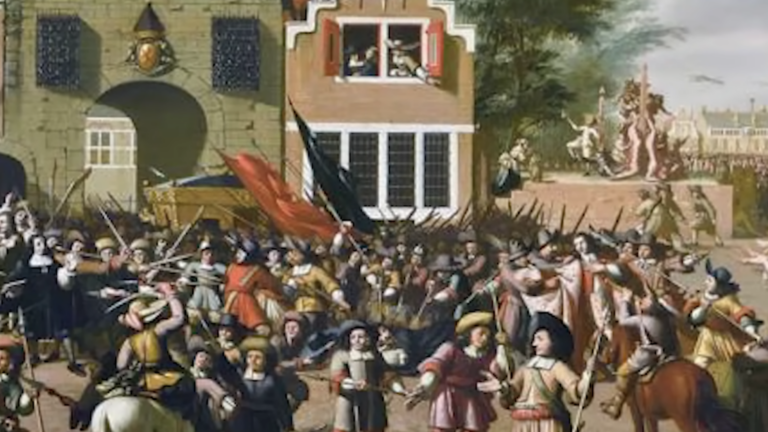
Outside the prison, a large crowd had gathered. The atmosphere was already filled with anger and hostility, and there were few effective guards capable of protecting the brothers. The mob seized Johan and Cornelis.
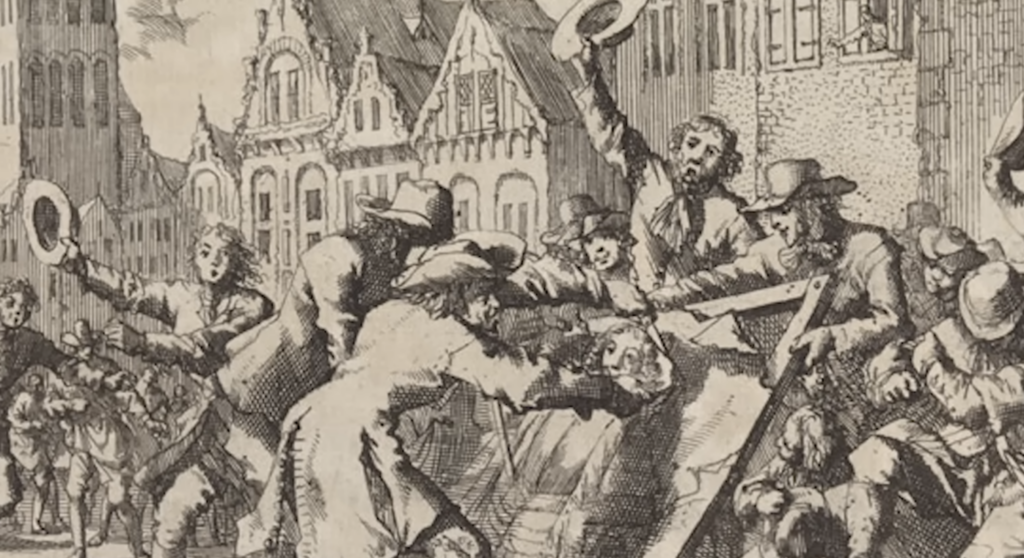
What happened next became one of the most infamous episodes in Dutch history.
The brothers were attacked and brutally killed by the crowd. Their bodies were mutilated, stripped, and displayed publicly, turning the political crisis into an act of extreme mob violence.
Accounts of what happened afterward vary, and some of the most horrifying details have been debated by historians. Later reports claimed that parts of the brothers’ bodies were cut off and consumed by members of the crowd.
Whether every detail of these stories is accurate or not, the violence itself was real and shocking.
The murders marked the complete collapse of Johan de Witt’s political career and demonstrated just how quickly public opinion could turn against a leader during a national crisis.
William III emerged from the chaos with greatly increased political power.

The House of Orange gained a stronger position, while the de Witt family’s influence effectively disappeared. The episode became known as the murder of the De Witt brothers and remains one of the darkest moments in Dutch political history.
What makes the story especially disturbing is how quickly the situation changed. Johan de Witt had once been one of the most respected political figures in the Netherlands, helping guide a wealthy and powerful republic. Only a few years later, he and his brother were dead at the hands of an enraged crowd.
Their deaths became a brutal reminder of what can happen when military disaster, political rivalry, fear, and public anger collide.
The Dutch Republic survived the crisis, but the events of 1672 permanently changed its political landscape. For Johan and Cornelis de Witt, however, the political struggle ended in one of the most horrifying acts of mob violence Europe had seen.