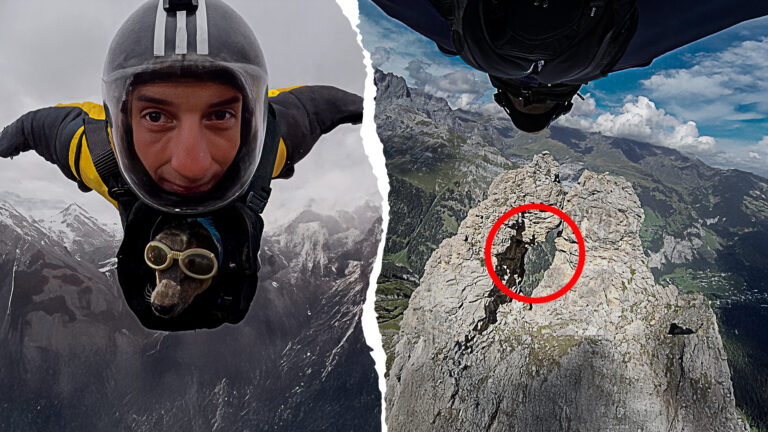
On the surface, it looks like pure freedom. A man suspended between sky and earth, a dog beside him, and the vast wilderness of the planet stretching endlessly below. This is BASE jumping, one of the most dangerous sports in the world, where a single miscalculation can turn flight into a fatal fall.
Since 1981, hundreds of lives have been lost in this pursuit of controlled descent, and among the most controversial and influential figures in the sport was Dean Potter.
Potter was not a traditional athlete chasing medals or records in the conventional sense. He was driven by something more personal, a need to test the limits of fear, control, and human perception. Alongside him through much of his journey was his dog, Whisper, a constant companion in his most extreme pursuits.
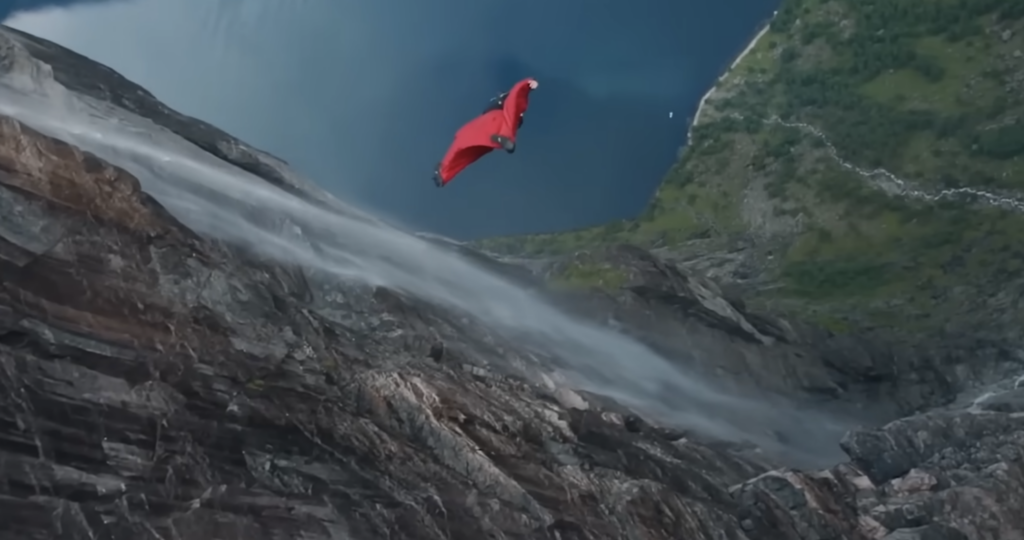
To his supporters, Potter represented courage and innovation. To his critics, he represented recklessness pushing dangerously close to the edge of survival itself.
Born in 1972 in Fort Leavenworth, Kansas, Dean Spaulding Potter grew up in a household shaped by discipline and reflection. His father was in the military, while his mother introduced him to meditation and spiritual practice. This unusual combination of structure and introspection would later define his approach to extreme sports.
As a teenager in New Hampshire, he discovered climbing, quickly developing a self taught passion for scaling difficult rock faces without formal training.
From an early age, Potter described a recurring dream of flying and falling, a psychological image that stayed with him as he grew older. Rather than avoiding that fear, he confronted it directly through increasingly dangerous forms of climbing, including free solo ascents without ropes or protective gear.
For Potter, the goal was not simply to reach the top, but to understand fear itself by placing himself directly within it.
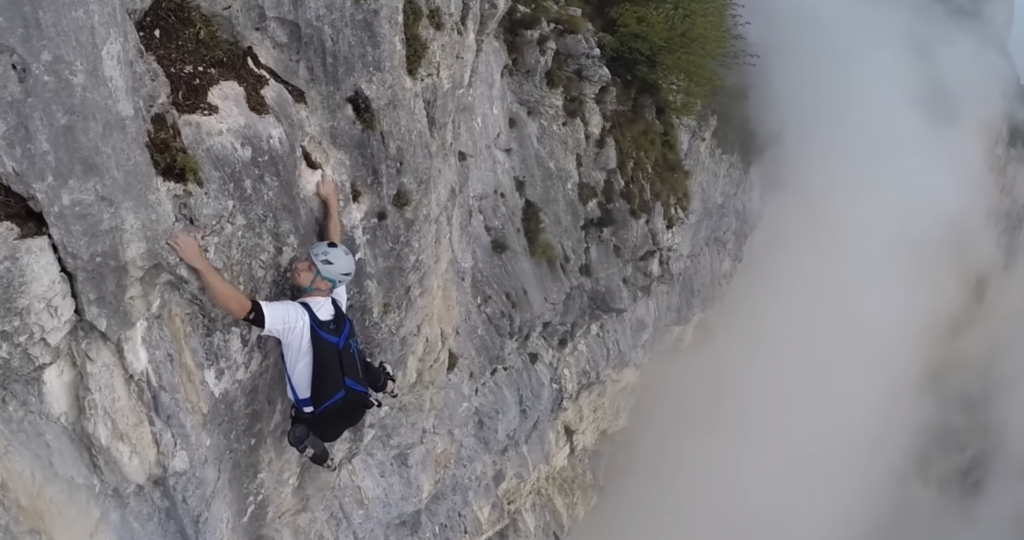
As his reputation grew, so did the scale of his achievements. He became known for speed ascents, free solo climbs, and later for pioneering new disciplines such as highlining and BASE jumping. In 2003, he was awarded the Laureus World Action Sportsperson of the Year, solidifying his place among elite extreme athletes.
His climbs in places like Yosemite and Patagonia pushed human capability into new territory, blending athleticism with risk on an unprecedented scale.
One of Potter’s most controversial innovations was FreeBASE, a hybrid discipline combining free solo climbing with BASE jumping. In this approach, climbers ascend without ropes but carry a parachute as a last resort in case of a fall. While some viewed it as groundbreaking, others saw it as an unacceptable gamble with life.
His 2008 ascent of the Eiger North Face in Switzerland brought global attention to the practice and intensified debate around its safety.
Highlining became another signature pursuit. Suspended hundreds of feet above ground, Potter would walk across thin slacklines stretched between cliffs without safety harnesses. Wind, instability, and exposure made each step a test of absolute focus. Yet he often described these moments not as reckless stunts, but as deeply aesthetic experiences, a way of engaging with nature on its most intense terms.
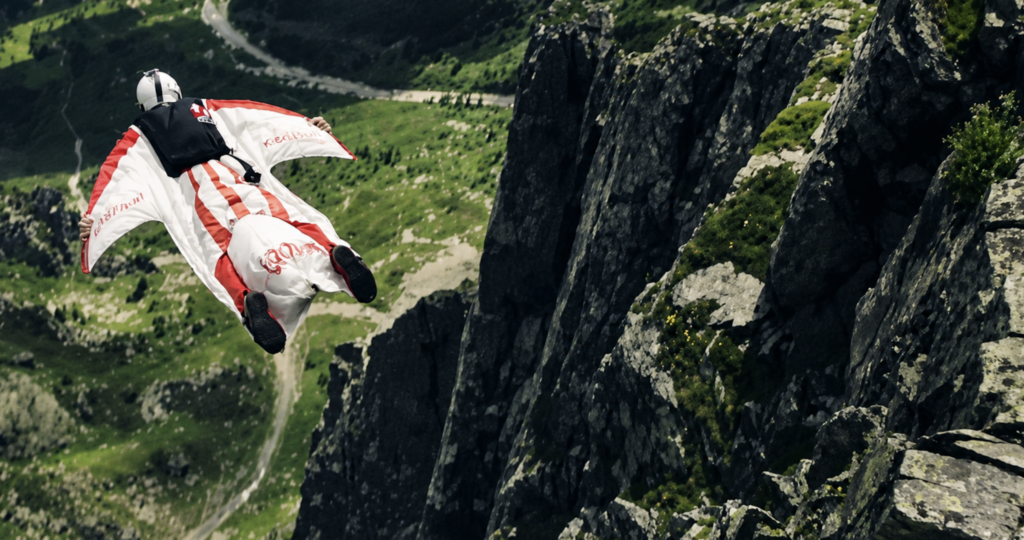
His inclusion of his dog Whisper in BASE jumping flights added another layer of controversy. Filmed in projects like When Dogs Fly, the pair became symbolic of both connection and risk. Potter insisted he took precautions with specially designed harnesses, but animal welfare concerns remained, with critics arguing that the environment itself made such activities ethically questionable.
Despite growing fame, Potter’s career was increasingly polarizing. Sponsorships became complicated, and public debate intensified after several high profile stunts, including his 2006 free solo climb of Delicate Arch in Utah.
While not illegal at the time, the climb led to widespread backlash and contributed to stricter regulations in national parks. Some sponsors distanced themselves from him, while others criticized the potential influence of his actions on less experienced climbers.
Psychologists studying extreme athletes often point to traits such as sensation seeking and altered risk perception. In Potter’s case, fear was not absent but actively engaged with. Fellow climber Alex Honnold, known for his own free solo achievements, later reflected that fear was a constant presence even among elite climbers, and that mastery came from managing it rather than eliminating it.

On May 16, 2015, Potter and fellow athlete Graham Hunt prepared for a wingsuit flight in Yosemite National Park. Their goal was a proximity flight through a narrow mountain gap at dusk, a maneuver requiring precise timing and control. From Taft Point, a 2,286 meter high cliff, they launched into the air in one of the most technically demanding disciplines in BASE jumping.
The jump was illegal within the park, but enforcement challenges and timing made such attempts difficult to prevent. Potter’s longtime partner Jen Rapp documented the moment as the two men prepared. Whisper, his dog, was nearby as she often was during his expeditions.
What followed was a sequence of rapid descent and miscalculation. Both men launched into the canyon separately but close in timing. Within moments, something went wrong during the flight path through the narrow gap. Radio silence followed. No emergency signals were received.
By the following morning, search teams located both bodies in a rocky outcrop below Taft Point. Their parachutes had not been deployed.
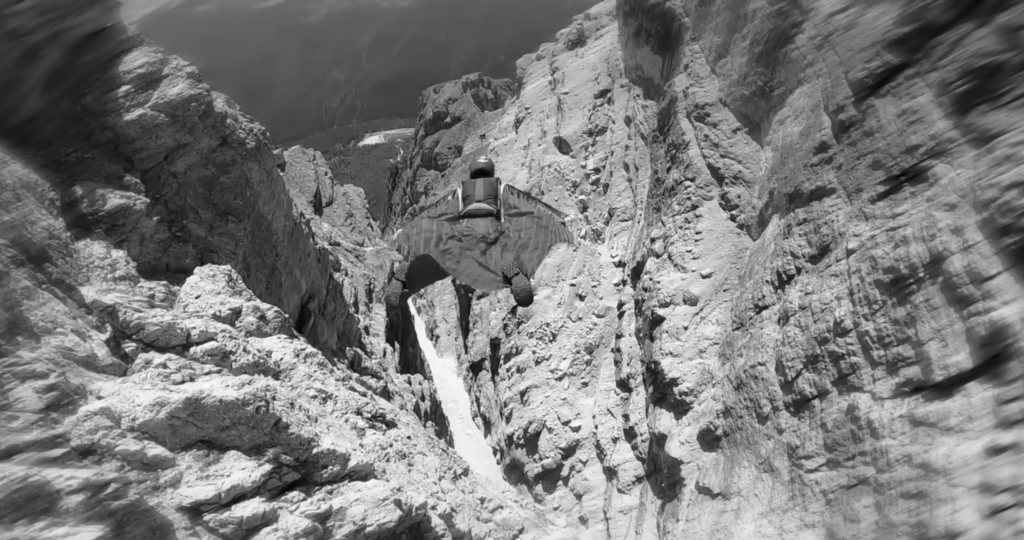
The news shocked the extreme sports community. Potter, who had spent his life navigating the boundary between control and chaos, had finally crossed it. Tributes described him as both visionary and controversial, someone who expanded the limits of what humans believed possible while constantly testing the limits of survival itself.
In the years since his death, BASE jumping and wingsuit flying have only grown in popularity, but also in documented fatalities. Safety statistics remain sobering, with some estimates suggesting that a significant number of jumps result in serious injury or death. Despite advances in equipment and training, the fundamental risk remains unchanged.
Dean Potter’s legacy sits in that tension between inspiration and warning. To some, he remains a symbol of freedom and exploration, someone who treated the natural world as both canvas and challenge. To others, his story is a reminder of how thin the line can be between pushing limits and breaking them.
Ultimately, his final flight was not just a tragic accident in an extreme sport. It was the closing chapter of a life defined by confrontation with fear, gravity, and the unknown. And like many who live at the edge of possibility, he left behind both admiration and unanswered questions about how far humanity should go in pursuit of feeling alive.