Tsunamis can turn coastlines into disaster zones within minutes. Some are caused by enormous earthquakes beneath the ocean, while others can be triggered by landslides that suddenly displace massive amounts of water.
These five tsunamis show just how devastating these enormous waves can become, from record breaking heights to disasters that killed hundreds of thousands of people.
Cascadia Tsunami of 1700
Long before modern seismographs existed, a massive earthquake struck along the Cascadia Subduction Zone in 1700.
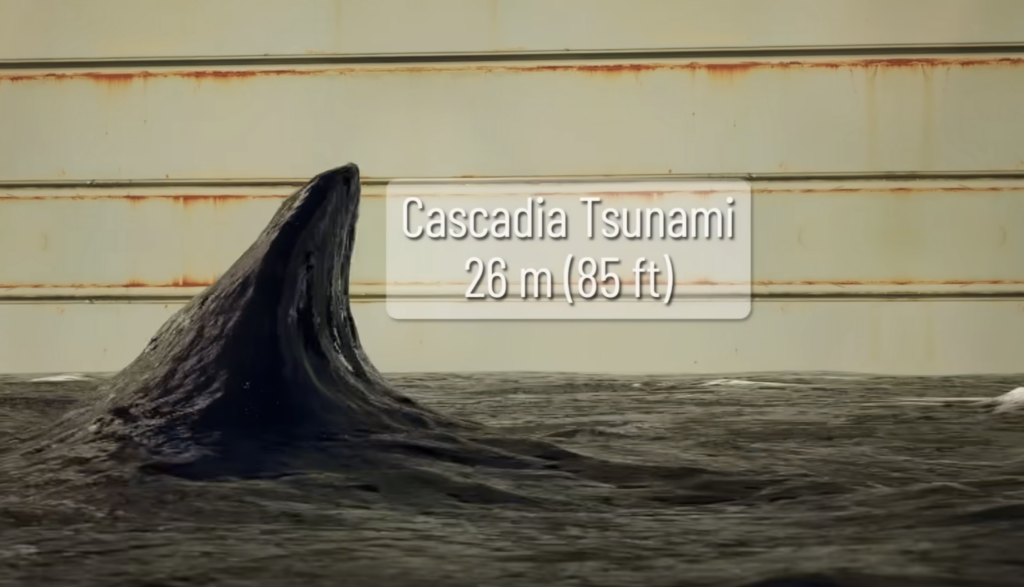
The resulting tsunami produced waves estimated to have reached 26 m (85 ft), severely affecting indigenous populations along the Pacific Northwest coast from Vancouver Island to Northern California.
The waves inundated low lying areas and traveled several kilometers inland in some places. Forests were stripped away, and coastal landscapes were dramatically reshaped.
Indigenous oral traditions preserved accounts of a time when the earth shook and the waters rose violently. Centuries later, scientific research provided evidence supporting the occurrence of this enormous historical tsunami.
Indian Ocean Tsunami
In 2004, a massive undersea earthquake triggered one of the deadliest natural disasters in recorded history. The resulting Indian Ocean Tsunami killed more than 230,000 people across multiple countries.
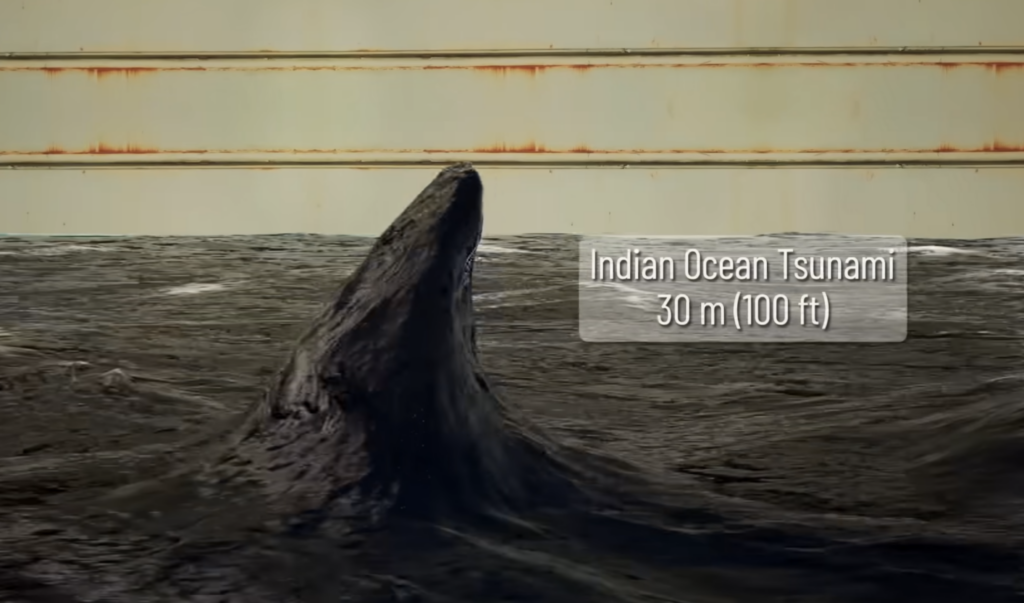
Waves reaching up to 30 m (100 ft) surged across the Indian Ocean, striking coastal regions including Indonesia, Thailand, Sri Lanka, and India. Entire communities were swallowed by the waves, while homes, schools, roads, and other infrastructure were destroyed.
The destruction stretched across thousands of miles of coastline, leaving millions of people affected by the disaster.
If you’re near the coast and feel an earthquake that lasts more than 20 seconds, evacuate to higher ground immediately.
Tohoku Tsunami
In 2011, the Tohoku Tsunami slammed into the eastern coast of Japan with waves reaching more than 40 m (133 ft).
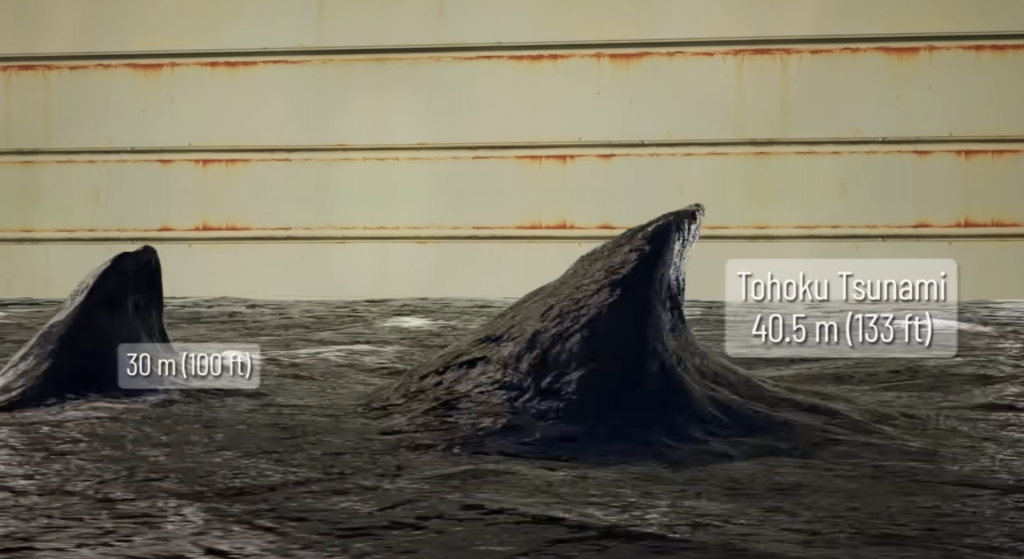
Entire coastal communities were obliterated, while cities such as Sendai were transformed into landscapes of debris. More than 15,000 people lost their lives, and hundreds of thousands were left homeless.
The tsunami also breached the defenses of the Fukushima Daiichi Nuclear Power Plant, triggering a nuclear crisis that added another layer of devastation to the disaster.
Vajont Dam Tsunami
Not every tsunami happens in the ocean. On October 9, 1963, a massive landslide crashed into the Vajont Dam reservoir in northern Italy.
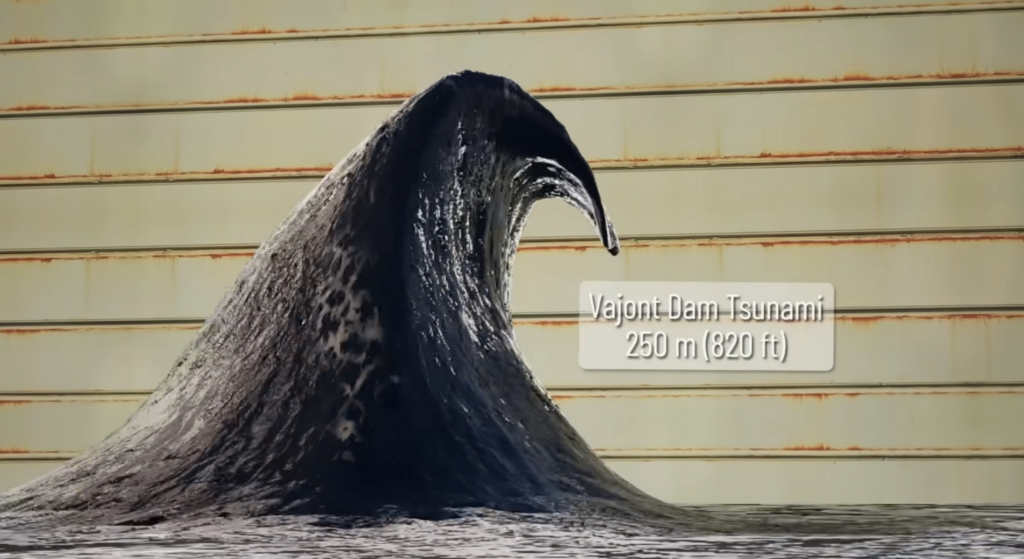
The impact displaced an enormous volume of water and created a colossal wave, initially estimated at around 250 m (820 ft) high. The wave surged over the dam and raced into the Piave Valley.
Entire villages were obliterated in seconds, with buildings and infrastructure reduced to rubble. The disaster demonstrated that enormous tsunami like waves can occur inland when massive landslides suddenly displace water.
The tragedy also led to important lessons about dam design, geological studies, and assessing the dangers of unstable terrain.
Lituya Bay Tsunami
In 1958, Lituya Bay in Alaska witnessed what is considered one of the tallest tsunami waves ever recorded.
A massive landslide crashed into the narrow bay after an earthquake, displacing an immense volume of water. The resulting wave surged up the mountainside to an astonishing height of approximately 524 m (1,720 ft).
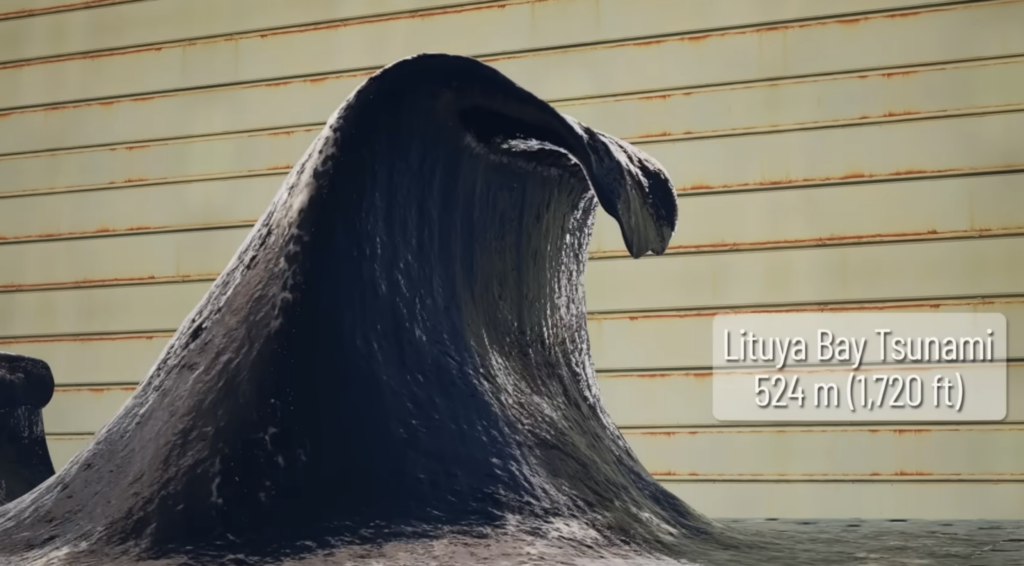
The wave ripped trees from the mountainside and left a massive scar that could be seen across the landscape. Astonishingly, two boats anchored in the bay managed to survive the enormous wave.
Lituya Bay showed that tsunami waves can reach extraordinary heights when they are generated by landslides in confined bodies of water.
These disasters show that tsunamis don’t always behave the way we might expect. Whether caused by an earthquake beneath the ocean or a landslide crashing into a confined body of water, the results can be catastrophic.
And if you’re ever near the coast during a powerful earthquake, don’t wait for an official warning. Move to higher ground immediately.