At first glance, it looks like something is wrong. A strange, floating slab of flesh rises beside a fishing boat, as if the rest of the animal is missing. But this is not a half eaten fish or the aftermath of a shark attack.
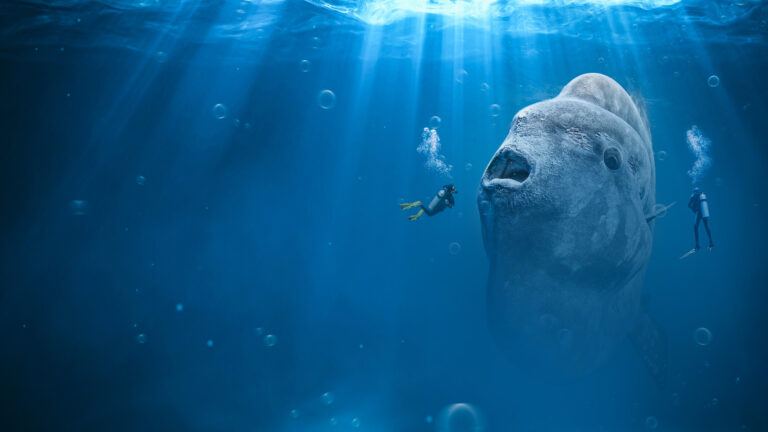
It is the full animal. This is the ocean sunfish, also known as a mola, and it is the largest bony fish in the ocean.
And once you understand what it is, the real question becomes even more fascinating: how does something this bizarre even exist?
A Fish That Looks Like It Should Not Exist
The name “mola” comes from the Latin word for millstone, and it fits perfectly. These animals look like giant, living stone discs drifting through the ocean.
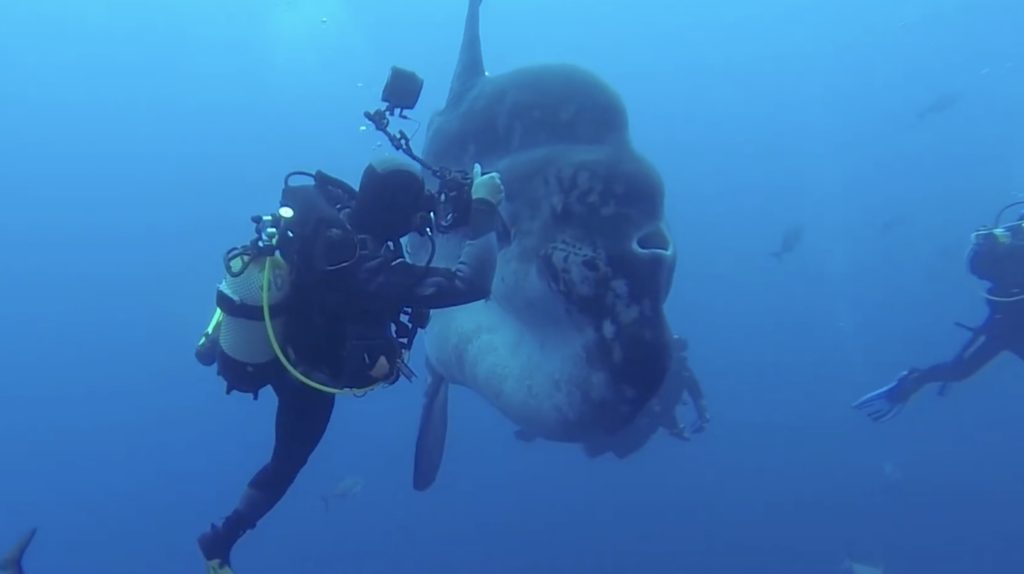
Mola mola and Mola alexandrini are among the largest bony fish on Earth. Unlike sharks, which are made of cartilage, molas have real bone structures like most fish, just scaled up to extreme proportions.
They can reach weights of up to 2.3 tons, heavier than a small car or several cows combined.
But what makes them especially strange is their shape. As they grow, their rear fin does not develop like most fish. Instead, it folds inward, leaving them looking like a massive head with fins attached, almost as if the body simply stopped growing halfway through evolution.
Yet this is not a mistake. This is adaptation.
Giants of the Open Ocean
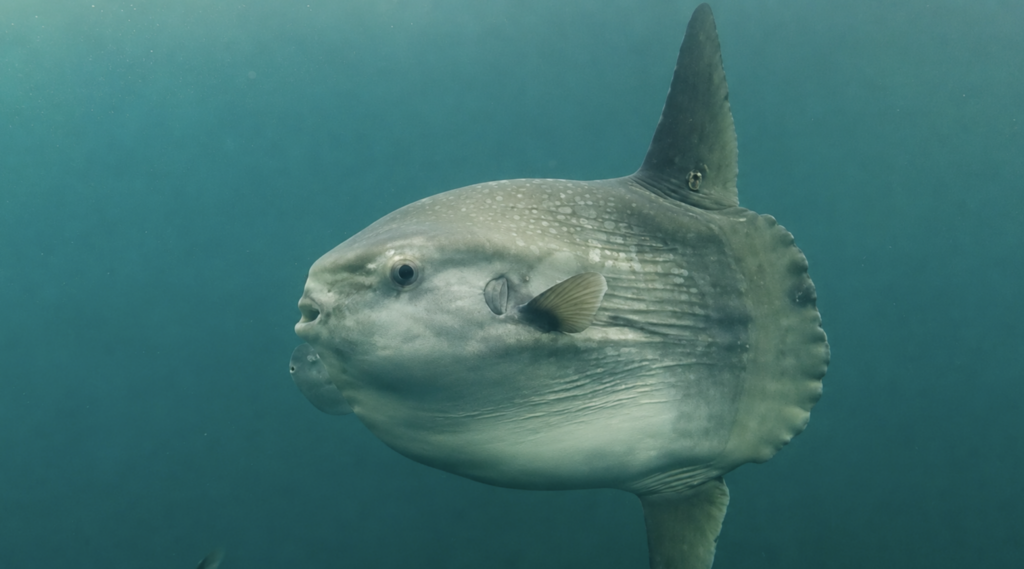
There are five known species of molas living in tropical and temperate oceans around the world. Despite their size, they are often found near the surface, drifting slowly through open waters.
Among them, the largest are Mola mola and Mola alexandrini. These two species are constantly competing for the title of the heaviest bony fish ever recorded.
One famous specimen of Mola alexandrini, measured at 2.7 meters long and weighing 2.3 tons, holds a Guinness World Record for the heaviest bony fish ever documented.
But the real mystery is not their size. It is how they get there.
The Secret Behind Their Massive Growth
Scientists studying sunfish discovered something unusual in their biology. They possess an overactive growth related gene similar to insulin like growth factors, which causes extremely rapid development. In controlled environments, sunfish have been recorded gaining over 400 kilograms in just over a year.
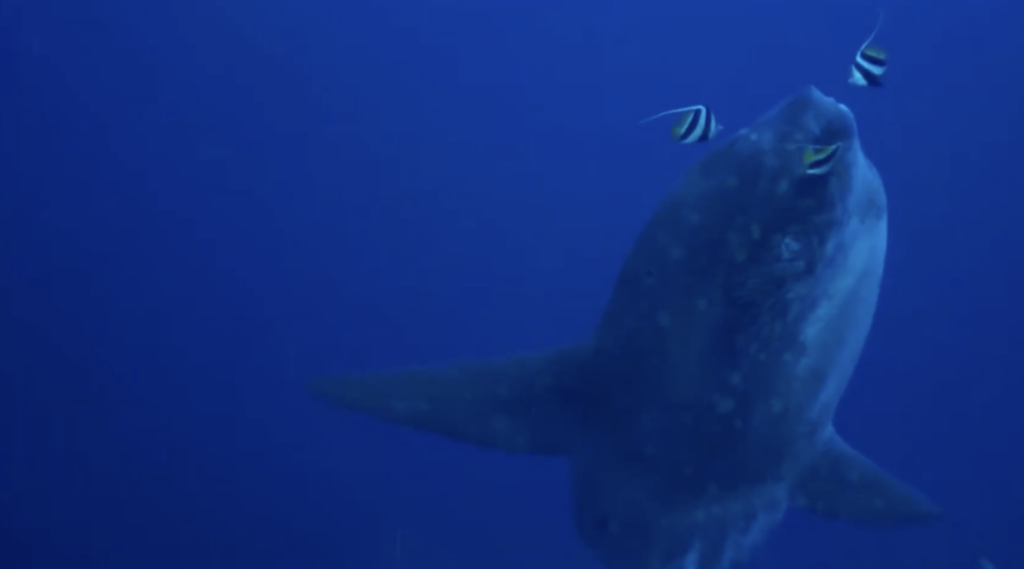
They grow from tiny larvae into ocean giants in about two decades, reaching lengths of up to 3 meters. Juveniles can gain nearly a kilogram of body mass per day during early development. But they begin life in a way that seems almost impossible.
A single egg from a sunfish is only about 0.13 centimeters wide. Once hatched, the larva is so small it is barely visible, roughly the size of two grains of sand. And yet, from something that small comes one of the largest fish on Earth.
To make things even more extreme, a female sunfish can release up to 300 million eggs in a single breeding season, the highest reproductive output of any known vertebrate.
Life as a Floating Giant
Despite their size, sunfish live a surprisingly vulnerable life.
Their bodies often host dozens of parasite species, sometimes even parasites of parasites. To cope with this constant burden, molas have developed unusual behaviors.
They are known to float on their sides near the surface, exposing themselves to seabirds that pick parasites off their skin like natural cleaners. They also leap out of the water and crash back down with force, a behavior believed to help shake off unwanted hitchhikers.
Even their feeding habits are unusual. They consume large amounts of jellyfish and gelatinous plankton, sometimes eating up to a small fraction of their body weight each day. Their thick skin and specialized tissues help protect them from jellyfish stings, while their unusual eye movement allows them to adjust their vision while hunting.
A Giant Under Threat
Despite their incredible biology, sunfish face serious threats in the modern ocean.
They are often caught accidentally in fishing nets and are sometimes hunted for traditional medicine in certain regions. Because of this, the International Union for Conservation of Nature classifies them as vulnerable.
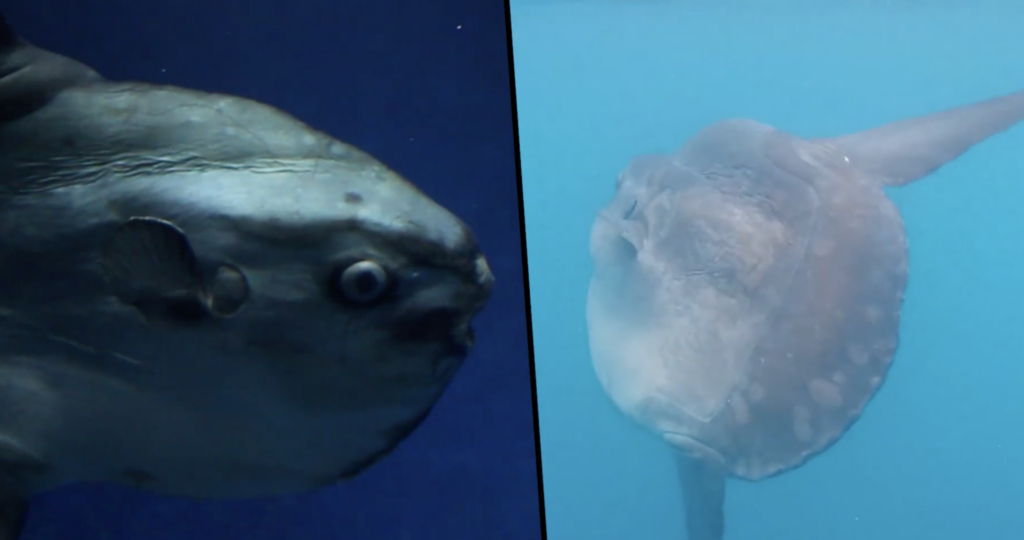
Pollution has also become a growing danger. Plastic bags floating in the ocean are frequently mistaken for jellyfish and consumed, often with fatal consequences.
And they are not alone. Many marine animals are now adapting to human waste in unexpected ways, from fish ingesting plastics to crabs using trash as shells.
The Biggest Fish You Never Knew
The ocean sunfish does not look like a typical fish. It does not behave like one either. But it is one of the most remarkable examples of how extreme evolution can become.
A drifting giant shaped by parasites, predators, and ocean currents, the mola is both fragile and massive at the same time. And as fishermen continue to pull these strange creatures from the water, one thing becomes clear.
The biggest fish in the world does not hide in deep darkness or hunt in violent packs. It floats quietly at the surface, shaped by the strange logic of the ocean itself.