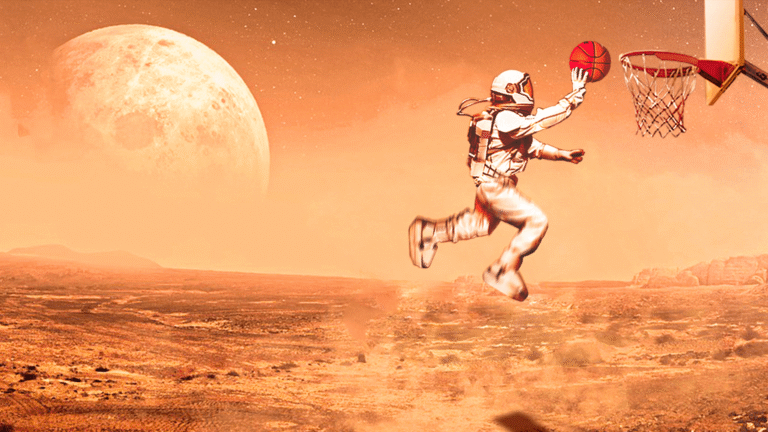
Playing sports on another planet sounds like science fiction. In theory, it would feel almost superhuman. You could run faster, jump higher, and throw with far more force than on Earth. But the moment you place that idea on Mars, it stops being fun and starts becoming a survival problem.
Lower gravity is the first thing people imagine. Since Mars has about one third of Earth’s gravity, every jump would send you higher and every movement would feel lighter. But that advantage comes with a catch. You are not moving freely. You are moving inside a pressurized space suit that resists every motion you make.
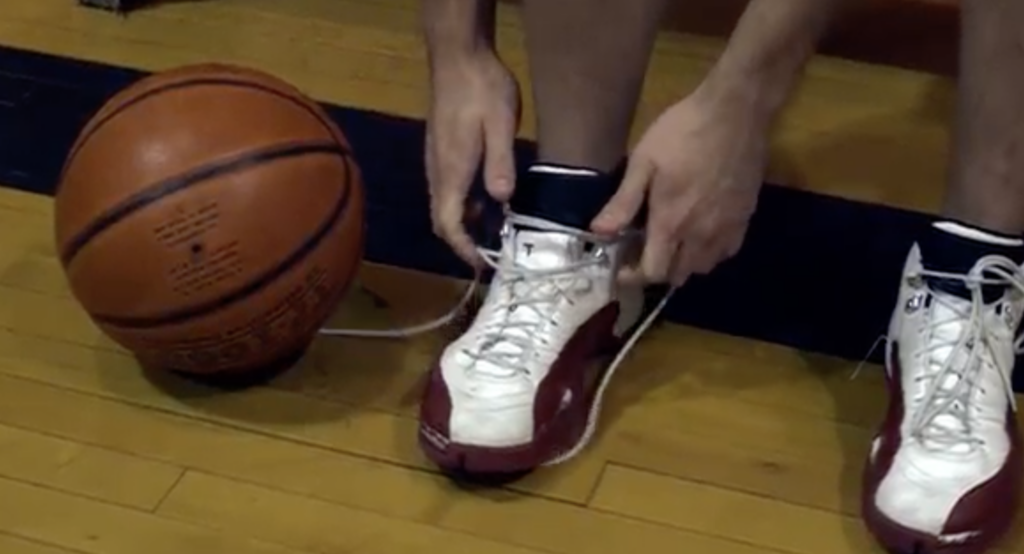
On Mars, a basketball court would also have to change completely. Distances would behave differently because movement in low gravity is harder to control. You would not simply run and stop like on Earth. Every step would carry momentum that is harder to correct, which means positioning, timing, and balance would become much more difficult.
The space suit changes everything even more than gravity does. Every bend of the knee or swing of the arm requires pressure from inside the suit to fight against the external vacuum. That means even basic movements burn energy quickly. What looks like effortless jumping would actually feel like dragging your body through resistance with every motion.
Heat would also become a serious issue. Space suits are insulated to protect against extreme cold and radiation, but that also traps body heat. During physical activity, overheating becomes a real risk. A simple game could turn into exhaustion far faster than expected.
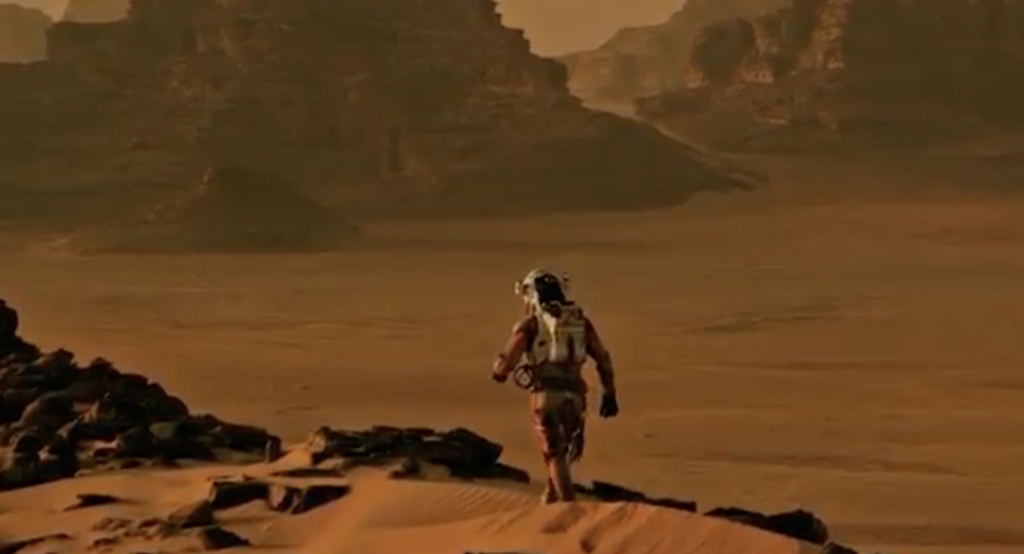
Hydration might seem simple, but even that becomes complicated. Drinking systems inside suits are necessary, but if something goes wrong, even a small leak inside a helmet can become dangerous. Water in the wrong place becomes a serious hazard when you cannot remove your gear easily.
Then there is the issue of injury. On Earth, a hard foul might hurt but it is manageable. On Mars, any damage to a suit is critical. A tear or puncture could cause rapid pressure loss. That would expose the body to near vacuum conditions, where oxygen disappears and fluids in the body can begin to behave abnormally. Because of that, contact in any Mars sport would need to be extremely limited.
Even if players avoided each other completely, Mars itself would still interfere. Dust storms are common and can grow large enough to cover entire regions. Visibility can drop to almost nothing. In a game setting, that would mean losing sight of the ball, teammates, and even the court itself. Strong winds and airborne dust could also damage suits or knock players off balance.
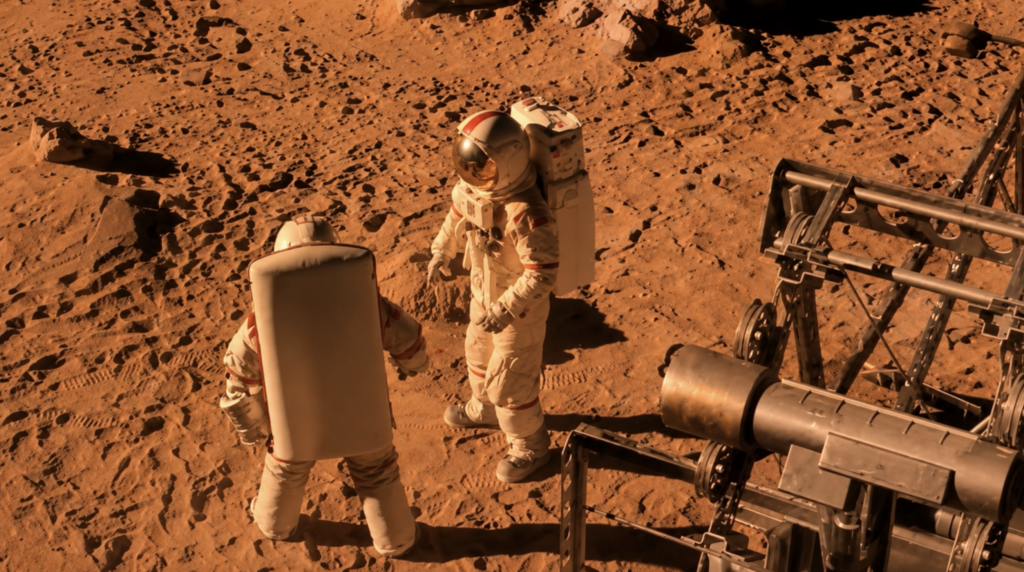
There is also the simple fact that Mars is not a controlled environment. Unlike a stadium on Earth, nothing is sealed off. The surface is open, harsh, and unpredictable. Any game would be constantly exposed to conditions designed for survival, not recreation.
In reality, basketball on Mars would not look like a sport at all. It would be slow, exhausting, and heavily restricted by safety systems. Every movement would be shaped by the need to stay alive inside an environment that does not support human life.
The idea of superhuman ability on Mars sounds exciting, but the reality is the opposite. The environment does not enhance sport. It limits it.
And on Mars, even a simple game would always come second to survival.