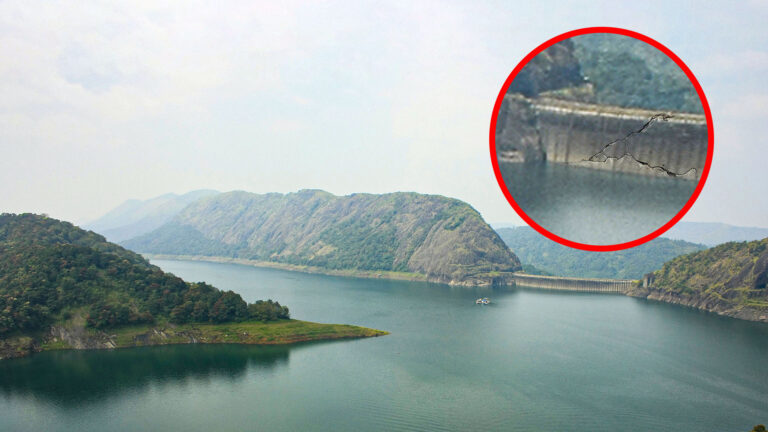
The Mullaperiyar Dam sits in India’s Kerala state, quietly performing a job it has done for more than a century. Built over 100 years ago, it plays a crucial role in supplying water for irrigation and generating power for both Kerala and neighboring Tamil Nadu.
At first glance, it appears to be just another impressive piece of early engineering. But beneath its aging structure lies a growing concern that has worried experts for years.
Standing 54 meters tall, the dam was constructed using design methods that predate modern safety standards. While it has served its purpose for decades, its age has become a critical factor in ongoing debates about its stability.
Engineering standards today are far more advanced, and structures built in earlier eras are often reassessed to determine whether they can still withstand modern environmental pressures.
One of the most serious concerns is the region’s seismic activity. Kerala has experienced multiple earthquakes over the years, including notable tremors in 1979 and 2011 that caused visible cracks in the dam’s structure. These events raised uncomfortable questions about what might happen if a stronger earthquake struck the same region again.
To understand the risk, imagine standing on the dam on a calm morning. On one side, water stretches across a massive reservoir. On the other, controlled flows of water rush downstream, feeding farms and communities far below.
The reservoir behind the dam holds an enormous volume of water, estimated at around 443 million cubic meters. During monsoon season, the pressure behind the structure increases even further, leaving very little room for error.
At first, everything seems stable. Then the ground begins to shake.
A minor earthquake ripples through the region. It lasts only a few seconds, and for a moment, it seems like nothing serious has happened. Life appears to return to normal. But deep within the dam’s aging structure, stress points begin to shift.
A sharp cracking sound breaks the calm. A small fracture appears along the dam wall. At first, water seeps through slowly, almost unnoticeably. But within minutes, the flow increases. The crack expands under pressure, and the situation escalates rapidly.
Anyone nearby would likely realize the danger immediately. The fracture would reach deep into the reservoir, allowing millions of cubic meters of water to push through weakened sections of the structure. At that point, evacuation would be the only chance of survival.
Within moments, the dam could fail.

A massive wall of water would surge downstream, carrying with it soil, rock, and debris torn from the collapsing structure. The force of the flood would be overwhelming, transforming rivers into uncontrollable torrents. Everything in its path would be swept away, including roads, bridges, and buildings. The scale of water released could fill hundreds of thousands of Olympic sized swimming pools, moving with devastating speed.
Communities downstream would have very little time to react. Entire towns could be submerged before residents could reach safety. The destruction would not be limited to infrastructure. The human impact would be catastrophic, with the potential to affect hundreds of thousands of lives directly and millions indirectly.
But the danger would not stop there.
Roughly 25 kilometers downstream lies the Idukki Dam, another critical structure in the region’s water management system. In theory, it is designed to withstand large inflows of water. However, in a worst case scenario where Mullaperiyar fails, the sudden surge could overwhelm its capacity, especially if its reservoir is already full.
If the Idukki Dam were to fail under that pressure, the consequences would multiply dramatically. A chain reaction involving multiple interconnected dams could extend the disaster across a much larger region, potentially reaching toward the Arabian Sea. In total, more than 3.5 million people could be affected by flooding, displacement, and infrastructure collapse.
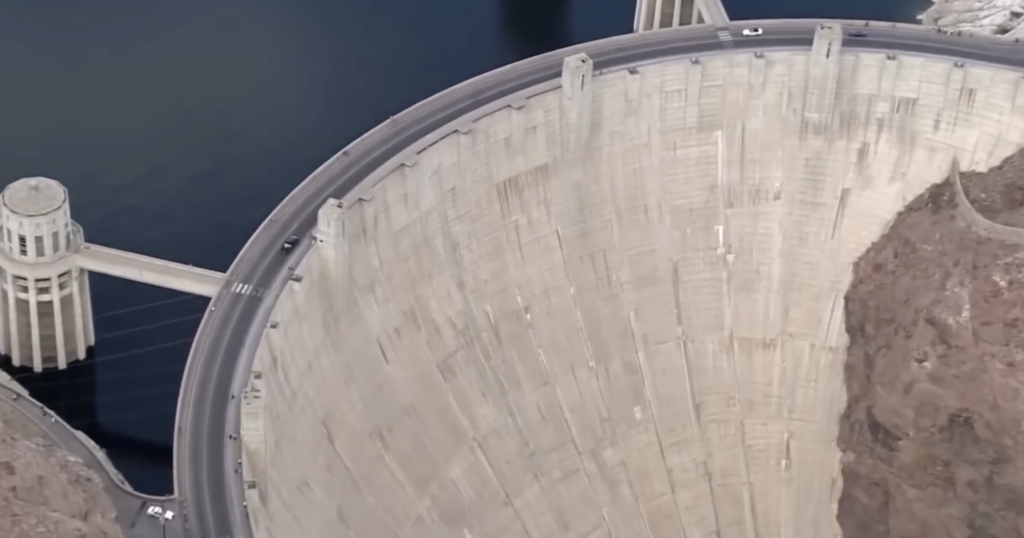
In the aftermath, the landscape would be unrecognizable. Survivors would face contaminated water sources filled with debris, chemicals, and heavy metals. Entire regions could become uninhabitable in the short term, forcing large scale evacuation and long term relocation efforts. The financial cost of rebuilding infrastructure alone would reach into the billions.
Yet the most unsettling aspect of this scenario is not its scale, but its uncertainty. Experts have debated the dam’s safety for years, with legal disputes between regional governments adding further complexity to its future. Some reports, including assessments from international research bodies, have suggested that decommissioning or major reconstruction may be necessary to reduce long term risk.
The Mullaperiyar Dam remains a powerful example of both engineering achievement and aging vulnerability. It continues to serve millions of people every day, but it also stands as a reminder that even the most vital infrastructure must eventually be re evaluated. Whether its future involves reinforcement, replacement, or removal, one thing is clear. The question is not simply whether a collapse could happen, but how prepared the world is if it ever does.