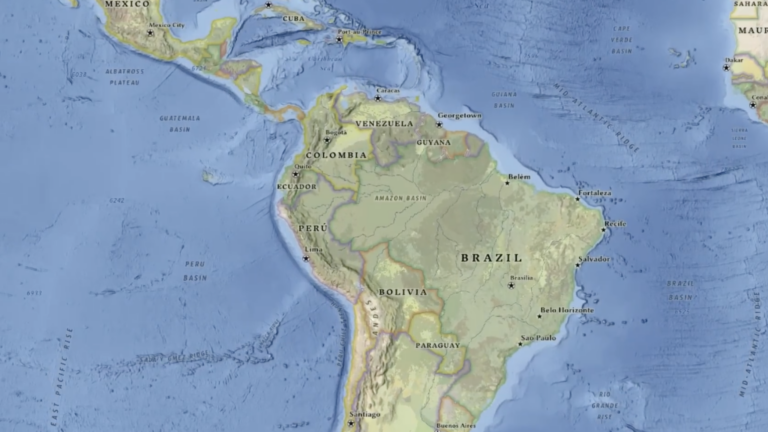
Latin America today is not a single country, but a vast and diverse region made up of over 20 independent nations and territories spread across Central and South America, as well as the Caribbean. Despite this fragmentation, the idea of unity has appeared many times throughout history.
One of the most famous advocates of a united Latin America was Simón Bolívar, often called The Liberator. He envisioned a continent standing together as one political and economic force, strong enough to resist foreign influence and shape its own destiny.

But what if that vision actually became reality? And more importantly, what would happen to the United States if Latin America unified into a single superstate?
To understand the impact, it is important to first imagine the scale of such a nation.
A unified Latin America would stretch from the northern border of Mexico all the way down to the southern tip of South America in Tierra del Fuego. It would combine the territories of Central America, South America, Mexico, and several Caribbean islands into one continuous geopolitical block.
The result would be a country covering more than 20 million square kilometers, making it larger than the United States and Canada combined. It would also contain some of the most resource rich and geographically diverse regions on Earth.
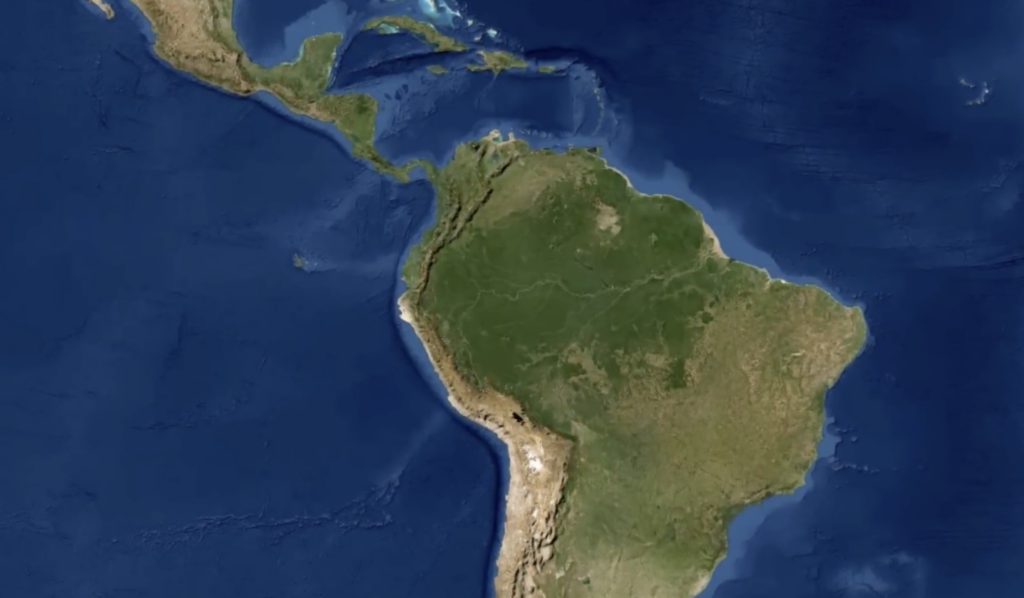
The Amazon rainforest alone would give it unmatched ecological importance. The Andes mountains would provide mineral wealth and energy potential. Coastal regions across the Caribbean and the Pacific would offer major trade advantages. Meanwhile, agricultural zones and fertile plains would support massive food production.
A country of this size would instantly reshape global economics.
With Spanish and Portuguese as dominant languages, Latin America would likely develop unified institutions for trade, education, and governance. Over time, a shared market could emerge, allowing easier movement of goods, labor, and capital across the continent.
Economically, such a superstate could rival the United States and China. It would become a major exporter of agricultural products, energy resources, and raw materials. Countries around the world would become heavily dependent on its supply chains.
Brazil’s industrial strength combined with Venezuela’s vast oil reserves and Mexico’s manufacturing base would create a powerful economic engine.
For the United States, this shift would be impossible to ignore. A single unified Latin America would mean one massive neighbor sharing a long and complex border. Trade relations would deepen, but so would geopolitical competition.
If cooperation succeeded, the Western Hemisphere could become an unprecedented economic bloc, with supply chains tightly linked between the U.S. and Latin America. If tensions rose, however, the balance of global power could shift dramatically.