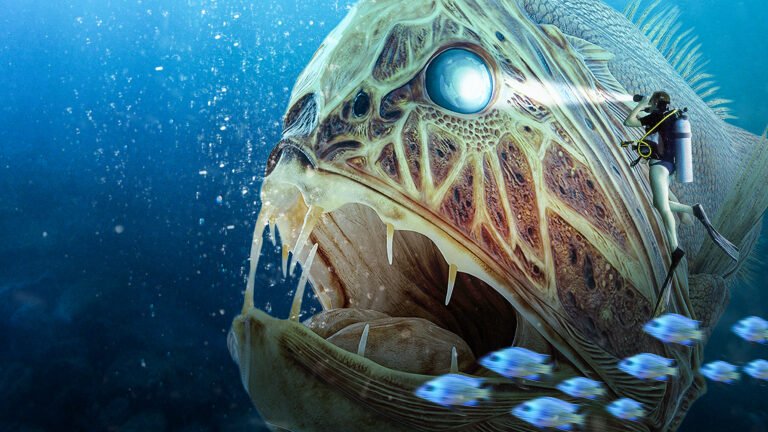
Deep beneath the ocean’s surface lives a creature so strange that it looks more like an alien than a fish. With oversized fangs, a massive head, and a body adapted for eternal darkness, the fangtooth fish has earned a reputation as one of the ugliest and most intimidating animals in the sea.
Yet despite its fearsome appearance, this mysterious predator remains one of the least understood creatures on Earth.
The fangtooth fish inhabits deep waters across the Atlantic, Pacific, and Indian Oceans, as well as regions near Australia and the British Isles. It spends much of its life far below the reach of sunlight, sometimes in waters approaching 5,000 meters deep. Living in such remote environments has allowed the species to remain largely hidden from human observation.
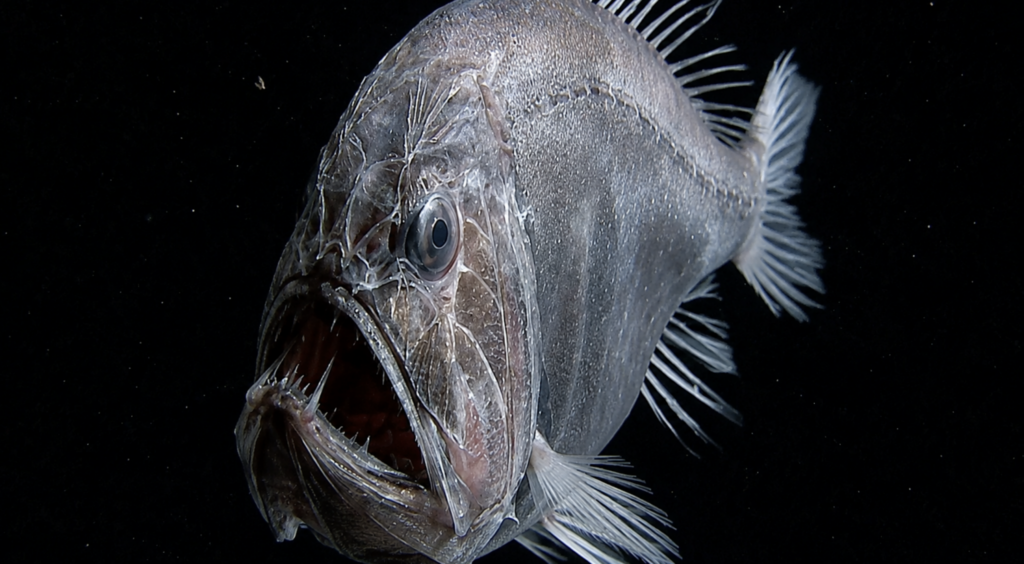
At first glance, many people assume the fangtooth must be a giant predator. Its enormous mouth and intimidating teeth certainly suggest a much larger animal. Surprisingly, however, an adult fangtooth typically measures only 15 to 18 centimeters in length. Despite its small size, it possesses some of the largest teeth relative to body size of any fish in the ocean.
Those famous fangs can grow between 5 and 7.5 centimeters long. In fact, they are so large that the fish cannot fully close its mouth without special adaptations. The roof of its mouth contains protective pockets that act like sheaths for the lower teeth, preventing them from piercing its head when the jaws are shut.
While the teeth look terrifying, the fangtooth does not use them in the way many people imagine. Rather than tearing apart large prey, the fish often uses its oversized mouth and sharp fangs to spear and swallow smaller animals whole.
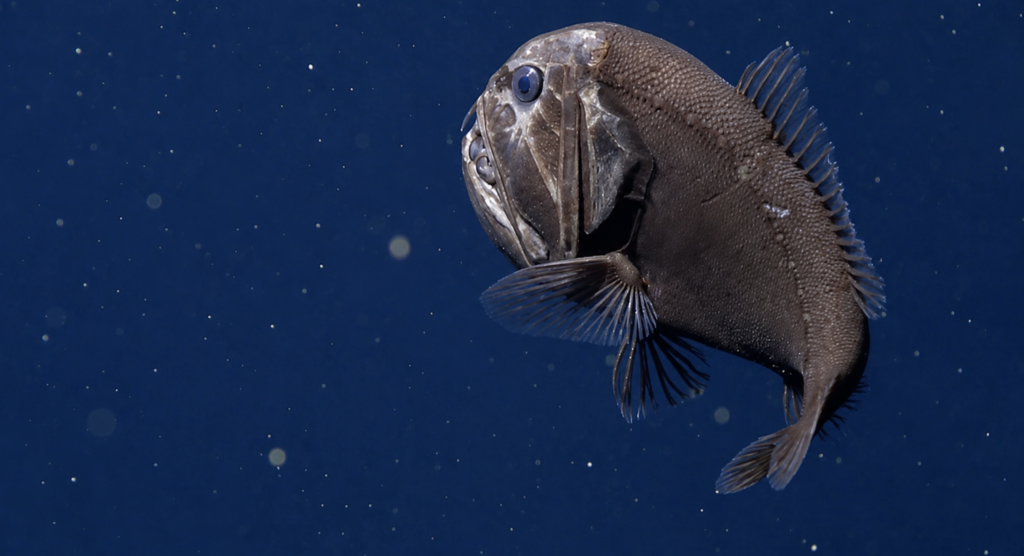
Shrimp, small squid, and other deep sea creatures make up much of its diet. Thanks to its unusually large head and flexible jaws, prey can often be consumed with minimal chewing.
Finding food in near total darkness presents another challenge. The fangtooth’s small eyes provide limited assistance in the deep ocean, where light is almost nonexistent. Instead, it relies on a combination of stealth and highly specialized senses.
Its skin is classified as ultra black, meaning it absorbs nearly all light that reaches it. Scientists estimate that this remarkable pigmentation can absorb up to 99.5 percent of incoming light. Whether the source is faint sunlight filtering from above or the glow of nearby bioluminescent organisms, very little light reflects off the fangtooth’s body.

This makes it exceptionally difficult for both predators and prey to detect.
In addition to its camouflage, the fangtooth possesses a highly developed lateral line system running along its body. This sensory network allows the fish to detect vibrations and movements in the surrounding water. Combined with chemical receptors that function similarly to a sense of smell, these adaptations help the predator locate prey without relying heavily on vision.
These same abilities also help protect the fangtooth from becoming prey itself. Larger predators such as marlin and tuna occasionally venture into the depths or encounter fangtooths during their movements toward shallower waters. Remaining nearly invisible gives the fish a significant survival advantage in these dangerous encounters.
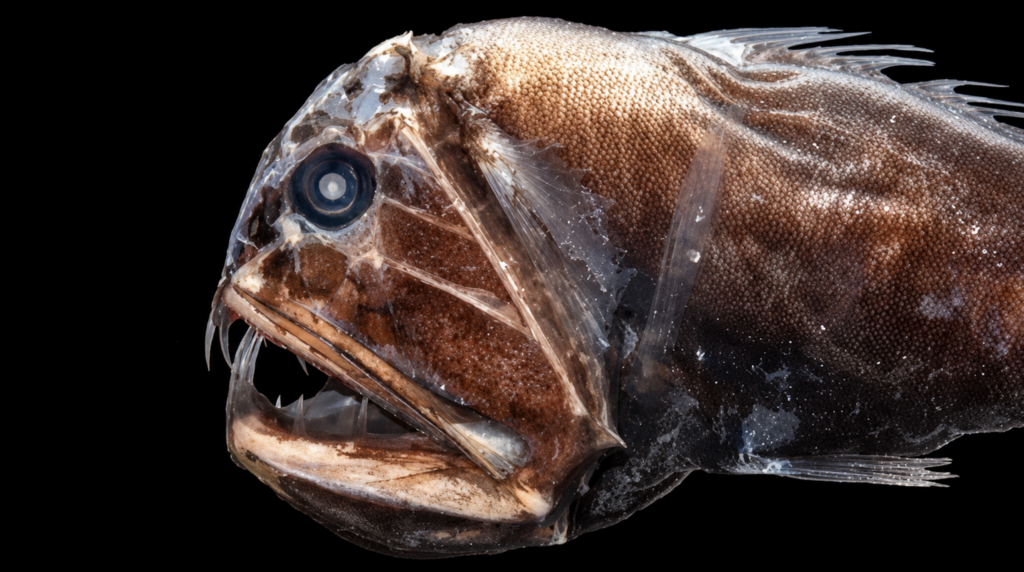
Despite what scientists have learned about the fangtooth’s hunting strategies and physical adaptations, many mysteries remain. Researchers still know surprisingly little about its population size, reproductive behavior, growth patterns, and overall life cycle.
Because the species spends so much of its life in deep and inaccessible waters, studying it presents enormous challenges.
The fangtooth fish serves as a reminder that some of the ocean’s most extraordinary creatures still remain largely unknown. Hidden in the darkness thousands of meters below the surface, this bizarre predator continues to challenge our understanding of life in one of Earth’s most extreme environments.