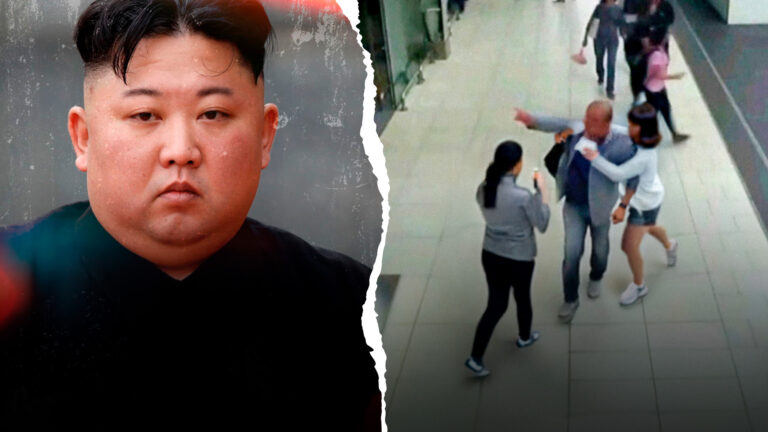
On the morning of February 13, 2017, travelers moved through the crowded terminals of Kuala Lumpur International Airport without noticing anything unusual. Flights flashed across departure boards, tourists rolled luggage across polished floors, and airport cafés buzzed with conversation.
Among the crowd stood a stocky man wearing a gray jacket and carrying a backpack stuffed with cash and emergency antidotes. His passport identified him as Kim Chol, but his real identity was far more dangerous.
He was Kim Jong-nam, the estranged half brother of North Korean leader Kim Jong-un.
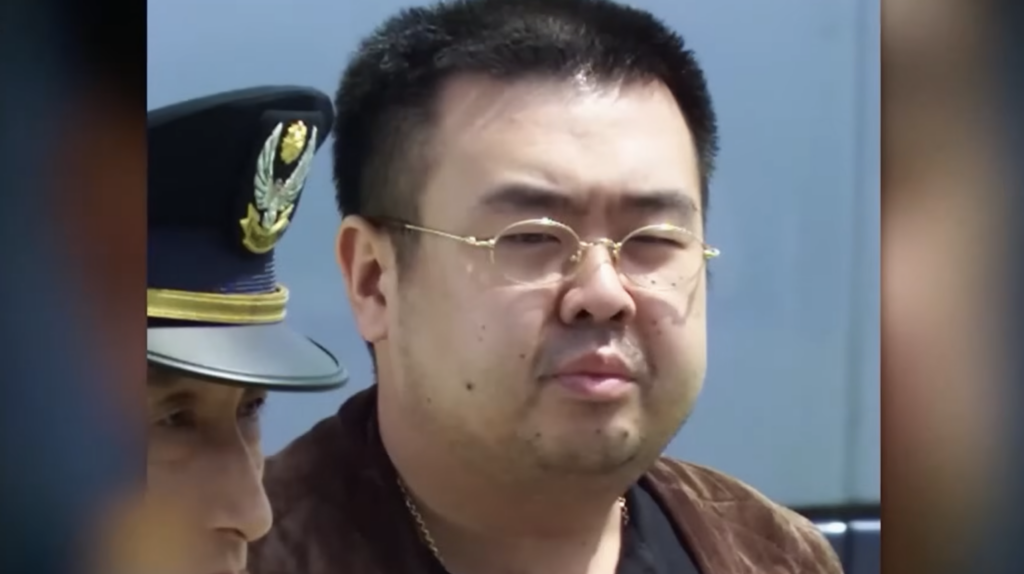
Within an hour, he would be dead.
The assassination shocked the world not only because it happened in broad daylight, but because it involved VX nerve agent, one of the deadliest chemical weapons ever created. The murder looked less like a traditional assassination and more like a scene pulled from a Cold War spy thriller.
Yet the operation was terrifyingly real.
A Deadly Encounter in an Airport
At approximately 9:00 a.m., two women approached Kim Jong-nam inside the airport terminal.
One distracted him from the front while the other suddenly grabbed him from behind and pressed a cloth against his face. Security footage later showed the entire attack lasting only seconds.
At first, the incident appeared bizarre rather than lethal. Kim Jong-nam stumbled away confused, telling airport staff that someone had splashed liquid onto his face.

Minutes later, his condition rapidly deteriorated.
He began sweating heavily, struggling to breathe, and suffering violent muscle spasms. By 9:40 a.m., he suffered cardiac arrest. Five minutes later, he was pronounced dead.
Doctors would later confirm he had been poisoned with VX nerve agent, a chemical weapon so toxic that even a tiny droplet can kill within minutes.
The Exiled Heir of the Kim Dynasty
To understand why Kim Jong-nam became a target, it is necessary to look at the brutal history of North Korea’s ruling family.
Born in 1971, Kim Jong-nam was the eldest son of former North Korean leader Kim Jong-il. For years, many believed he would eventually inherit control of the regime.
Unlike other members of the Kim dynasty, however, Kim Jong-nam spent much of his youth abroad, studying in Switzerland and becoming fascinated by Western culture. He enjoyed video games, foreign restaurants, and modern technology while developing views that differed sharply from the isolated ideology of Pyongyang.
Over time, he reportedly began advocating for economic reforms modeled after China’s market system.
That made him politically dangerous.
His downfall came in 2001 when Japanese authorities detained him at Tokyo’s Narita International Airport after he attempted to enter the country using a forged Dominican passport. According to reports, he planned to visit Tokyo Disneyland.
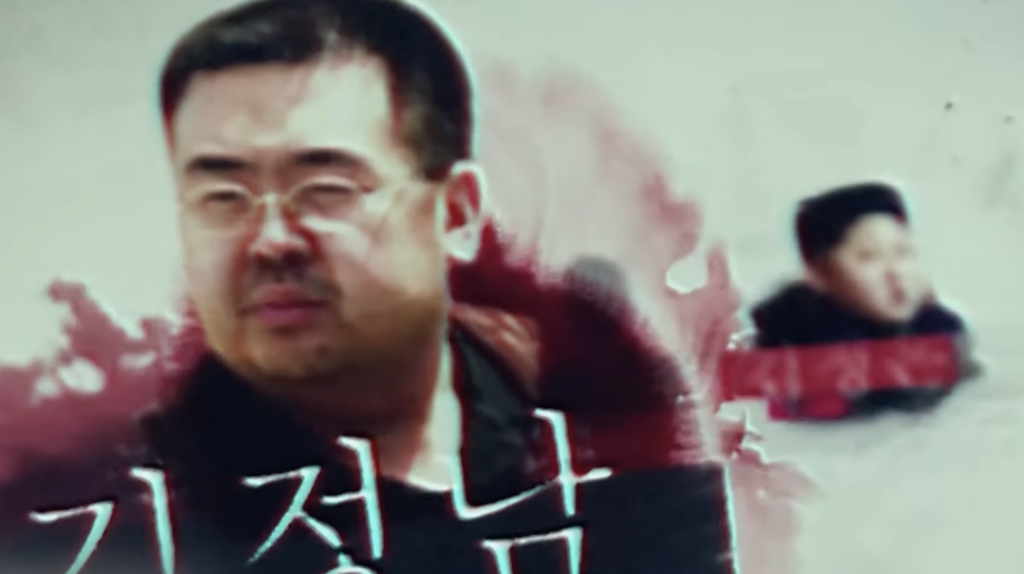
The embarrassing scandal humiliated the Kim family and effectively destroyed his chances of succeeding his father.
After that, Kim Jong-nam lived mostly in exile, moving between Macau, Singapore, and China while quietly criticizing hereditary dictatorship in rare interviews with foreign journalists.
For Kim Jong-un, those criticisms may have been unforgivable.
The Women Who Thought It Was a Prank
The two women accused of carrying out the attack, Siti Aisyah and Doan Thi Huong, claimed they had no idea they were participating in an assassination.
Siti Aisyah, an Indonesian woman working odd jobs in Malaysia, said she had been recruited by a man posing as a television producer. He allegedly paid her to participate in prank videos where strangers had baby oil or lotion rubbed onto them in shopping malls.
Doan Thi Huong, a Vietnamese aspiring entertainer, received a similar offer.
According to investigators, the women participated in multiple practice “pranks” before the attack on Kim Jong-nam. By the time they arrived at the airport that morning, they believed they were filming another hidden camera stunt. But the liquids they handled that day were not harmless oils.
Authorities later concluded the women unknowingly carried two separate chemical precursors that combined directly on Kim Jong-nam’s face to form VX nerve agent.
Individually, the chemicals were relatively safe to touch briefly. Combined together, they became a weapon of mass destruction.
Moments after the attack, both women hurried to nearby restrooms and washed their hands thoroughly, likely saving their own lives.
North Korea’s Alleged Role
Malaysian investigators quickly identified four North Korean suspects who had fled the country immediately after the assassination.

Security footage showed them monitoring the airport, directing the women before the attack, and calmly leaving Malaysia shortly after Kim Jong-nam collapsed.
The suspects escaped through a series of international flights and eventually returned to North Korea before authorities could arrest them.
Although Pyongyang denied involvement, many intelligence experts believed the assassination could only have been authorized at the highest level of the North Korean government.
Former diplomats and South Korean intelligence officials later claimed that Kim Jong-un had viewed his half brother as a long term threat.
Kim Jong-nam’s existence alone represented a potential alternative to Kim Jong-un’s rule. Some Chinese officials reportedly even considered him a possible replacement leader if instability ever struck North Korea.
That made him dangerous simply by staying alive.
The Poison That Terrified the World
VX nerve agent is one of the most horrifying substances ever developed.

Originally created in the 1950s during pesticide research, VX attacks the nervous system by preventing muscles from relaxing. Victims lose control of their bodies, their lungs fill with fluid, and breathing eventually stops.
Even tiny amounts can kill within minutes.
Because of its extreme lethality, VX is classified as a chemical weapon under international law. North Korea is widely believed to possess large stockpiles of chemical agents, including VX, sarin, and mustard gas.
The use of VX inside a civilian airport stunned governments around the world. The assassination transformed a busy international terminal into the scene of a chemical weapons attack.
The Message Behind the Murder
The assassination of Kim Jong-nam was more than a family dispute. It was a global demonstration of how far authoritarian regimes may go to eliminate perceived threats.
The killing unfolded in one of the busiest airports in Asia, under multiple security cameras, in front of countless witnesses. Yet the masterminds escaped.
For many observers, the attack revealed the extraordinary reach of North Korea’s intelligence operations and the ruthless determination of the Kim dynasty to maintain power at any cost.
Kim Jong-nam spent years living cautiously, carrying antidotes in his backpack and moving constantly between countries. But in the end, even that was not enough to save him.
Forty five minutes after a stranger wiped liquid across his face, the exiled heir to North Korea’s ruling family was gone.