






Swipe Down for Full Video Story
Most of us learned that the Solar System has eight planets. For many years, Pluto made it nine before being reclassified as a dwarf planet. But beyond Neptune, far past the Kuiper Belt, scientists have noticed something unusual. Objects in the outer Solar System appear to be behaving as if something massive is influencing them.
That raises a fascinating question. What if there really is a hidden world out there? And even more strangely, what if it is not a planet at all? What if the explanation is something far more exotic, like a tiny black hole drifting through the outer Solar System?
The Strange Clues at the Edge of the Solar System
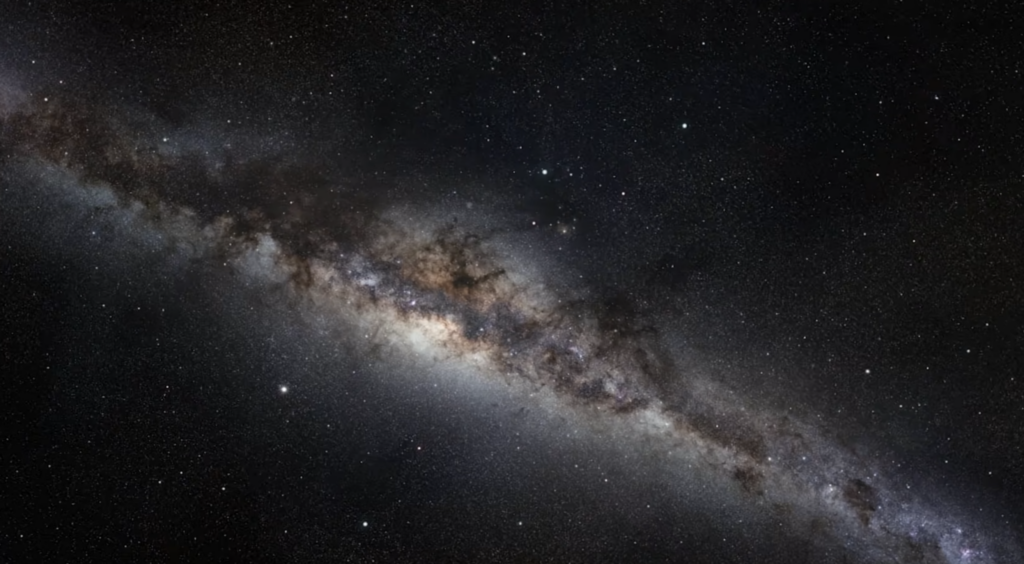
To understand the mystery, we first need to zoom out and grasp just how large space really is.
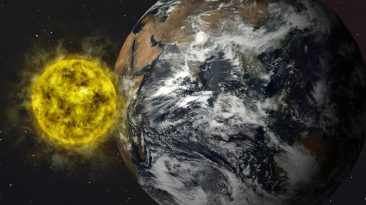
Earth sits just 1 Astronomical Unit from the Sun, roughly 150 million kilometers. Neptune, the outermost known planet, is about 30 times farther out. Beyond Neptune lies the Kuiper Belt, a vast region filled with icy bodies, dwarf planets, and trillions of comet like objects.
This region is not empty. It is a frozen frontier filled with remnants from the formation of the Solar System.
But something odd has been observed here.
Certain distant objects, called Trans Neptunian Objects, or TNOs, seem to follow unusual orbital patterns. Instead of moving randomly, several of them appear to cluster in similar directions and tilt in a coordinated way. Statistically, this should not happen by chance.
The Planet Nine Hypothesis
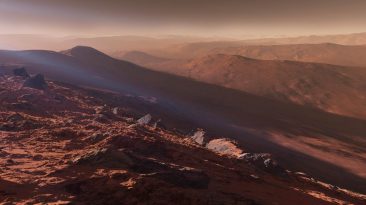
In 2016, researchers at Caltech proposed a bold explanation. The strange orbital clustering could be caused by a massive unseen planet far beyond Neptune. This theoretical world is often called Planet Nine.
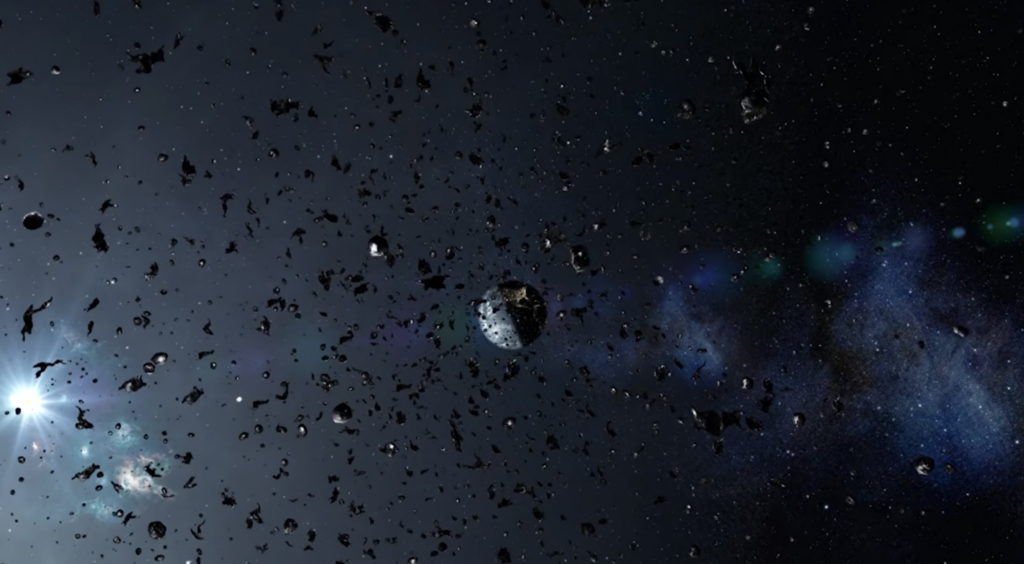
According to calculations, Planet Nine could be around five to ten times the mass of Earth. It might take ten thousand to twenty thousand years to complete a single orbit around the Sun. That means it would move incredibly slowly from our perspective, making it extremely difficult to detect.
If it exists, it would likely be located hundreds of Astronomical Units away, possibly between 400 and 1500 AU from the Sun.
The challenge is simple. Even if Planet Nine is large, it is also extremely dark and far away. At that distance, sunlight is so weak that even a Neptune sized object would be nearly invisible.
At 600 AU, it would appear over 100,000 times dimmer than Neptune. At 1000 AU, it would be nearly impossible to see with current telescopes.
That is why, despite strong mathematical evidence, no one has ever directly observed it.
A Missing Planet or Something Else Entirely
The Planet Nine idea is still just a hypothesis. Scientists are actively searching for it, but there is another possibility that is even more unusual.
What if the gravitational effects we are seeing are not caused by a planet at all?
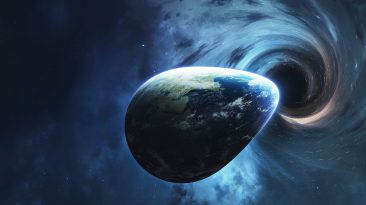
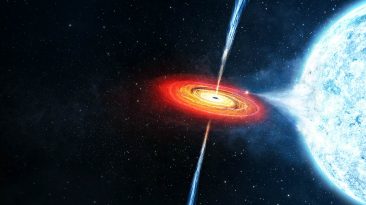
One alternative theory suggests that a small primordial black hole could be responsible.
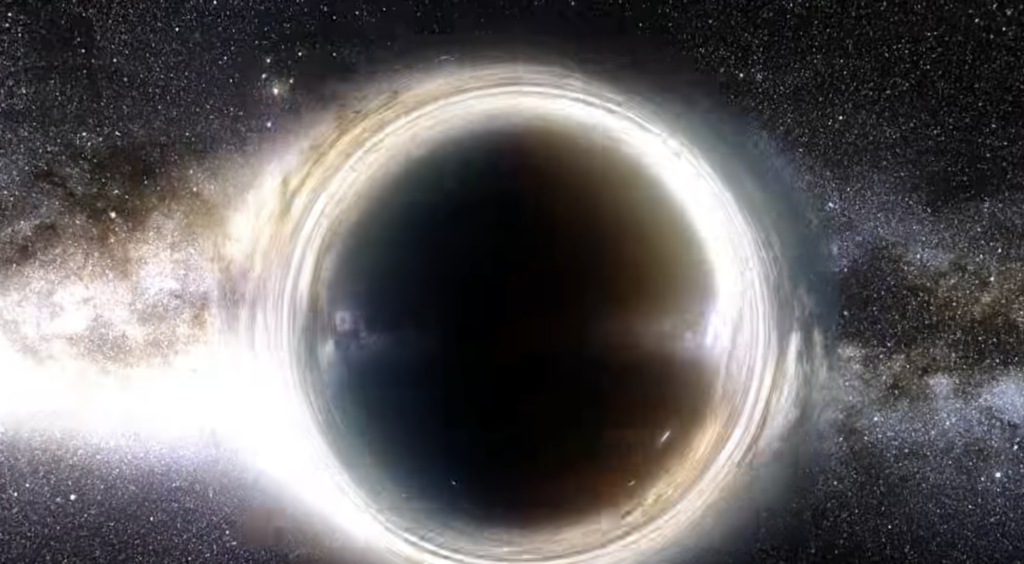
Primordial black holes are hypothetical objects that may have formed in the extreme conditions of the early universe shortly after the Big Bang. Unlike stellar black holes, they could be extremely small in size but still contain significant mass.
In theory, a black hole with the mass of several Earths could be no larger than a grapefruit.
An object like that drifting through the outer Solar System would be almost impossible to detect directly. It would not emit light, and it would not reflect sunlight. The only way to find it would be through its gravitational effects on nearby objects.
Why It Would Be So Hard to Find
Whether Planet Nine exists or a black hole is responsible, the outer Solar System is one of the darkest and most difficult regions to study.
At extreme distances, even large objects reflect almost no sunlight. That makes direct imaging extremely challenging.
Instead, scientists rely on indirect evidence. They track how smaller objects move and look for patterns that suggest something massive is influencing them.
This is similar to how Neptune was discovered in the 19th century. Astronomers noticed irregularities in Uranus’s orbit and calculated the position of an unseen planet. Neptune was later found almost exactly where predicted.
The same method is being used today, but the distances involved are far greater.
The Search for the Hidden Influence
Modern telescopes are beginning to improve our chances of solving this mystery. Instruments like wide field survey telescopes are scanning the sky for faint moving objects and unusual gravitational effects.
Future observatories will be even more powerful, potentially capable of detecting distant planets or confirming whether a compact object like a primordial black hole exists in the outer Solar System.
If Planet Nine is real, it will likely be one of the most important discoveries in modern astronomy. It would reshape our understanding of how planetary systems form and evolve.
If it is not a planet, and instead something more exotic is out there, then the implications could be even more profound.
Why This Mystery Matters
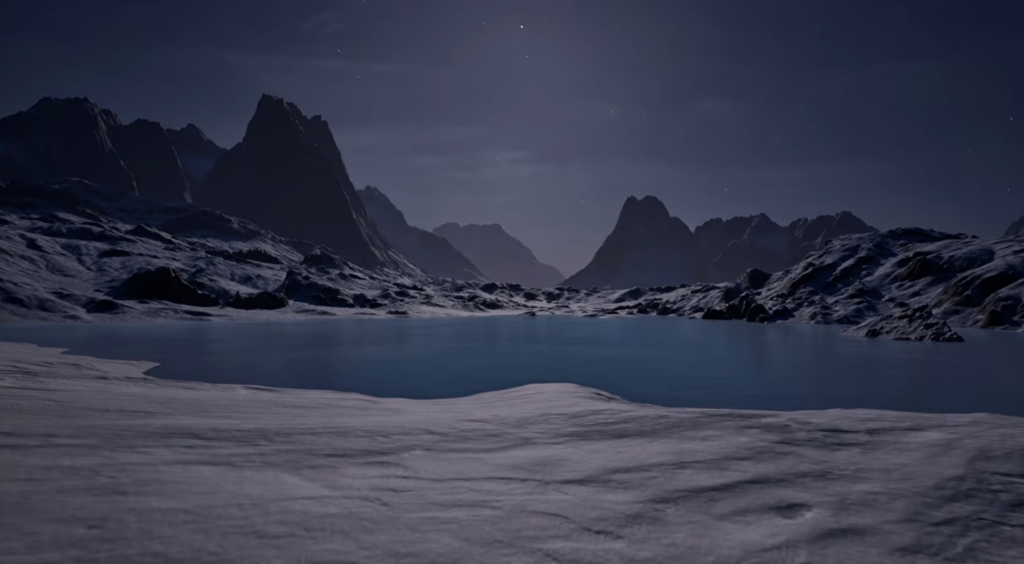
At first glance, this might seem like a distant scientific puzzle with little relevance to everyday life. But it is actually part of a much bigger story.
The Solar System is not static. It is constantly influenced by gravitational forces, leftover debris from its formation, and possibly even unseen objects drifting in from interstellar space.
Understanding what is shaping the outer Solar System helps scientists answer fundamental questions about where we come from and how common planetary systems like ours really are.
A Cosmic Question Still Waiting for an Answer
For now, the truth remains unknown. There may be a massive hidden planet slowly orbiting far beyond Neptune. Or there may be something far stranger, like a primordial black hole silently shaping the motion of distant icy worlds.
What is clear is that the outer Solar System still holds secrets waiting to be uncovered.
And as our technology improves, we may soon discover whether the mystery is a lost planet, a cosmic relic from the early universe, or something we have never even imagined before.