Your hike has taken longer than expected, and now the forest is almost completely dark. Ahead, two round eyes suddenly appear between the trees. You stop, trying to understand what you are seeing, when the eyes move closer. An owl is watching you.
Most owls have no interest in people, but entering their territory can change their behavior. These birds are specialized predators, equipped with excellent night vision, extremely sensitive hearing, sharp talons, and wings designed to move through the darkness with surprisingly little noise.
Among the species that deserve respect is the great horned owl. Recognizable by the feather tufts on its head, this powerful bird can become defensive when a person gets too close to its nest or young.
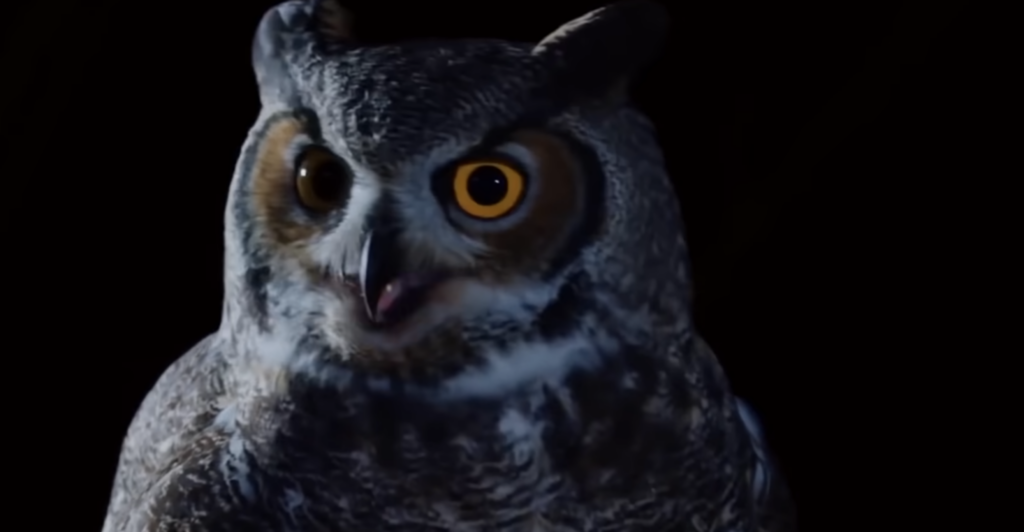
A great horned owl can have a wingspan of around 1.5 meters, while its strong feet are equipped with curved talons designed to seize prey. Despite its size, the bird can move through the air with remarkable stealth.
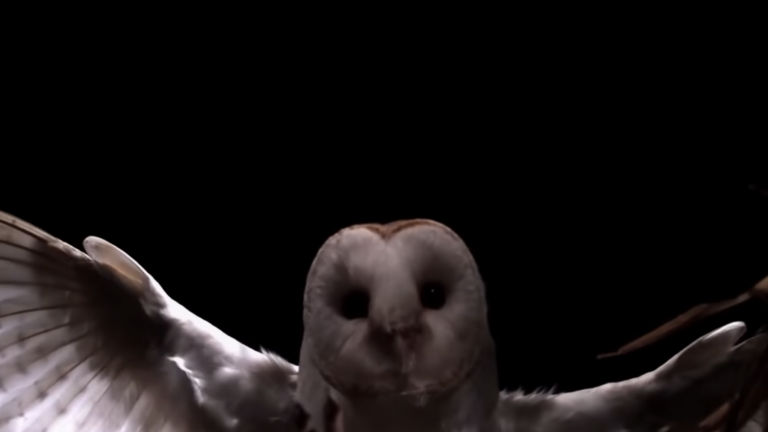
That silence comes from specialized feathers. The edges of their wing feathers help break up turbulence, while the soft surfaces reduce the sound produced as air moves across the wings.
This allows an owl to approach without giving its target much warning. However, an owl that wants you to leave may make its presence very clear by hissing, clicking its bill, or producing other threatening sounds.
Those warnings should never be ignored. If an owl is repeatedly watching you, making aggressive noises, or flying toward you, you may already be too close to its territory.
Something as ordinary as what you are wearing can also attract attention. Headphones, unusual hats, or hair that moves behind your head can potentially draw an owl’s attention if the movement resembles prey.
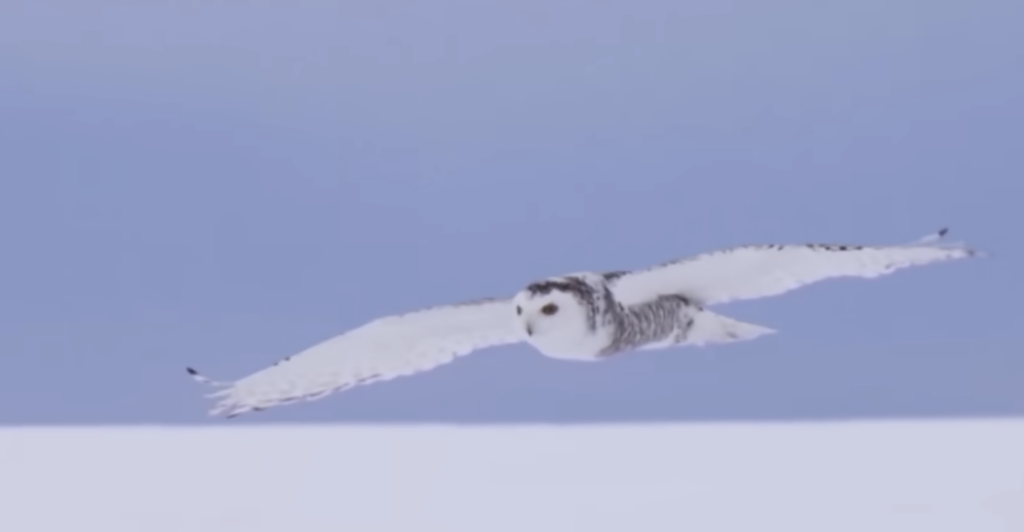
In 2019, a man hiking in British Columbia experienced an unusual encounter when an owl swooped down and stole his cap. The bird carried the hat to a tree and watched him. When the man shook the tree to recover it, the owl eventually attacked him until he ran away.
If you hike where aggressive owls are known to nest, carrying something that can protect your head may be useful. An umbrella can provide a barrier during a dive, while another object held above you could draw the bird’s attention away from your head.
If the owl continues attacking, your goal should be to leave its territory rather than confront it. Protect your face and head, move away from the area, and avoid trying to grab or strike the bird.
Young owls can create another dangerous situation because they sometimes leave the nest before they are capable of flying properly. A fluffy young bird sitting on the ground may look abandoned, but its parents could be nearby.
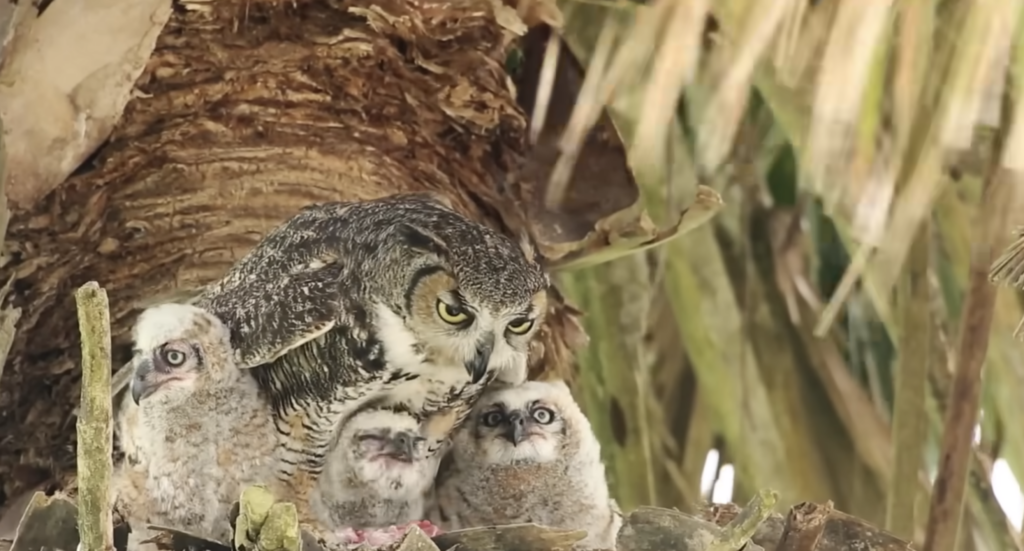
Approaching a young owl can therefore bring you directly into the path of a protective parent. If you find one on the ground, leave it alone and continue moving rather than trying to rescue or touch it.
If an owl does attack, protecting yourself is obviously important, but deliberately killing the bird can create serious legal problems. Owls are protected wildlife in many places, and harming one can result in penalties. In the United Kingdom, for example, the Wildlife and Countryside Act provides protections for wild birds, their nests, and eggs.
The safest approach is to recognize the warning signs early, protect your head if necessary, and leave the area. An owl may look small compared with a human, but its silent flight, powerful talons, and willingness to defend its territory can turn an ordinary nighttime hike into a frightening encounter.