



Swipe Down for Full Video Story
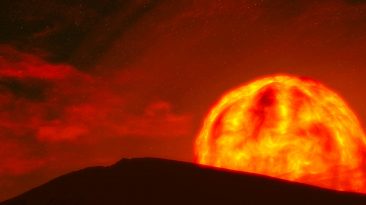
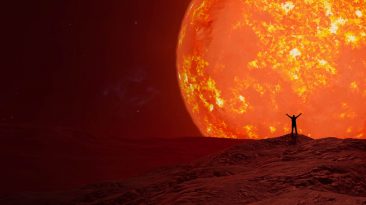
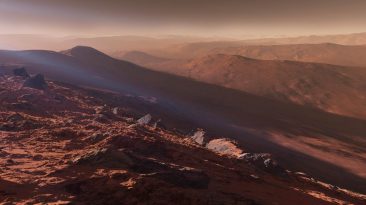
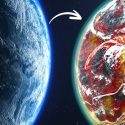
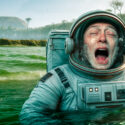
Imagine standing on the surface of an alien world nearly 600 light years away from Earth. The sky glows dim red instead of blue. Strange plants sway in the cold wind. Water glimmers in the distance. And every step feels heavier than it should.
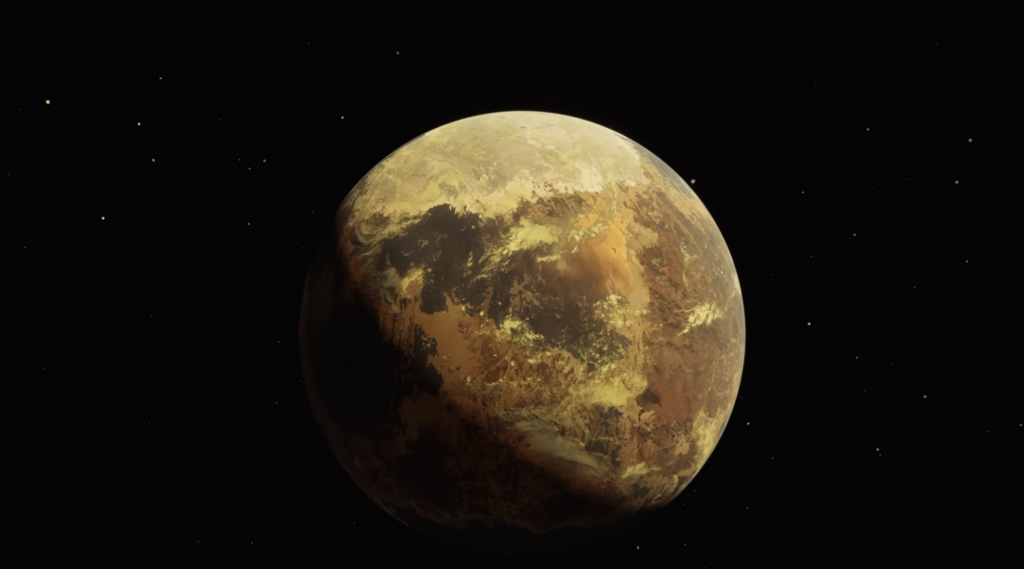
Welcome to Kepler 186 f, one of the most fascinating exoplanets ever discovered and a world scientists believe could potentially support life.
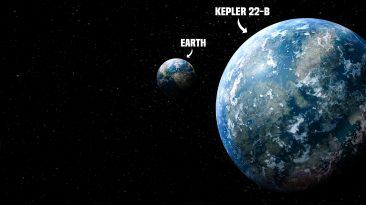
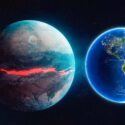
Located about 579 light years from Earth in the constellation Cygnus, Kepler 186 f was the first Earth sized planet discovered inside the habitable zone of another star. That made it an instant scientific sensation. Unlike giant gas planets or scorching lava worlds, this planet appeared to have some of the key ingredients needed for life as we know it.
But surviving there would be far more difficult than science fiction movies make it seem.
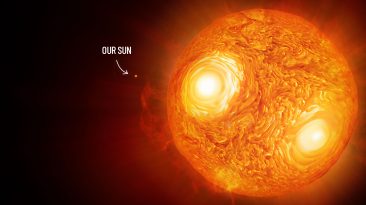
Kepler 186 f orbits a red dwarf star called Kepler 186. Red dwarfs are smaller and cooler than our Sun, which means planets have to orbit much closer to them to receive enough warmth for liquid water. One year on Kepler 186 f lasts only about 130 Earth days.
At first glance, the planet sounds surprisingly Earth like. Scientists estimate it is only slightly larger than Earth, and it sits in the so called “Goldilocks zone,” where temperatures might allow liquid water to exist on the surface.
That alone makes it incredibly valuable to researchers searching for habitable worlds. However, “potentially habitable” does not mean humans could simply land there and start building cities.
The first challenge would be the atmosphere. Scientists still do not know exactly what gases surround Kepler 186 f. Even if oxygen exists there, the balance could be deadly for humans. Too little oxygen would suffocate explorers, while too much could become toxic over time. The atmosphere could also contain dangerous compounds that human lungs have never encountered before.
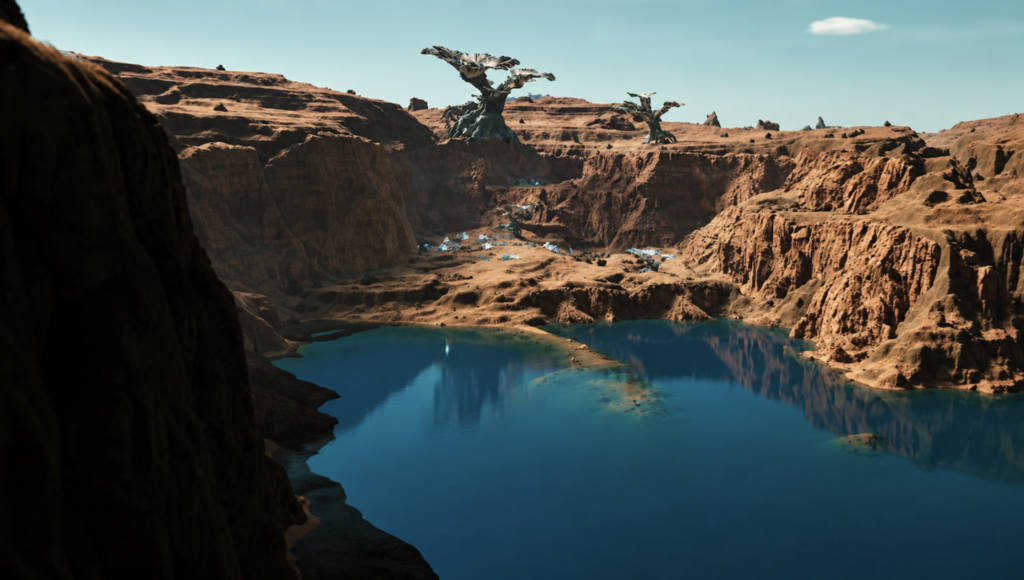
Without an atmosphere, the planet would likely be frozen solid. But with a thick enough atmosphere, a greenhouse effect could trap heat and keep temperatures relatively mild. Some estimates suggest parts of the planet could hover around temperatures similar to Earth’s cooler regions.
Even then, astronauts would never remove their helmets without years of testing.
Gravity would create another major problem. Kepler 186 f is believed to have about 30% stronger gravity than Earth. That might not sound extreme, but over time it would put enormous stress on the human body. Walking would become exhausting. Carrying equipment would require much more energy. Long term exposure could damage muscles, joints, and the cardiovascular system.
Simple tasks like setting up habitats or transporting supplies could quickly become dangerous.
Power generation would also be complicated. Because Kepler 186 f receives far less sunlight than Earth, ordinary solar panels would be much less effective. The dim red light from its star would provide only about one third of the energy our planet receives from the Sun.
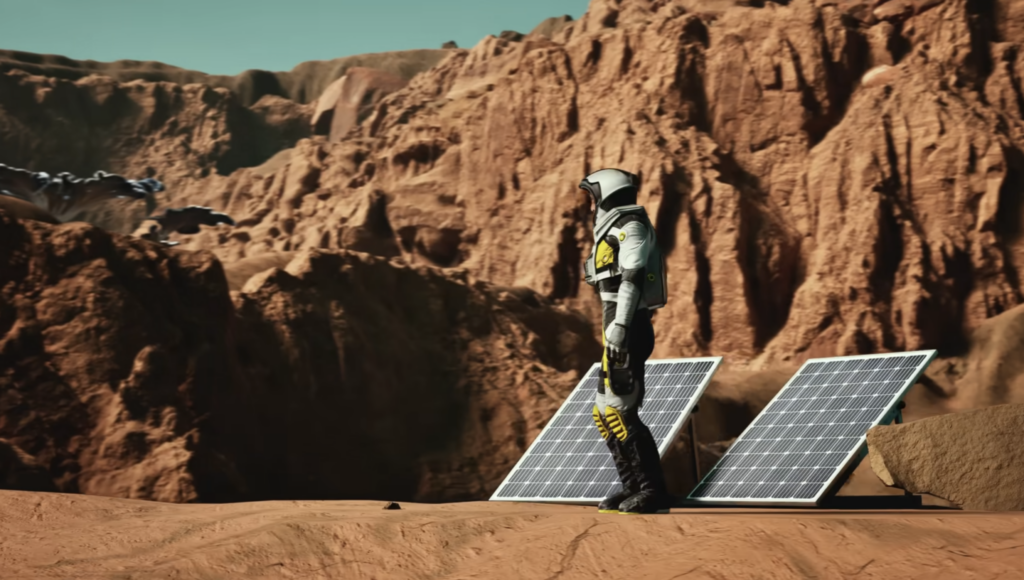
That means future colonists would likely depend on nuclear power systems or advanced energy storage technologies to survive. And the star itself presents another terrifying threat.
Red dwarf stars are known for violent solar flares that can blast nearby planets with dangerous radiation. Even though the star appears dim and harmless compared to our Sun, sudden eruptions could expose the surface to lethal bursts of energy.
Any human settlement would require heavy radiation shielding, underground habitats, or magnetic protection systems just to stay alive.
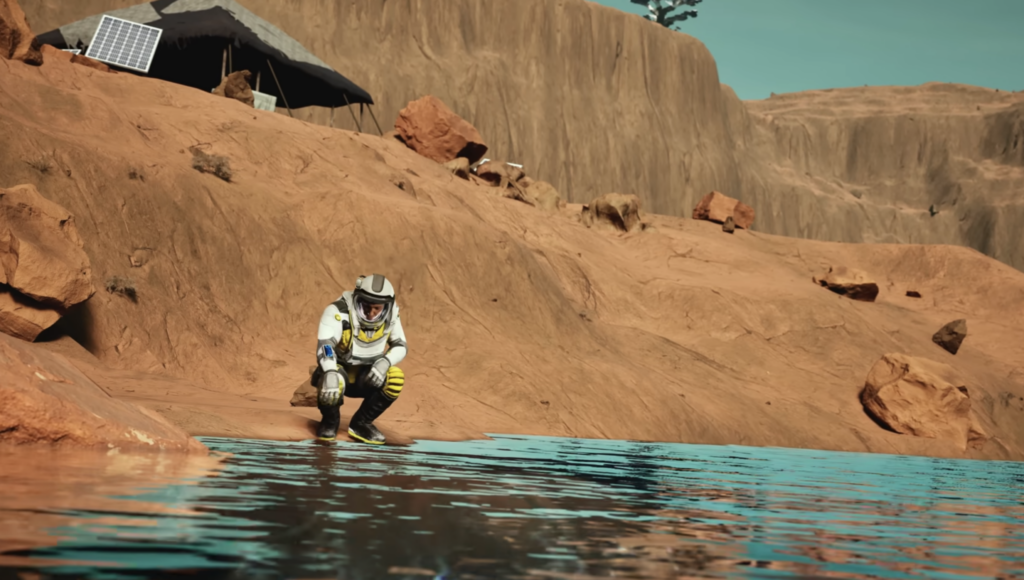
Water, one of the most important ingredients for survival, could also become a deadly trap. Liquid water might exist on Kepler 186 f, but that does not mean it would be safe to drink. Alien water sources could contain toxic chemicals, dangerous microorganisms, or entirely unfamiliar biological compounds.
Future explorers would need advanced filtration and recycling systems. In reality, astronauts traveling through deep space would likely recycle nearly every drop of water they use, including moisture from sweat and even processed waste water.
Food would become another challenge. Humans could not simply eat alien plants or organisms without extensive testing. Even harmless looking vegetation could trigger deadly allergic reactions or contain toxic biochemistry incompatible with life on Earth.
Instead, colonists would probably grow food using aeroponics or hydroponics. These farming systems allow crops to grow without soil by spraying nutrient rich water directly onto exposed roots. Such systems use far less water and could function inside sealed habitats.
Still, psychological survival might become just as difficult as physical survival.
Imagine living under a permanently dim red sky, separated from Earth by hundreds of light years. Messages sent back home would take nearly six centuries to arrive. Any reply would take another six centuries to return.
The loneliness would be unimaginable.
Yet despite all these dangers, Kepler 186 f remains one of the most exciting exoplanets humanity has ever discovered. Scientists believe there could be billions of potentially habitable planets scattered throughout the Milky Way galaxy alone.
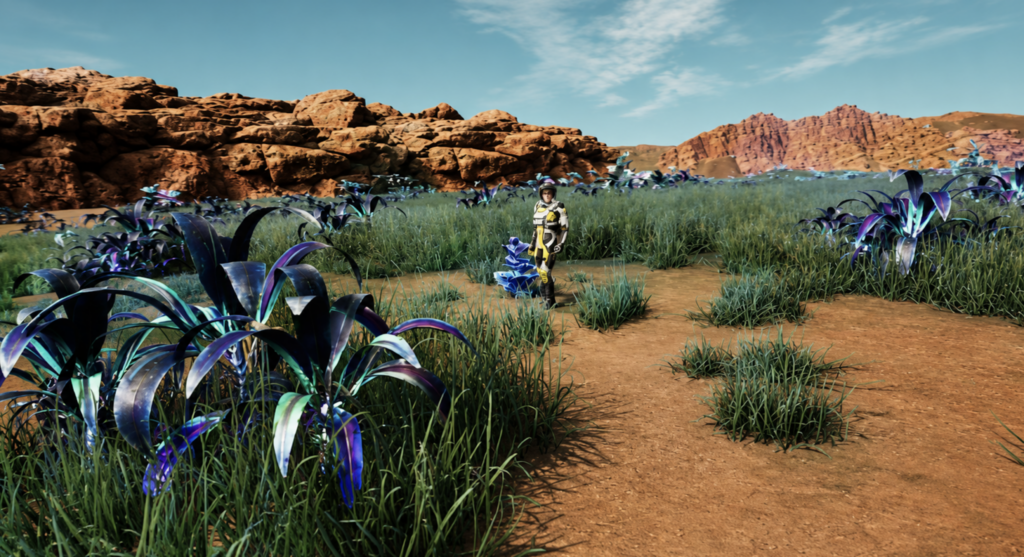
Some may be barren wastelands. Others might host oceans, atmospheres, or even alien ecosystems unlike anything on Earth.
On worlds orbiting red dwarfs like Kepler 186, plant life could look dramatically different from anything we know. Because red dwarfs emit mostly red and infrared light, alien plants might evolve darker colors such as deep purple, black, or crimson to absorb as much energy as possible.
Entire forests could appear almost otherworldly under the dim crimson glow of the sky. But nature on another planet would not necessarily welcome human visitors.
Scientists still do not know whether alien life exists anywhere in the Universe. If it does, it could range from harmless microbes to highly aggressive organisms adapted to completely different environments. Human immune systems might have no defense against alien biology, and alien organisms might react unpredictably to human presence.
Even weather could become deadly.
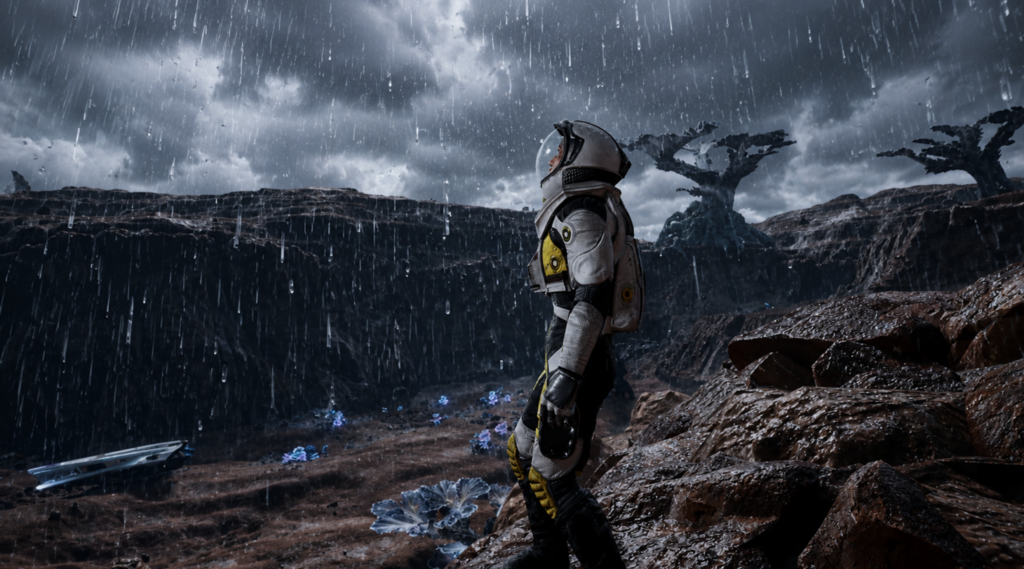
A dense atmosphere combined with freezing temperatures could create strange phenomena such as supercooled rain. These liquid droplets remain unfrozen even below zero degrees Celsius, but instantly crystallize into ice when they touch a surface. For astronauts, exposure could rapidly freeze equipment, visors, and protective suits within seconds.
Kepler 186 f may look beautiful from afar, but beauty in space often hides danger.
For now, the planet remains far beyond our technological reach. With today’s spacecraft, reaching it would take millions of years. But discoveries like this are changing how humanity sees the cosmos.
Worlds once imagined only in science fiction are now being found regularly by astronomers. Every new exoplanet discovery brings scientists one step closer to answering one of humanity’s oldest questions: Are we alone in the Universe?
And if we are not, Kepler 186 f might be one of the places where we eventually find the answer.