






Swipe Down for Full Video Story
You have just completed a seven month journey through deep space. Earth has faded into a distant blue dot, and ahead of you is a cold, dusty world no human has ever truly called home. Mars.
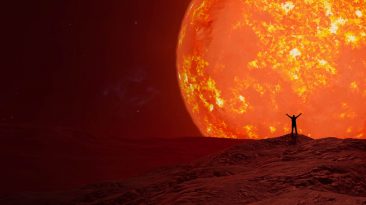
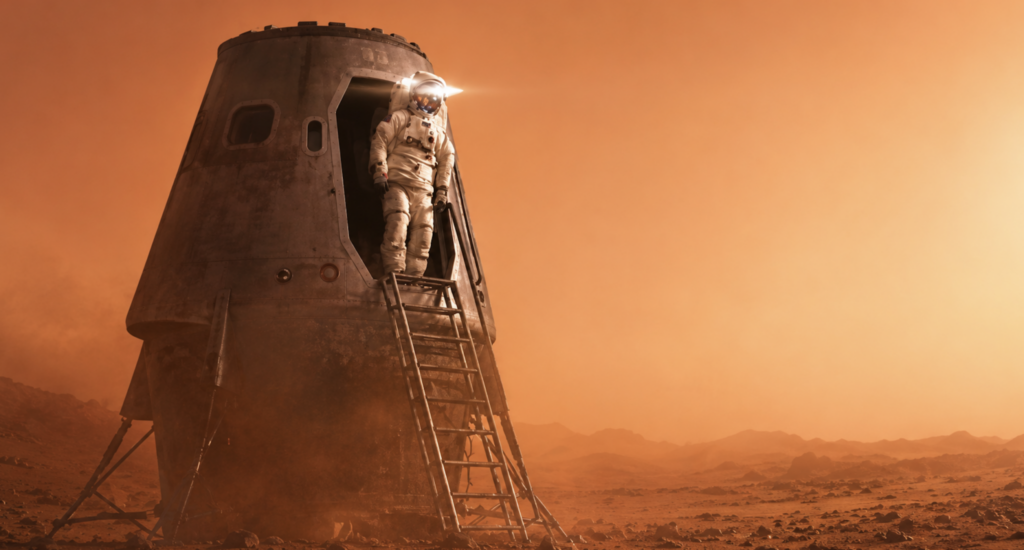
The landing is rough, the silence afterward even stranger. When the dust settles, you step out and realize something that changes everything. You are the first human being on Mars.
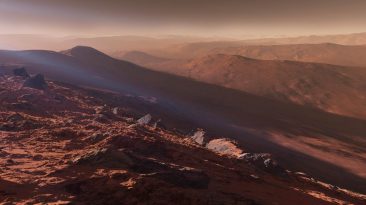
There is no crowd, no celebration, no familiar skyline. Only endless red terrain stretching toward a pale sky. And in that moment, the real mission begins. Now the question is no longer how you got here. It is how you survive, how you build, and whether you will ever make it back to Earth.
The First Human Settlement Beyond Earth
NASA has long planned for human missions to Mars, with early projections suggesting the first crewed landing could happen in the 2030s. Some estimates place it around 2033, depending on technology, funding, and mission success. But NASA is not alone in this ambition. Private companies and international space agencies are also racing toward the same goal.
What makes this moment even more fascinating is that it is not just a mission. It is the beginning of a possible new branch of human civilization.
Much like the race to the Moon in the 1960s, Mars is becoming the next great frontier. But unlike the Moon, Mars is not a place you visit for a few days. It is a place where survival itself must be engineered.
Once you arrive, there is no quick return. Every decision matters.
Choosing Where Humans Can Survive
The first major challenge is location. Mars is not uniform. It is a harsh planet with extreme cold, intense radiation, and a thin atmosphere that offers almost no protection.
Scientists believe that the best places for early human bases are near the polar regions or in areas where water ice is known to exist underground. These regions are not chosen for comfort. They are chosen for survival.
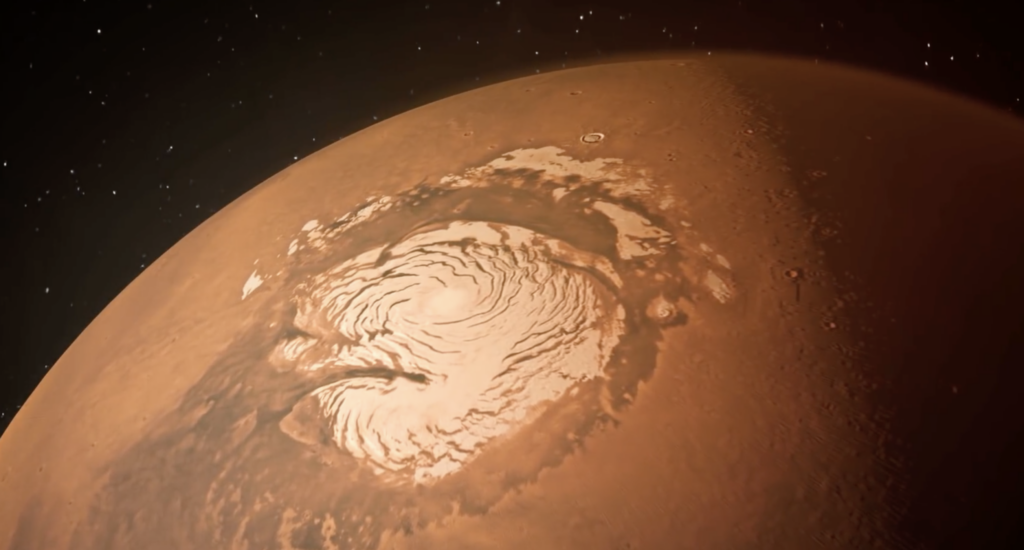
Water is the key reason. Transporting water from Earth is extremely expensive and impractical. Instead, future settlers will rely on extracting water directly from Martian ice deposits. These frozen reserves can potentially be melted and purified for drinking, farming, and oxygen production.
Water is not just for drinking. It is also a source of oxygen and hydrogen, both critical for life support systems and fuel production. Without it, a settlement cannot function for long.
Some of these ice rich regions may also contain minerals like iron and sulfur. Over time, these resources could support construction and manufacturing, reducing dependence on Earth.
But at the beginning, everything depends on one thing. Establishing a base that can keep humans alive.
Building a Home on Another Planet
Before humans even arrive, robotic missions are expected to prepare the ground. These machines would construct basic habitats, deploy solar panels, and set up essential systems for energy, communication, and environmental control.
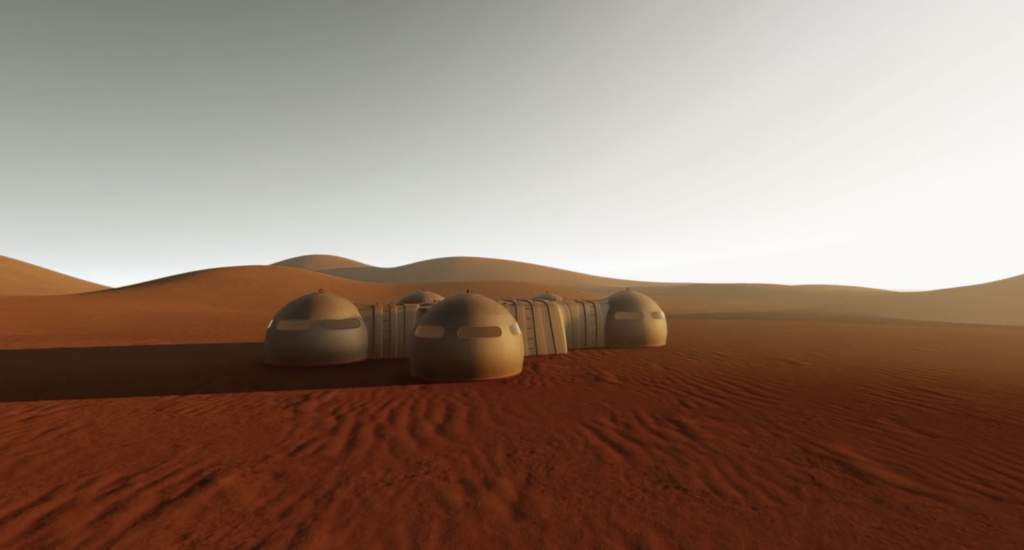
By the time the first crew lands, the early structure of a habitat may already be in place.
The initial base would likely be compact. Roughly the size of a small house, perhaps around 12 meters high and 5 meters wide. It would not feel spacious, but in an environment where the outside is deadly, it would be everything.
Inside, the habitat must perform multiple roles. It must maintain air pressure, regulate temperature, filter radiation, recycle water, and support communication with Earth. Every system is life critical.
The first human crew would likely be small, perhaps six people. Each person would not just be an astronaut. They would be engineers, biologists, mechanics, and emergency repair specialists all at once. There is no backup team waiting nearby. There is no quick rescue mission. Everything depends on cooperation and preparation.
Life in Low Gravity
One of the first things the crew would notice is how different Mars feels physically.
Mars has about one third of Earth gravity. This means everything becomes lighter. Movement feels unusual at first. Walking becomes a series of controlled hops. Even simple actions like lifting tools or climbing ladders require adjustment.
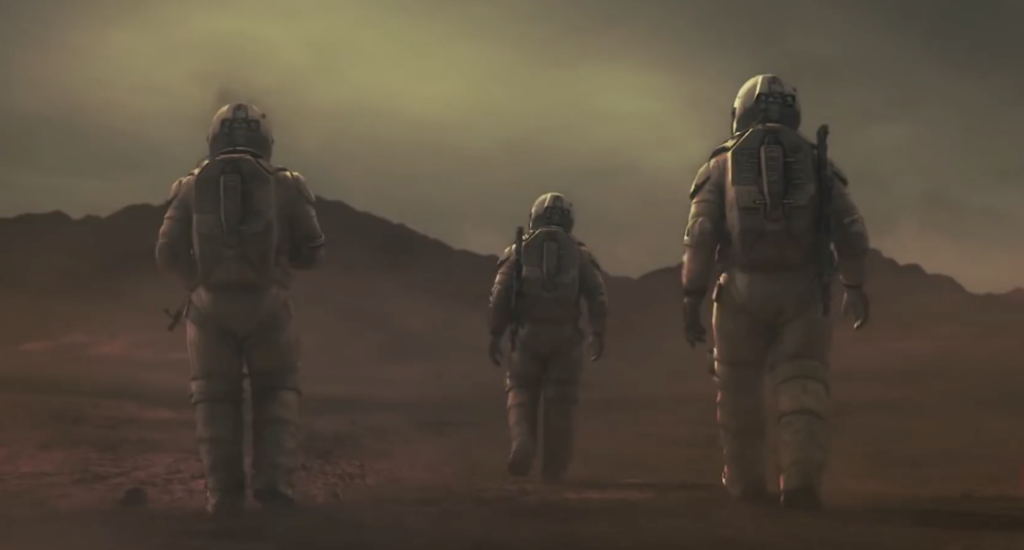
A person who weighs 45 kilograms on Earth would feel closer to 17 kilograms on Mars. At first, this might feel exciting. Jumping higher, moving easier, feeling almost weightless in comparison to Earth.
But over time, low gravity becomes a challenge. Human bodies evolved under Earth conditions. Long term exposure to lower gravity can affect muscles, bones, and even the cardiovascular system. Exercise becomes essential for survival, not just fitness.
Inside the habitat, astronauts would likely follow strict daily routines designed to keep their bodies functioning properly.
Treadmills, resistance machines, and carefully planned physical tasks would become part of everyday life.
Mars is not a place for comfort. It is a place for discipline.
The Struggle to Produce Food
Perhaps the most urgent challenge is food.
Every kilogram of food sent from Earth is extremely expensive. That means early settlers cannot rely on constant resupply missions. They must learn to grow their own food on Mars.
But Mars is not Earth. Its soil is not naturally fertile in the way Earth soil is. It contains useful minerals, but also compounds that may be harmful to plants unless carefully processed.
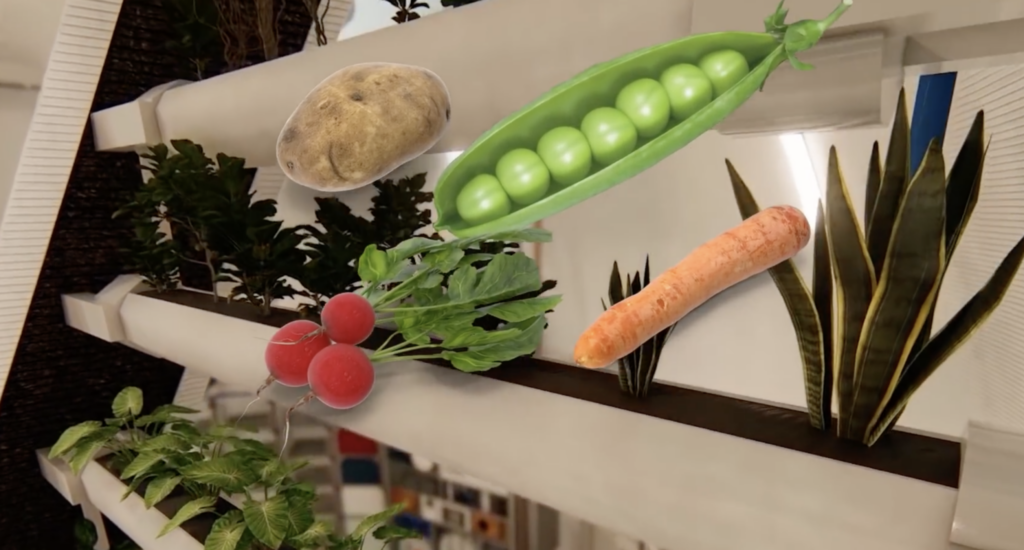
To solve this, scientists have been testing simulated Martian soil on Earth. Experiments suggest that certain crops could survive under controlled conditions. Potatoes, peas, carrots, and radishes are among the most promising options.
These crops are not chosen randomly. They are selected because they are hardy, fast growing, and nutritious.
Food production would likely take place inside controlled greenhouses. These environments would regulate temperature, humidity, and light, mimicking Earth like conditions as closely as possible.
Water would be carefully recycled. Nothing can be wasted. Even human waste would be processed and reused as fertilizer in carefully controlled systems. While this may sound unpleasant, it is an efficient way to close the loop of resource use in a closed environment.
Every drop of water and every gram of nutrients matters.
Over time, these systems would become more advanced, potentially allowing for larger and more stable food production. But in the beginning, survival agriculture is fragile and experimental.
Energy, Air, and Recycling Life Itself
Beyond food, the base must also sustain air and power. Energy would likely come from solar panels placed on the Martian surface. However, Mars experiences dust storms that can reduce sunlight for long periods, meaning energy storage systems would also be essential.
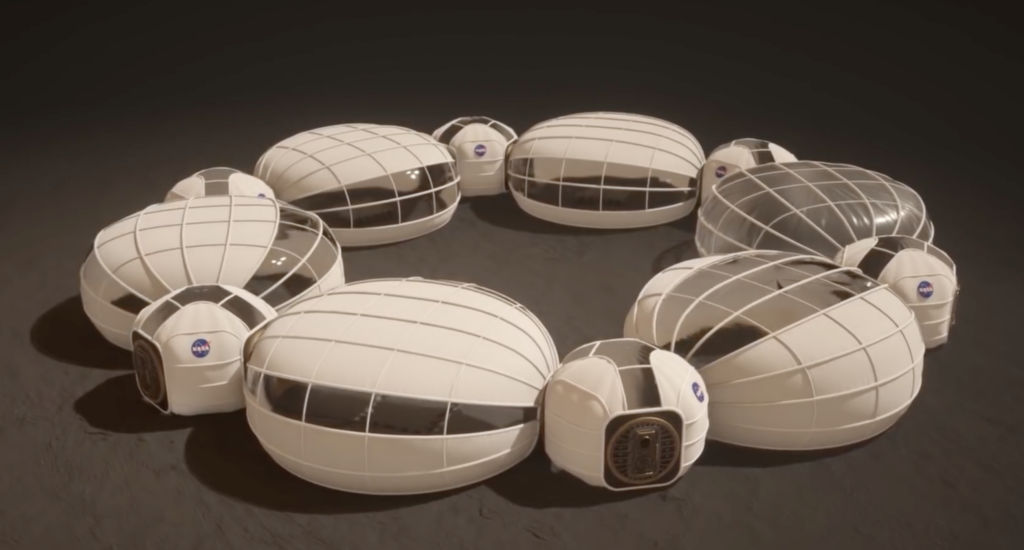
Inside the habitat, air must be constantly recycled. Oxygen would be generated from water or transported supplies, while carbon dioxide would be filtered and processed.
Nothing is open ended. Everything is recycled.
Water systems would also function in a closed loop. Sweat, humidity, wastewater, and even urine would be purified and reused. In space, waste is not waste. It is a resource.
Exploration and Scientific Discovery
Once the base is stable, attention shifts to exploration. The first human settlers would become explorers of an entire planet. They would study geology, search for signs of past water activity, and investigate whether Mars ever supported life.
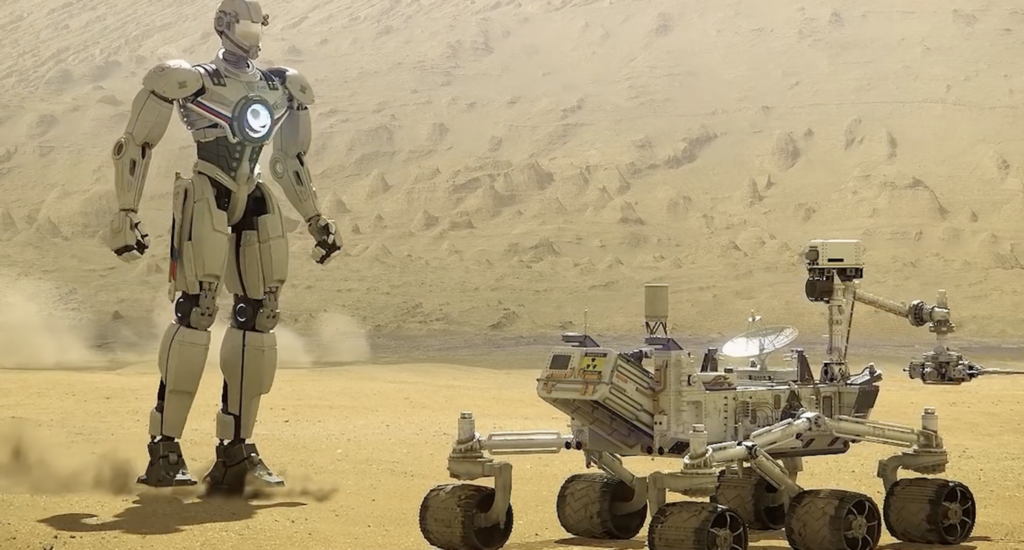
Rovers and drones would assist in this mission, but human decision making remains crucial. Humans can adapt quickly, make judgments, and respond to unexpected discoveries in ways machines cannot fully replicate.
Every sample collected, every rock studied, and every layer of soil examined brings humanity closer to understanding Mars history.
Did life ever exist here? Could it exist again in controlled environments? These are questions the first settlers would begin to answer.
Preparing for the Journey Home
After months on Mars, the mission would shift toward return preparation. Leaving Mars is not simple. It requires a carefully timed launch window when Earth and Mars are properly aligned. Missing that window could mean waiting months or even years.
The crew would use a spacecraft known as a Mars Ascent Vehicle. This vehicle must launch from the Martian surface and connect with a larger spacecraft orbiting the planet.
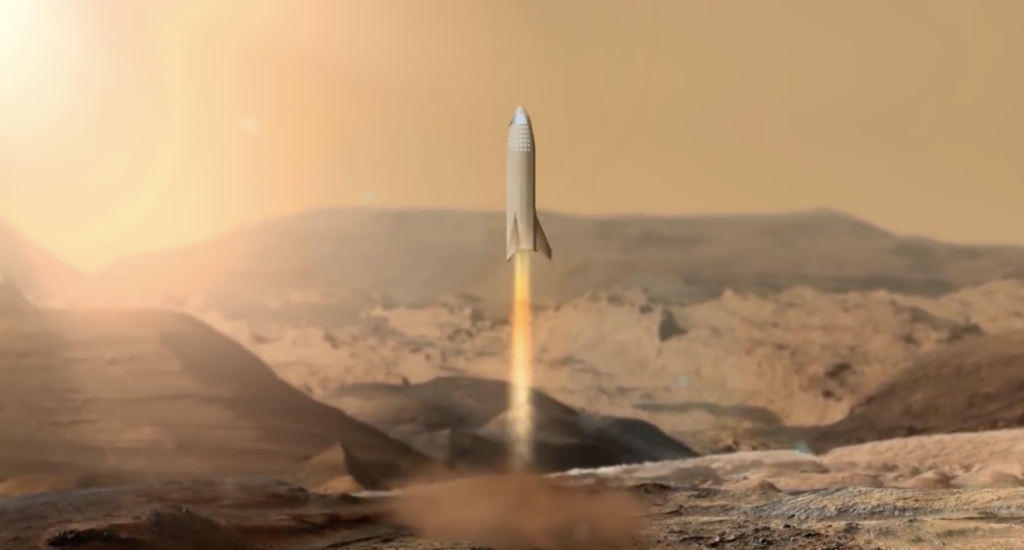
This docking process is one of the most dangerous parts of the entire mission. If alignment fails, the crew could be stranded.
In the best case, the ascent is smooth and takes less than an hour. In more complex scenarios, it could take longer and require multiple adjustments.
Once docked, the crew would begin the long journey back to Earth, carrying with them something far more valuable than samples or data.
They would carry experience.
The First Steps Toward a Permanent Presence
When the return mission succeeds, it will not mark the end of Mars exploration. It will mark the beginning of something larger.
The first human mission will not just be about survival. It will become the foundation for future settlements. Every mistake, every discovery, and every adaptation will help shape how humans live on another planet.
Future crews will benefit from better habitats, improved farming systems, stronger radiation protection, and more reliable transportation. What begins as a small outpost may eventually grow into a permanent settlement. Over decades, Mars could shift from a distant target to a second home.
A New Chapter for Humanity
Standing on Mars as the first human means more than being part of history. It means becoming part of a turning point in civilization.
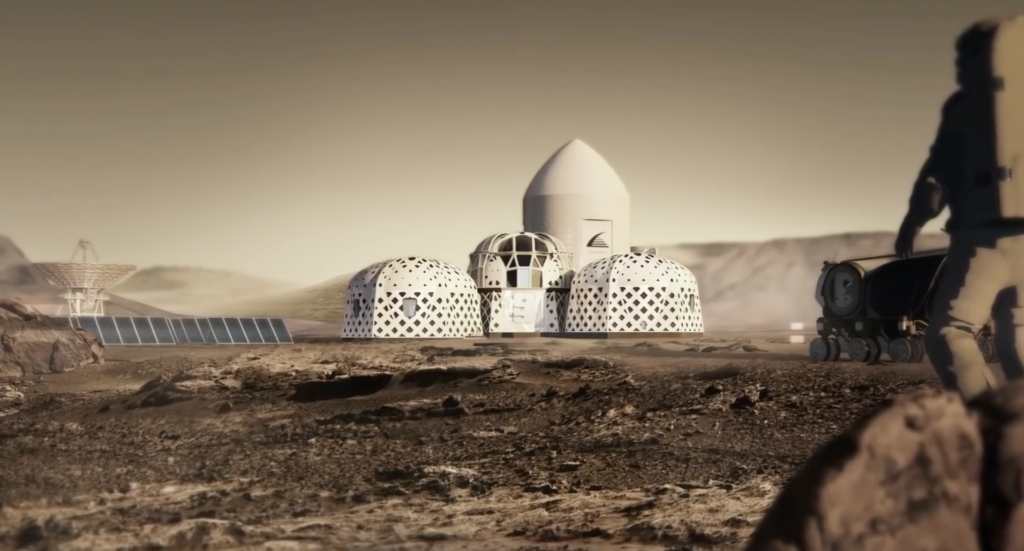
It is a moment where humanity expands beyond Earth for the first time, carrying its knowledge, its challenges, and its hopes into an entirely new world.
The red planet is harsh, silent, and unforgiving. But it is also full of possibility. And as the first footprints are left in its dust, one truth becomes clear.
This is not just a journey to Mars. It is the beginning of life beyond Earth.