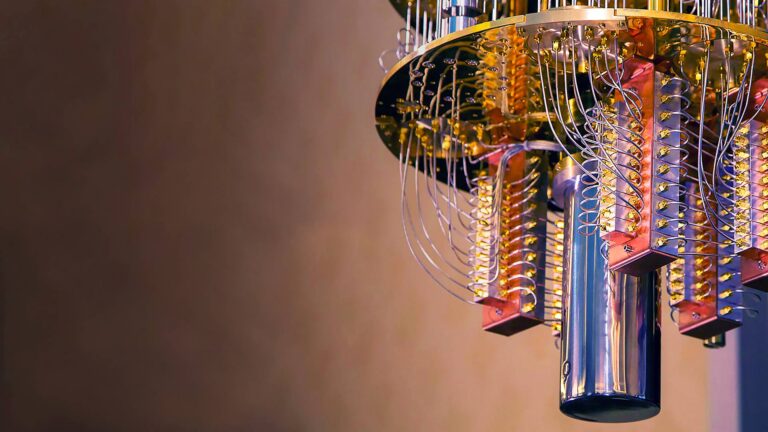
For decades, computers have become faster, smaller, and more powerful. But even the world’s best supercomputers have limits. Some calculations would take them thousands or even millions of years to complete. That is why scientists are developing an entirely new kind of machine that does not simply improve today’s computers. It changes the rules they operate by.
Quantum computers are often described as the next great technological revolution. Although they are still in the early stages of development, researchers believe they could transform medicine, finance, cybersecurity, artificial intelligence, and scientific discovery. Some experts even argue that quantum computing will have an impact as significant as the invention of the internet itself.
Unlike traditional computers, quantum computers rely on the strange laws of quantum mechanics, where particles can behave in ways that seem impossible in everyday life.

Today’s computers process information using bits. Every bit can exist in only one of two states: either a 0 or a 1. Every website, video game, spreadsheet, and movie ultimately comes down to billions of these tiny binary decisions being processed at incredible speed.
Quantum computers work differently.
Instead of bits, they use qubits. A qubit can represent a 0, a 1, or a combination of both at the same time through a quantum property known as superposition. This allows quantum computers to explore many possible solutions simultaneously instead of checking them one after another like a traditional computer.
A simple way to picture the difference is to imagine a globe. A normal computer can only use the North Pole or the South Pole to store information. A quantum computer can use every point across the entire surface of the globe, dramatically increasing the amount of information that can be represented.
This does not mean a quantum computer is simply billions of times faster at every task. In fact, for everyday activities like browsing the internet, writing documents, or watching videos, your laptop is still the better choice.
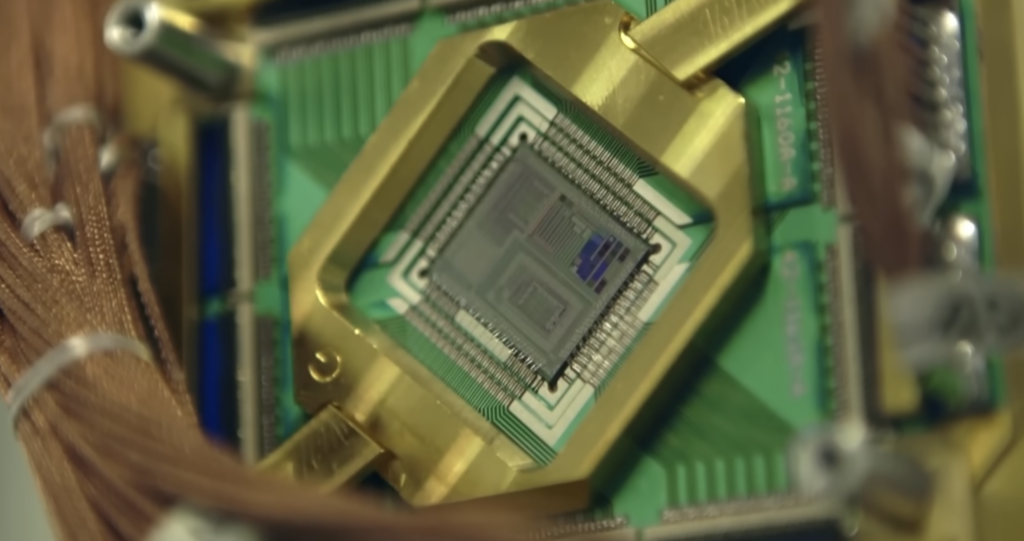
Quantum computers excel only at certain types of extremely difficult mathematical and scientific problems that overwhelm even today’s most advanced supercomputers.
Researchers around the world are racing to unlock that potential.
Companies such as Google and IBM, along with government agencies and research laboratories, have already built early generation quantum computers. These machines are still experimental and contain relatively small numbers of qubits, but they have demonstrated that quantum computing is no longer just a theoretical concept.
If scientists succeed in building large scale, fault tolerant quantum computers, the benefits could be extraordinary.
In medicine, quantum computers could simulate the behavior of molecules with unprecedented accuracy. Instead of spending years testing potential drugs in laboratories, researchers could model their interactions digitally, dramatically accelerating the discovery of new treatments for diseases such as cancer, Alzheimer’s, and rare genetic disorders.

Climate science could also benefit. Today’s climate models already require enormous computing power. Quantum computers may one day simulate atmospheric processes in much greater detail, helping scientists improve weather forecasts and better understand long term climate change.
Artificial intelligence could become even more capable as quantum algorithms process vast amounts of data more efficiently. Industries ranging from logistics to finance could optimize complex systems that currently require enormous computational resources.
Perhaps the most dramatic impact would be on cybersecurity.
Modern encryption protects everything from online banking to military communications. These security systems rely on mathematical problems that would take ordinary computers an impractical amount of time to solve. Powerful quantum computers, however, could eventually solve some of these problems much faster using specialized algorithms.

This possibility has sparked a global race to develop post quantum cryptography, new encryption methods designed to remain secure even against future quantum attacks. Governments and technology companies are already preparing for a future where quantum computers become powerful enough to threaten today’s digital security.
The country or organization that first develops practical large scale quantum computers could gain an enormous technological advantage. Leadership in quantum computing may influence economic competitiveness, scientific research, and national security for decades.
Still, many challenges remain.
Qubits are incredibly fragile and easily disturbed by heat, vibration, or electromagnetic interference. Even tiny disturbances can introduce errors into calculations. Building stable machines with thousands or even millions of reliable qubits remains one of the greatest engineering challenges of the century.

Despite these obstacles, progress continues every year. Scientists are steadily improving quantum hardware, developing better error correction techniques, and discovering new algorithms that expand what these machines can accomplish.
Quantum computers are not replacing the devices sitting on your desk anytime soon. Instead, they represent an entirely new class of computing designed to tackle problems that were once thought impossible.
If researchers succeed, quantum computers will not simply make technology faster. They will change the kinds of questions humanity is capable of answering, opening the door to discoveries that could redefine science, medicine, and our understanding of the universe itself.