Where did life on Earth come from? It is one of humanity’s oldest and most fascinating questions. For centuries, people have searched for answers in religion, philosophy, and science. But what if the true origin of life is far stranger than we imagine?
What if the first living organisms on Earth were not born here at all, but arrived from somewhere else in the cosmos?
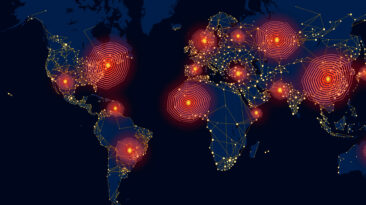
This idea is known as panspermia, a scientific hypothesis that suggests life, or at least the building blocks of life, may have traveled through space before reaching our planet. Rather than life beginning exclusively on Earth, microscopic organisms could have arrived aboard asteroids, comets, or other interstellar objects.

The theory gained renewed attention in 2017 when astronomers detected Oumuamua, the first known object from another star system to pass through our Solar System. This unusual, cigar or pancake shaped object sparked debate among scientists because of its mysterious properties.
Some researchers suggested that objects like Oumuamua could potentially act as carriers for organic material, protecting it from harmful radiation during long journeys through space.
While the idea may sound like science fiction, experiments have shown that some forms of life are remarkably resilient. Researchers studying bacteria aboard the International Space Station discovered that certain microbes can survive exposure to the harsh conditions of outer space.
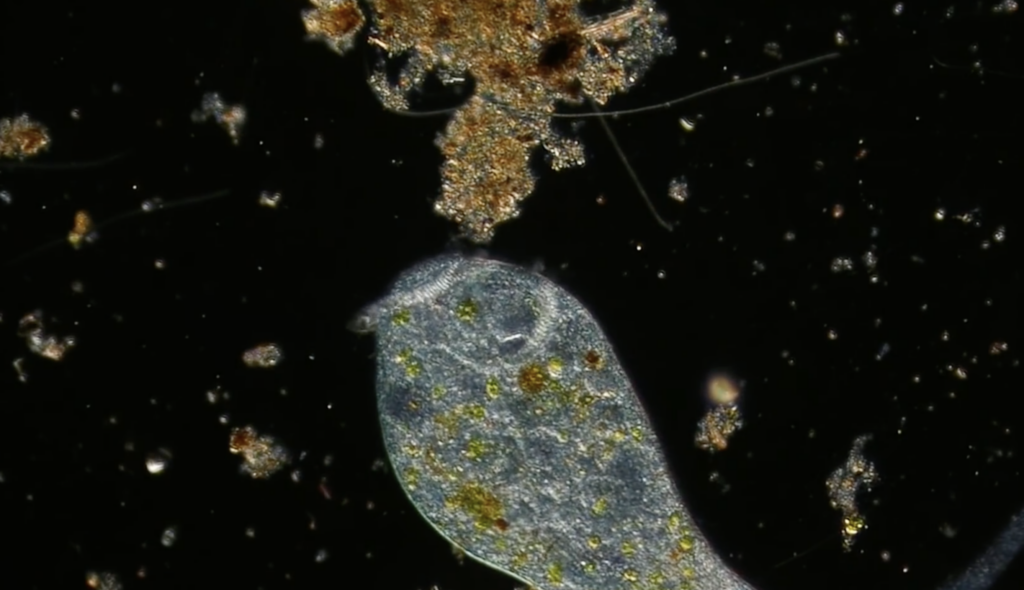
Extreme cold, intense radiation, and the vacuum of space are not always enough to destroy these tiny organisms.
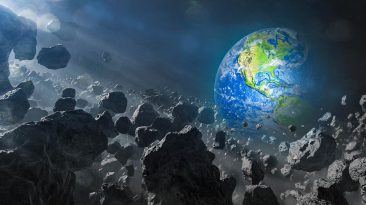
If microbes can survive in space, they may also be capable of enduring a journey between planets. During Earth’s early history, nearly four billion years ago, the young planet was bombarded by countless asteroids and meteors.
Massive impacts regularly struck the surface, delivering minerals, water, and potentially organic compounds. If some of these incoming rocks contained microbial life hidden deep inside, they may have survived both the trip and the violent impact.
Scientists have also discovered ingredients essential for life scattered throughout the universe. Using powerful radio telescopes, researchers have detected glycolaldehyde, a simple sugar linked to the formation of RNA, in distant star systems.

RNA plays a crucial role in the biology of all known living organisms. The discovery suggests that some of the chemical components necessary for life are not unique to Earth.
Another intriguing clue involves chirality, a property of molecules that exist in left handed and right handed forms. Life on Earth overwhelmingly uses left handed amino acids and right handed sugars. Scientists can create both forms in laboratories, yet nature seems to strongly favor one version.
Some researchers have proposed that this unusual pattern may have been influenced by chemical processes that occurred beyond Earth long before life appeared here.
Although there is still no direct evidence that life came from another world, the possibility remains one of science’s most captivating mysteries. Whether life began in Earth’s ancient oceans or arrived on a wandering space rock from a distant corner of the galaxy, the answer could fundamentally change how we view our place in the universe.
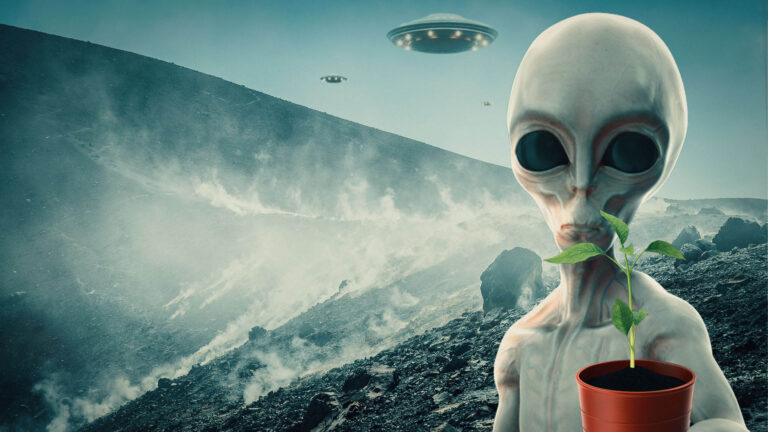
If aliens really did bring life to Earth, then every living thing on this planet may ultimately share a cosmic origin.