






Swipe Down for Full Video Story
Even if you were not 1.5 billion kilometers (900 million miles) from Earth, building a new community would still be a major challenge. Fortunately, we can help break down what life on Titan might actually be like.
In real estate, the most important rule is “location, location, location,” and in that sense, Titan has some surprising advantages. Saturn’s largest moon is often considered the most Earth like world in the Solar System thanks to its thick atmosphere and the presence of liquids on its surface.
Of course, living there would come with some major adjustments.
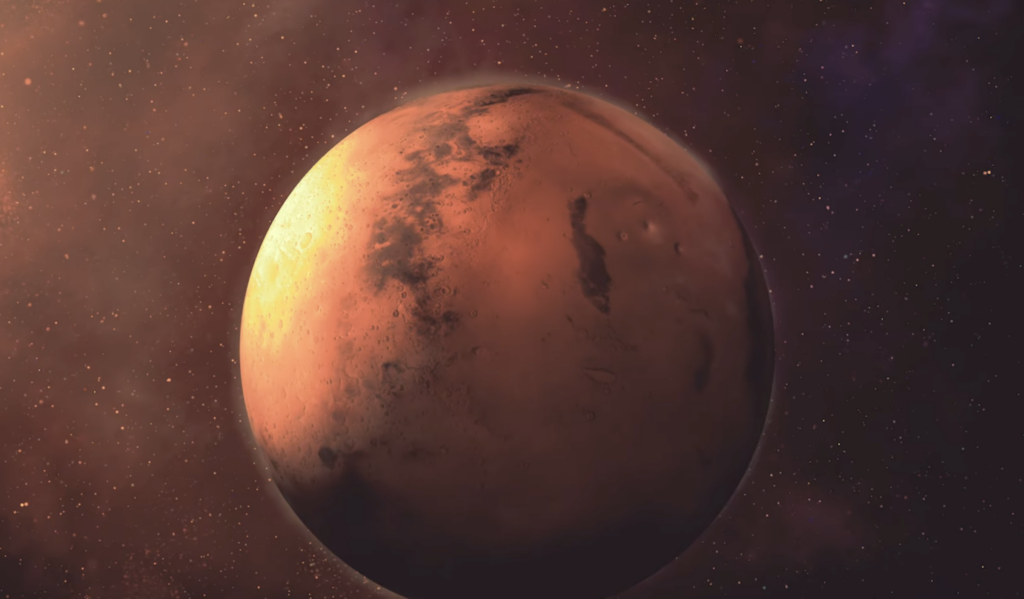
For example, Titan has an atmospheric pressure about 1.6 times higher than Earth’s, similar to the pressure you would experience about 5 meters underwater. On the bright side, it also has distinct seasons, which means you could enjoy dramatic seasonal changes in your wardrobe. The catch is that each season lasts around seven Earth years, so you would be wearing those outfits for a very long time.
The main attraction, however, is Titan’s vast reserves of hydrocarbons, which could potentially be used both as building materials and as a valuable energy source.
With that in mind, establishing a settlement becomes a realistic goal. The first step would likely involve sending a fleet of autonomous robots to prepare the environment for future human arrival. These machines would begin laying the groundwork, constructing basic infrastructure, and ensuring the area is ready for a permanent human presence.
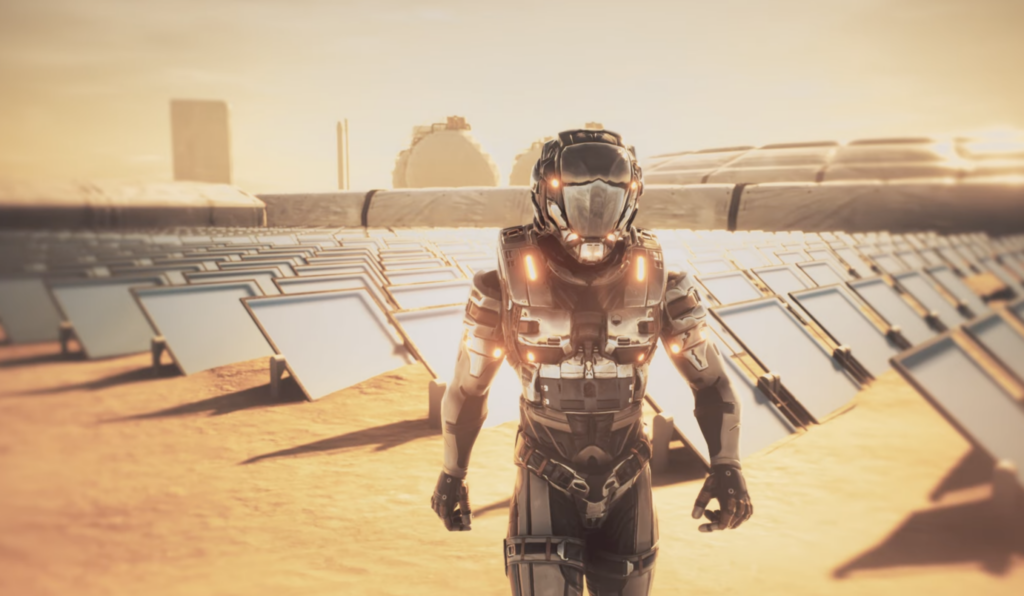
The robots could begin building homes, structures, and even mining facilities. Since Titan contains large amounts of hydrocarbons such as methane and ethane, these materials could potentially be processed into plastics and used as a practical construction resource.
For energy, the settlement would require a massive power system, potentially involving solar panels spread across roughly 10 percent of Titan’s surface. While this is an enormous engineering challenge, it could be achievable with advanced technology and coordinated effort.
Once the basic infrastructure is in place, the focus would shift to daily life on Titan. However, living there would be extremely harsh. Surface temperatures average around −179 °C (−290 °F), making the environment far colder than anything on Earth.
To survive, humans would need to live inside large sealed domes equipped with self sustaining ecosystems, creating controlled environments where air, temperature, and food production are carefully maintained.
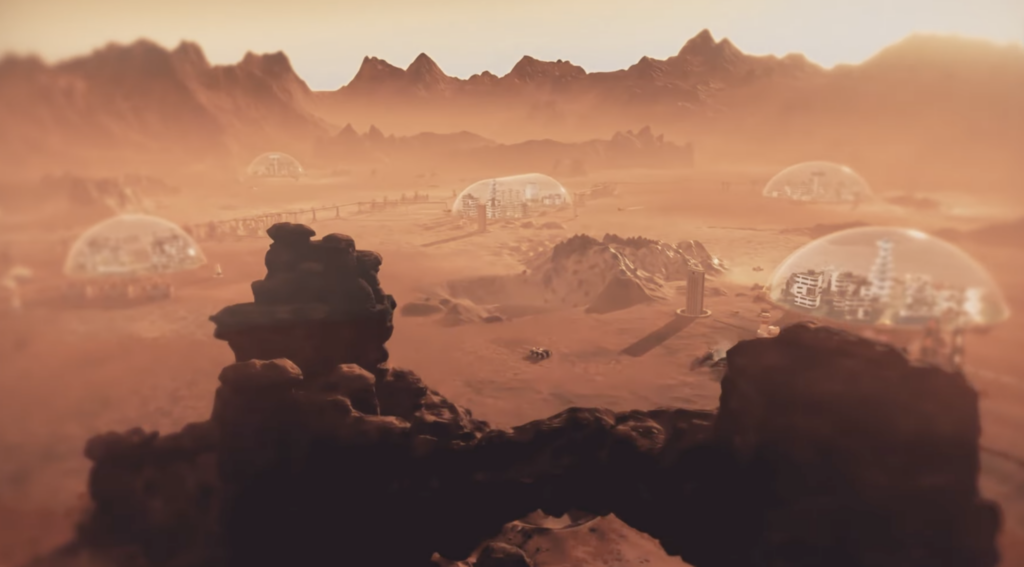
These self sustaining ecosystems would also be responsible for producing food. To make that possible, we would rely on knowledge already gained from experiments aboard the International Space Station, where astronauts have successfully grown crops like lettuce, peas, and radishes in microgravity conditions.
These space grown plants have shown that agriculture beyond Earth is possible and have helped scientists understand how plant growth changes in low gravity environments.
However, because Titan receives far less sunlight than Earth, additional artificial lighting would be essential to support any large scale greenhouse systems and keep crops alive.
Some researchers have even suggested that life in off world colonies could become so heavily monitored that certain behaviors, such as crime, would be extremely difficult to carry out. The same idea could apply to a Titan settlement.
With constant tracking of airlock activity, location data, and even biological indicators such as heart rate or stress levels, nearly every aspect of daily life would be recorded, making privacy almost nonexistent but safety highly controlled.

If a crime were ever to occur, the vast amount of collected data would make it relatively easy to trace what happened and identify the person responsible.
Despite the futuristic setting, living on Titan would not require everyone to be a rocket scientist. Early settlement efforts would depend on a wide range of skilled professionals, including engineers, medical staff, farmers, and cooks, all working together to keep the colony functioning.
Just like any community on Earth, a successful Titan settlement would rely on people with different abilities and roles, meaning there would be a place for many kinds of contributors in humanity’s new home on Saturn’s moon.