






Swipe Down for Full Video Story
Technically speaking, this marine reptile was not a dinosaur, even though it lived alongside many of them in ancient oceans.
Styxosaurus lived around 70 to 85 million years ago during the Late Cretaceous Period, long before humans ever appeared on Earth. This massive predator could reach lengths of about 10 meters, or roughly 35 feet.
Fossils of this ancient giant have been discovered in regions that are now Kansas and South Dakota, suggesting that if it were alive today, it would most likely patrol the coastal waters of North America.
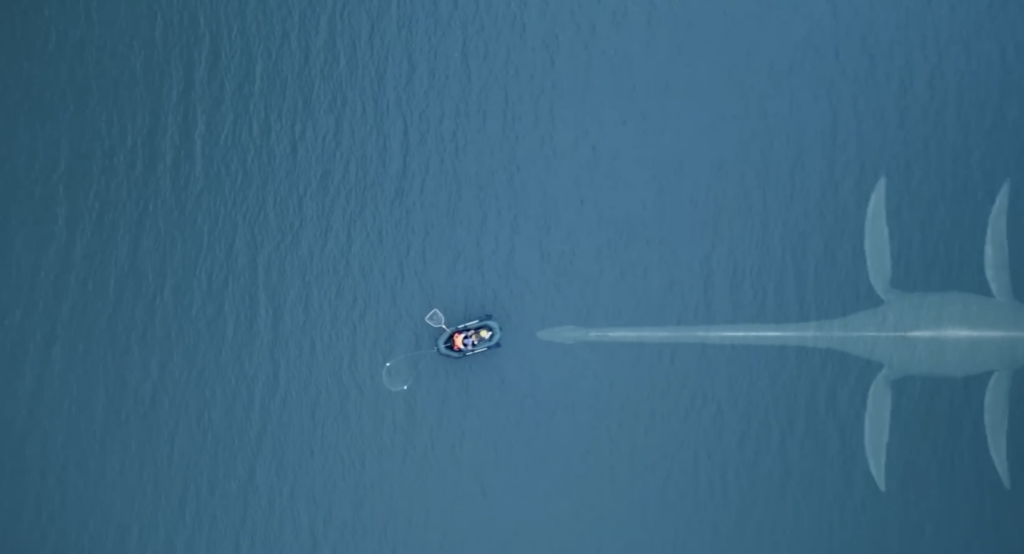
However, you would rarely see its full body. In most cases, only its head and part of its extremely long neck would break the surface. The rest of its bulky, turtle like body would stay hidden beneath dark, murky waters, making it appear far smaller and more mysterious than it truly is.
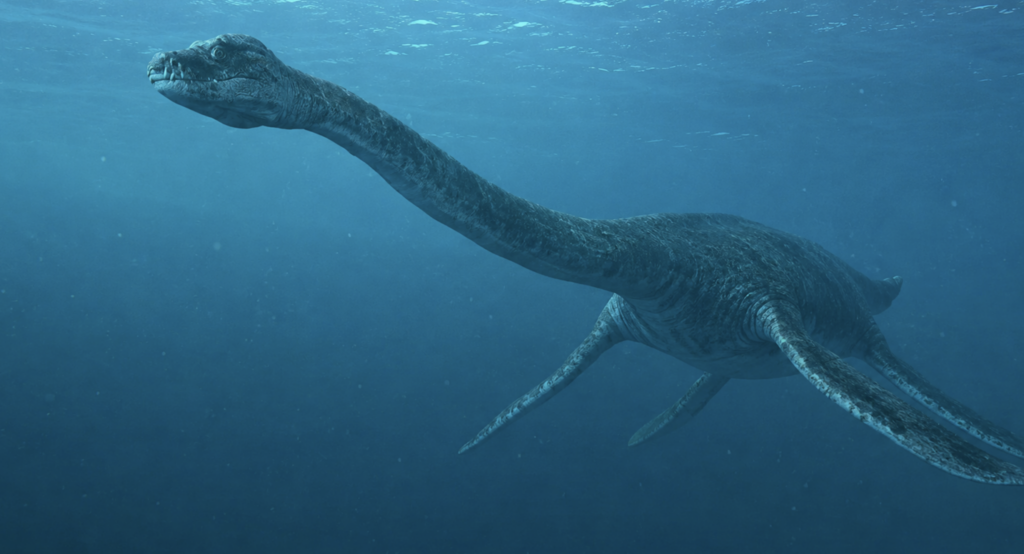
This would reduce the chances of it being detected. And it would make it seem less intimidating to the fish and squid it’ll later munch on.
This feasting would be pulled straight from a horror movie. As Styxosaurus shut its mouth around its prey, sharp teeth would intermesh with each other and fully trap the animal inside. Like a cage from which there’s no escaping.
While the teeth of the Styxosaurus evolved for seizing slippery prey, they weren’t particularly effective at cutting through flesh. So this behemoth would swallow its still-living prey whole. The stones in its belly would take care of crushing bones and rubbing off scales.
Well, the head of the average Styxosaurus would be around 50 cm (1.6 ft) long, with a snout of about 30 cm (1 ft) in length.
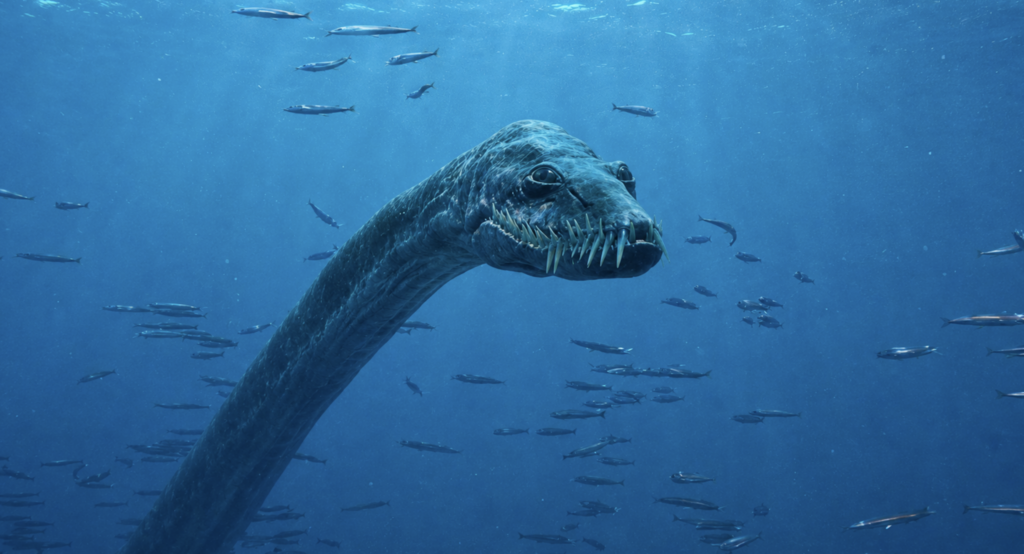
That means that, if you happen to be an average-sized adult, this sea reptile wouldn’t want to try swallowing you whole. You wouldn’t fit in its mouth.
If Styxosaurus could somehow swallow a human whole, the experience would be terrifying and inescapable. You would be dragged into sudden darkness, sliding down an impossibly long neck before ending up in a cramped, stone like stomach where crushing forces would finish the job in a chaotic, uncomfortable way. Fortunately, this creature was not large enough to swallow a person whole in reality.
Even in its own time, Styxosaurus had dangers to face. Ancient sharks likely hunted it, and shifting ocean conditions tied to climate changes may have made survival even more difficult.
Today, the biggest challenge might be temperature. During the Cretaceous Period, ocean temperatures were much warmer, averaging around 37 °C, which is close to human body heat. Modern seas, especially around North America, are far colder.
In those conditions, Styxosaurus would struggle to survive unless it had evolved new adaptations. Even warmer tropical waters today might still be too cool compared to the ancient oceans it was built for.
If the Styxosaurus was around today, it might not pose the greatest of threats to us ocean-loving humans. If anything, the risk to this behemoth’s survival would go beyond killer whales and sharks. You can bet our more avant-garde foodies would also be dying to give Styxosaurus a taste.
Seeing as it is a reptile, odds are it would have the sweet and juicy flavor of an iguana, with the fish-like texture of its favorite marine life. Putting aside the risk of parasites, viruses and Salmonella that comes from eating reptiles, it actually sounds delicious.