As tensions simmer in the Middle East, the world watches the shadow war between Israel and Iran with increasing concern. While both nations possess formidable military forces, they operate on vastly different philosophies of warfare. One relies on technological superiority and precision, while the other leans on strategic depth, a massive missile arsenal, and a network of regional proxies.
Here is a comprehensive breakdown of how these two regional powers stack up.
Missile Arsenals and Defense Systems
This is perhaps the most volatile category of the rivalry.
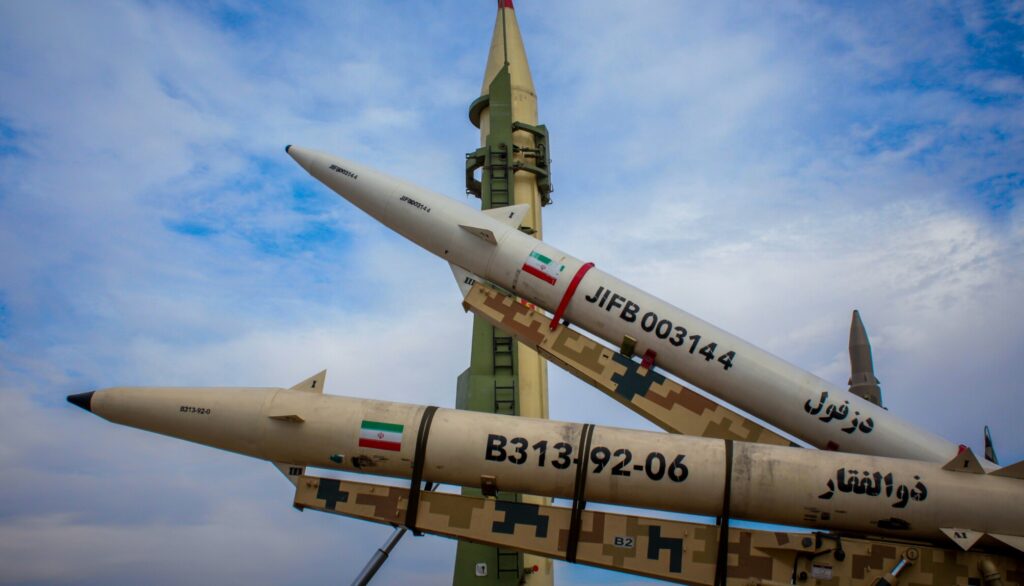
Iran’s Long Reach: Lacking a modern air force, Iran has built the largest and most diverse ballistic missile arsenal in the Middle East. These missiles, such as the Shahab and Kheibar Shekan, are capable of reaching targets across Israel.
Israel’s Multi-Tiered Shield: To counter this threat, Israel has developed the world’s most sophisticated integrated air defense system. This includes the Iron Dome (short-range), David’s Sling (medium-range), and the Arrow system (long-range/exo-atmospheric). These layers are designed to intercept everything from crude rockets to hypersonic ballistic missiles.
Naval Capabilities
The maritime theater is crucial for both, though their goals differ:
Iran focuses on “green-water” operations, utilizing small, fast-attack boats and submarines (like the Ghadir class) to control the Strait of Hormuz, a vital global oil chokepoint.
Israel maintains a smaller but highly advanced navy, including Sa’ar 6-class corvettes and Dolphin-class submarines, which are rumored to be capable of carrying nuclear-tipped cruise missiles, providing a “second-strike” deterrent.
The Numbers Game: Personnel and Mobilization
On paper, Iran holds a significant numerical advantage. With a population of over 85 million, the Islamic Republic maintains an active military force of approximately 610,000 personnel, supplemented by hundreds of thousands of paramilitary and reserve forces.
Israel, with a much smaller population of roughly 9 million, maintains a smaller active force of about 170,000. However, Israel’s true strength lies in its mobilization speed. Its reserve system is one of the most efficient in the world, capable of swelling the Israel Defense Forces (IDF) to over 600,000 troops in a matter of days.
Air Superiority: Precision vs. Persistence
Israel: The Israeli Air Force (IAF) is widely considered one of the most advanced in the world. It operates cutting-edge U.S.-made hardware, including the F-35 Lightning II “Adir” stealth fighters, F-15s, and F-16s. Israel’s edge is not just in its planes, but in its advanced electronic warfare capabilities and highly trained pilots.
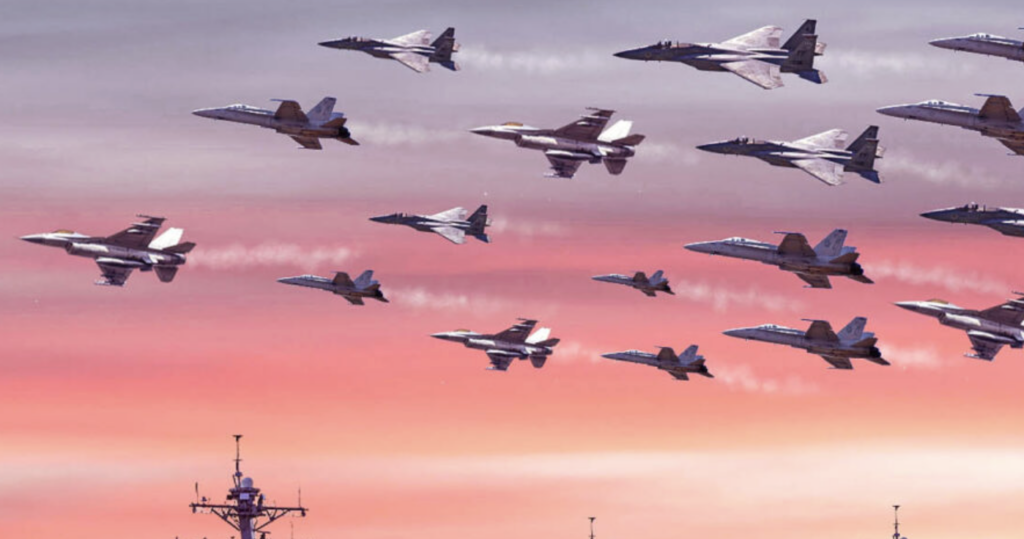
Iran: Iran’s air force is largely composed of aging platforms, including pre-1979 American F-14s and Soviet-era MiGs. To compensate for this weakness, Iran has invested heavily in domestically produced Unmanned Aerial Vehicles (UAVs). Iranian drones, like the Shahed series, have proven to be effective and low-cost tools for asymmetric warfare.
The “Grey Zone”: Cyber and Proxies
The conflict rarely happens in a conventional vacuum.
Cyber Warfare: Both nations are top-tier cyber powers. From the Stuxnet attack on Iranian nuclear facilities to Iranian hacks on Israeli infrastructure, the digital front is constantly active.
The “Axis of Resistance”: Iran’s greatest strategic advantage is its network of proxies, including Hezbollah in Lebanon, Hamas in Gaza, and militias in Iraq and Yemen. This allows Tehran to exert pressure on Israel’s borders without engaging in a direct, state-on-state war.