





Don’t Miss the Full Video Story Below
The year is 2126, and Earthrise is no longer something you only see in textbooks or old footage. It is what you wake up to every morning from the comfort of your home… on the Moon.
NASA has just completed Phase One of constructing the first full scale lunar city. While the world back on Earth celebrates expansion, innovation, and new architecture, there is one truth that never changes: the Moon remains one of the most hostile environments humans have ever tried to live in.
You once thought Antarctica was extreme. The Moon makes it look like a holiday destination.
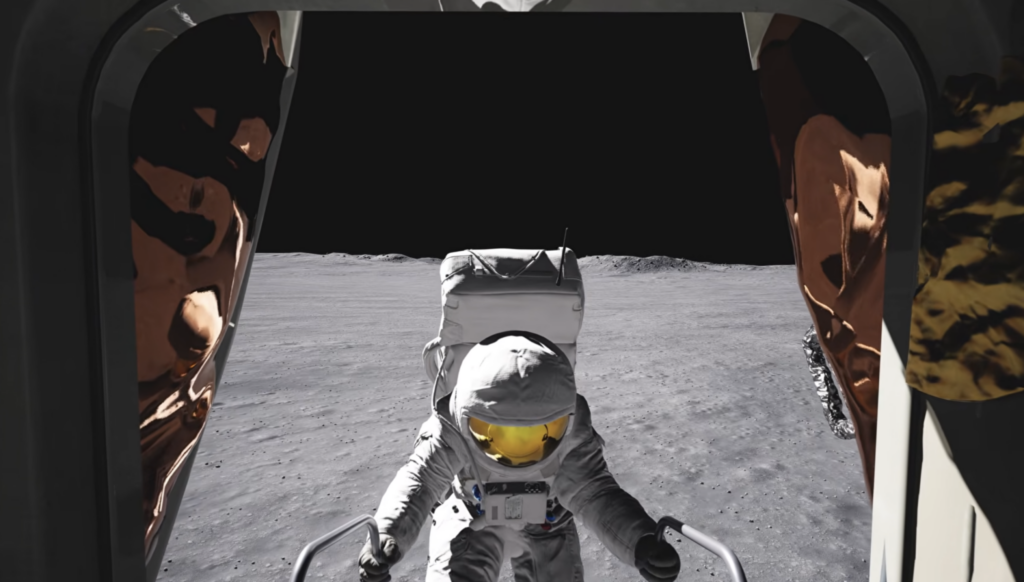
Today, you are going to experience what life in a lunar city truly feels like, and there is no sugarcoating it. It is dangerous, demanding, and unforgiving.
Life in a Lunar City
This morning, you take the monorail out toward your job at the solar farms. On the Moon, everything depends on energy, and vast fields of solar panels are among the most important infrastructure systems ever built.
Your assignment today is simple in theory but risky in practice: rewire solar arrays powering Luna Prime and inspect the aging radioactive heater units that keep critical systems from freezing in permanent shadow zones.
You are excited. It is a big opportunity. A real outside assignment. But out here, “outside” is the keyword that reminds everyone why only the bold, or slightly reckless, choose to live here.
Micrometeorites streak across the surface faster than bullets. A tiny fragment of space debris, even one no larger than a grain of sand, can puncture a suit, rupture an oxygen line, or end a life in an instant. Every task beyond the habitat walls carries real risk.
And that is only the beginning.
A World Without a Comfort Zone
At the Moon’s equator, there are roughly fourteen Earth days of continuous daylight followed by fourteen days of darkness. That means long stretches of extreme temperature swings.
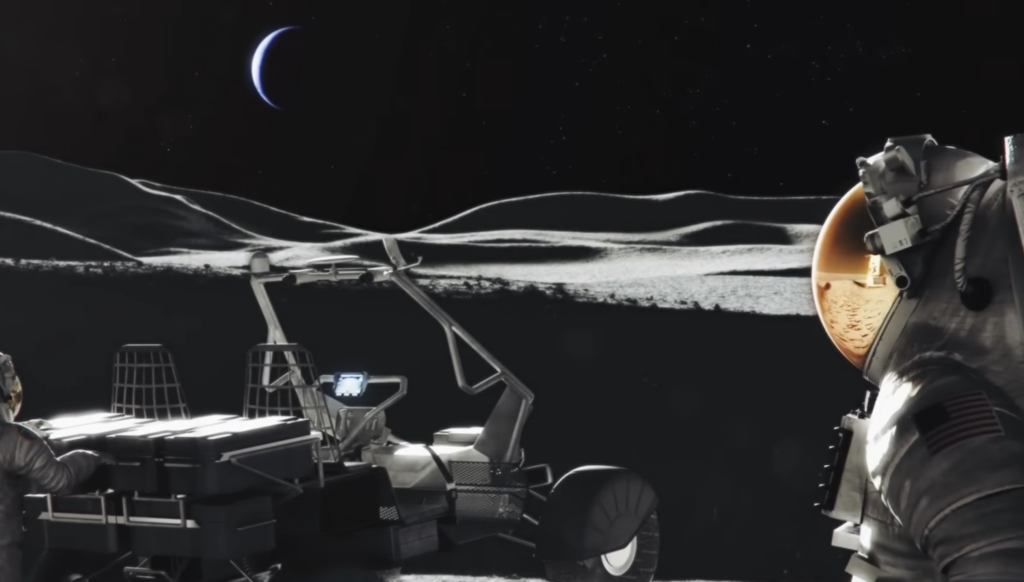
In sunlight, surface temperatures can reach 127°C. In shadow, they plunge to minus 173°C. Imagine trying to function in conditions that swing between an oven and deep space freezer within the same month.
Now remove the atmosphere.
There is no air to breathe, no weather to soften radiation, and no magnetosphere to shield the surface. A solar flare can expose everything outside to intense radiation in seconds. And yet, people live here. Because in 2126, humanity has engineered solutions for nearly every environmental problem the Moon can throw at them. Almost.
Why Build a City Here at All?
It is a fair question. Why would anyone willingly choose this place? Because Luna Prime is not just a settlement. It is a launch point for the entire Solar System.
Every mission to Mars, the asteroid belt, or beyond becomes dramatically easier when it begins on the Moon. In many ways, it is the stepping stone humanity needed to leave Earth behind.
The reason is simple physics.
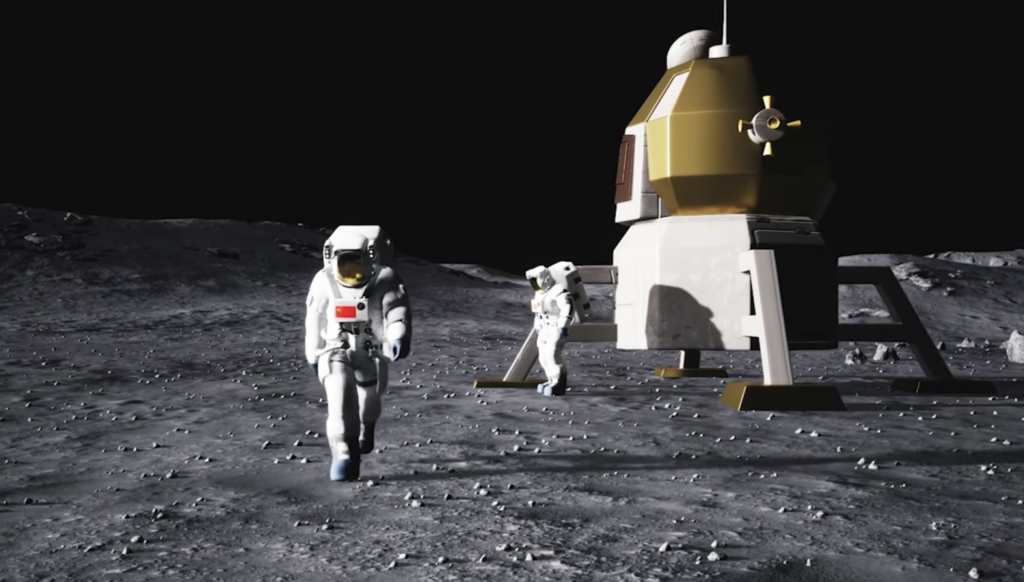
To launch a rocket from Earth into low orbit, you need speeds of around 35,000 kilometers per hour. Achieving that requires enormous fuel loads, with nearly 90 percent of a rocket dedicated just to propellant. On the Moon, everything changes.
With only 16 percent of Earth’s gravity and almost no atmosphere, launching from the lunar surface requires far less energy. In practical terms, it is one of the most valuable locations in the Solar System for building a spacefaring civilization.
There are even experimental concepts like electromagnetic launch rails that could fire cargo directly into space without traditional rockets. The Moon is not the destination. It is the doorway.
Building a City That Keeps You Alive
Luna Prime is not a city in the traditional sense. It is a fully integrated life support system disguised as a settlement.
Every breath, every drop of water, and every watt of power is part of a tightly controlled network. Oxygen production, water extraction, food systems, computing infrastructure, and radiation shielding all operate as one interconnected organism.
A single failure in the system could be catastrophic. That is the constant reality here. One software error or power disruption could cascade into a life threatening emergency within minutes.
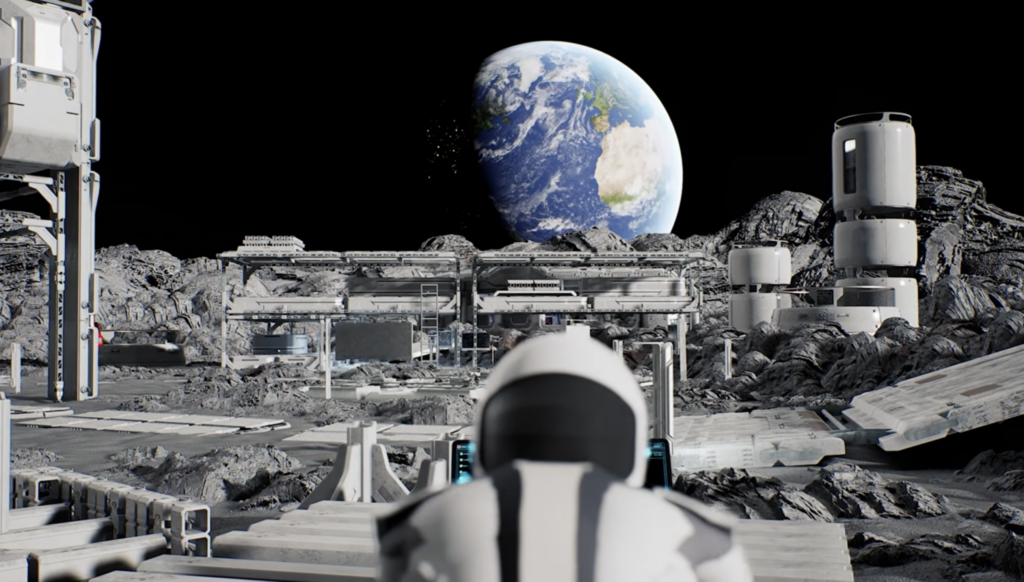
And yet, it works. Because everything has been designed with redundancy, resilience, and an almost obsessive level of engineering precision.
The Psychological Challenge of the Moon
Physical survival is only part of the challenge. Long term habitation introduces another threat: the human mind.
Isolation, confinement, and distance from Earth create psychological strain that cannot be ignored. Studies like the Mars 500 experiment showed how quickly social dynamics can degrade when people are isolated for extended periods with limited external contact.
On the Moon, there is no “return trip” in any meaningful sense. You are already home, even if it feels like nowhere you have ever belonged.
Cabin fever is not a side effect. It is a design problem that had to be solved through architecture, recreation systems, and carefully structured social environments. Even then, it never fully disappears.
From First Habitats to Lunar Cities
Your daily route passes old structures, the earliest lunar habitats. They look primitive now, almost improvised, like temporary shelters from another era. And in a way, they were.
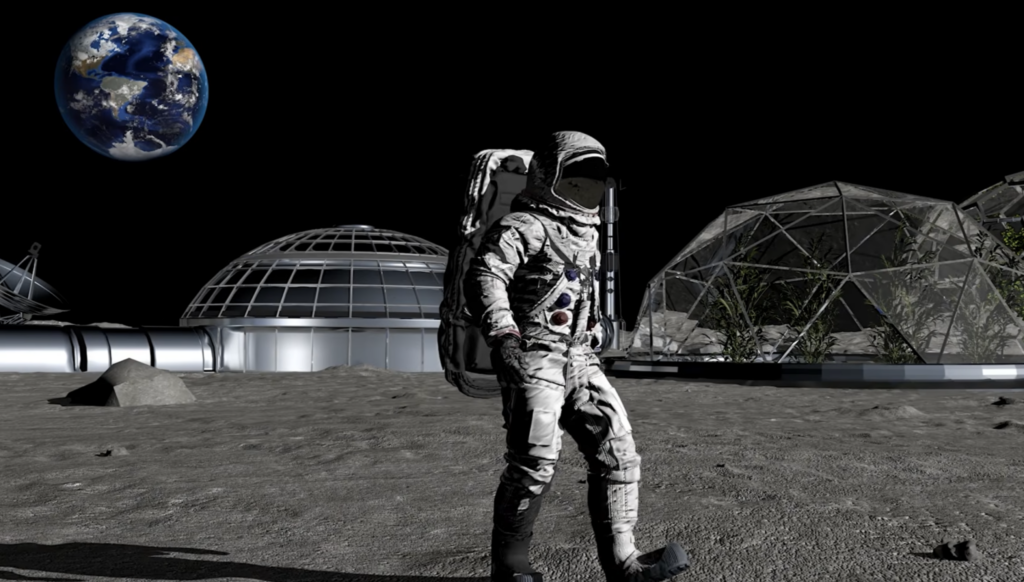
The idea of living on the Moon predates all of this by centuries, long before it became reality. Science fiction shaped imagination. Apollo 11 proved it was possible. Artemis missions reignited ambition.
The turning point came when water was discovered in lunar soil, transforming the Moon from a barren rock into a resource rich environment. By the 2030s, early habitats were established. They were small, fragile, and heavily dependent on Earth. But they were the beginning.
Over time, construction methods evolved. Lunar regolith, once seen as useless dust, became the primary building material for structures. Using laser sintering and 3D printing techniques, engineers transformed it into durable ceramic like “moon concrete.”
Domes began to rise across the surface, designed to handle internal pressure while shielding residents from radiation and micrometeorite impacts.
What started as temporary shelters became permanent settlements. Then towns. Then cities.
Why Location Changed Everything
Luna Prime was built near the Moon’s south pole for a reason.
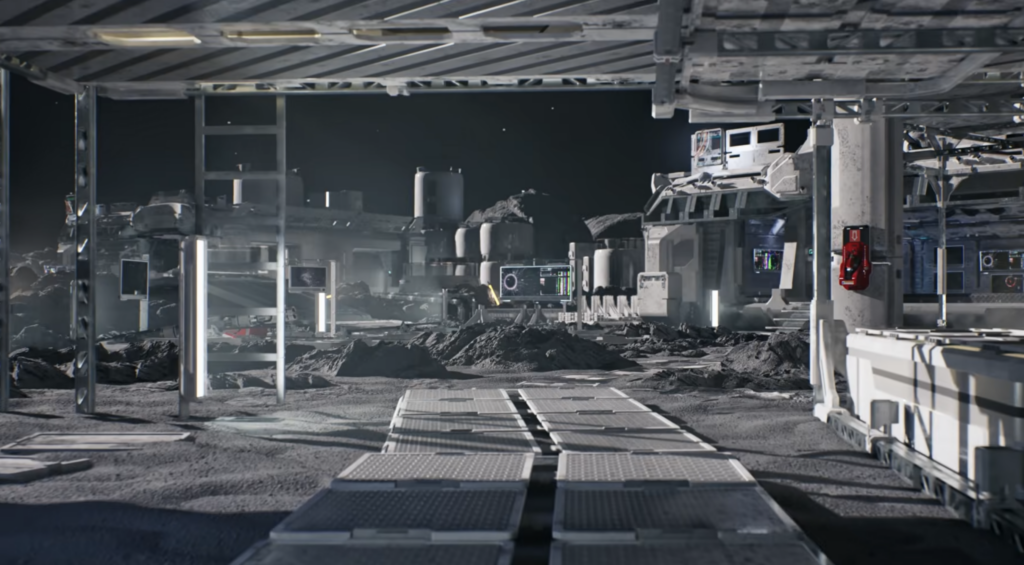
Unlike equatorial regions, polar areas receive near constant sunlight in certain ridges, allowing continuous solar energy generation. Nearby permanently shadowed craters contain water ice, one of the most valuable resources in space.
In one location, you get energy, water, and communication stability. That combination made long term habitation possible. It was not just engineering that built the city.
It was geography.
A New Kind of Human Future
Now, standing on the surface of the Moon after your shift, you look up. The sky is always black. Always filled with stars. There is no atmospheric haze, no weather, no twilight in the way Earth experiences it.
And Earth itself hangs in the sky, constant and familiar, a glowing reminder of where humanity began. Living here is not easy. It is not comfortable. It is not safe. But it is something else entirely.
It is the beginning of something far larger. Because Luna Prime is not the end of human civilization.
It is the first step beyond it. And somewhere in the back of your mind, as you watch Earth rise, you cannot help but wonder how long it will take before humanity reaches Mars… and then the rest of the Solar System.